Elderbroom Jennifer L, Huang Jennifer J, Gatza Catherine E, Chen Jian, How Tam, Starr Mark, Nixon Andrew B, Blobe Gerard C
Department of Pharmacology and Cancer Biology, Duke University, Durham, NC 27708.
Department of Medicine, Duke University, Durham, NC 27708.
Mol Biol Cell. 2014 Aug 15;25(16):2320-32. doi: 10.1091/mbc.E13-09-0524. Epub 2014 Jun 25.
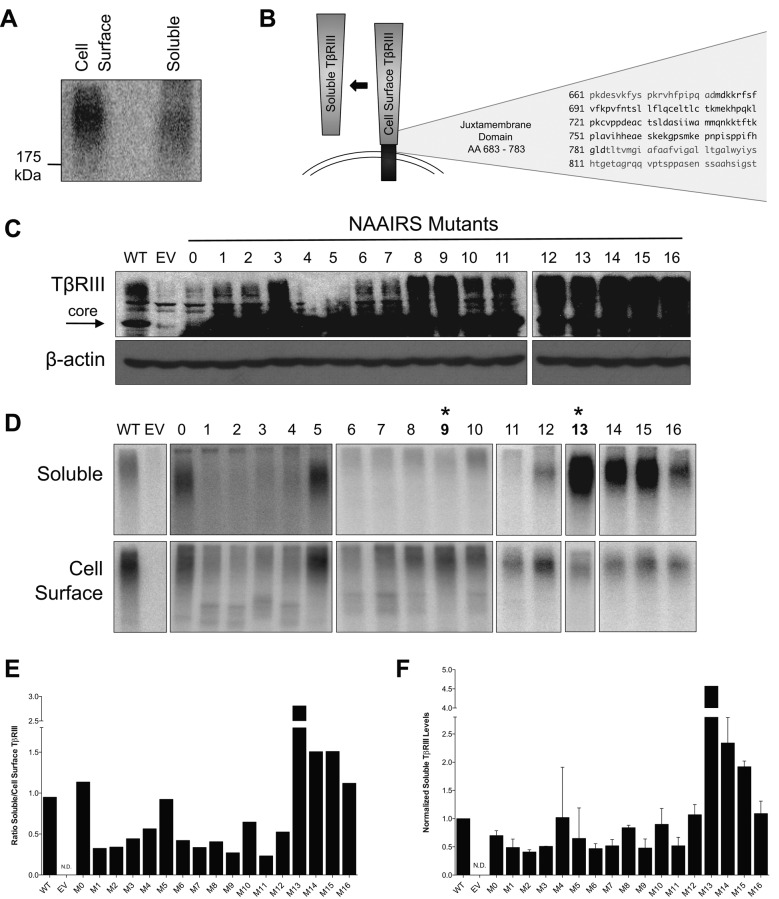
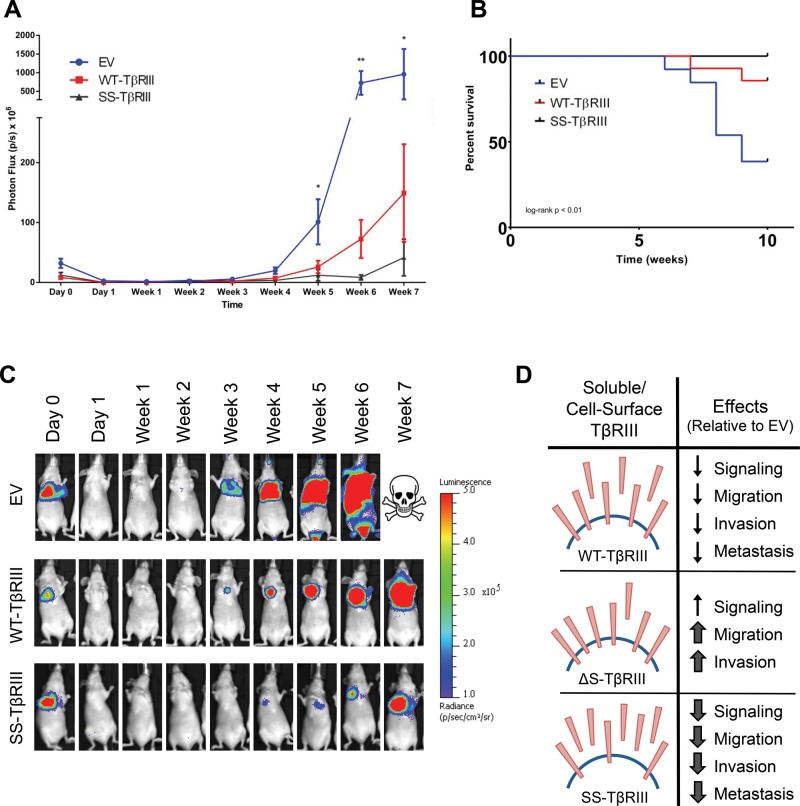
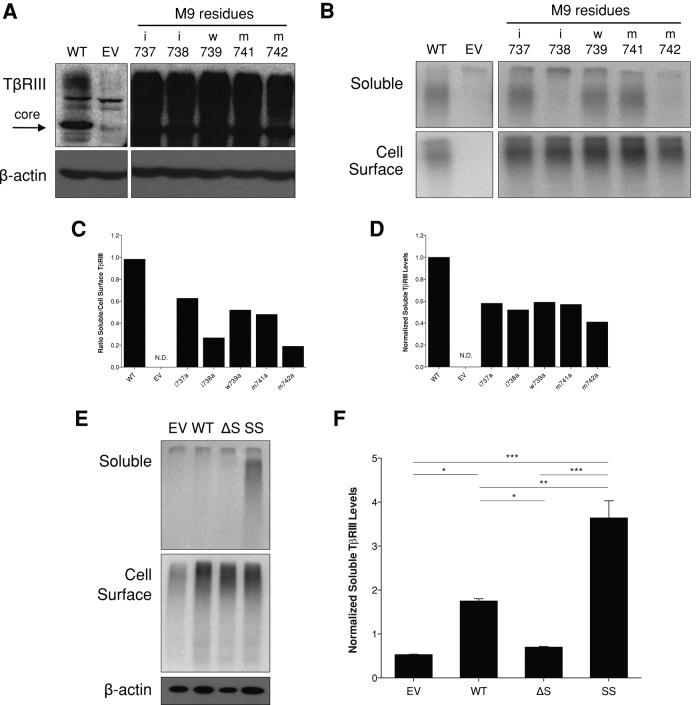
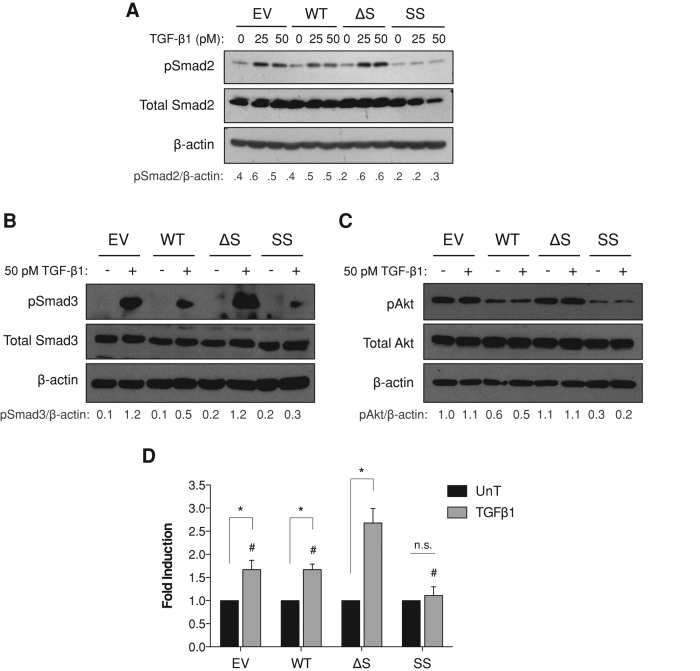
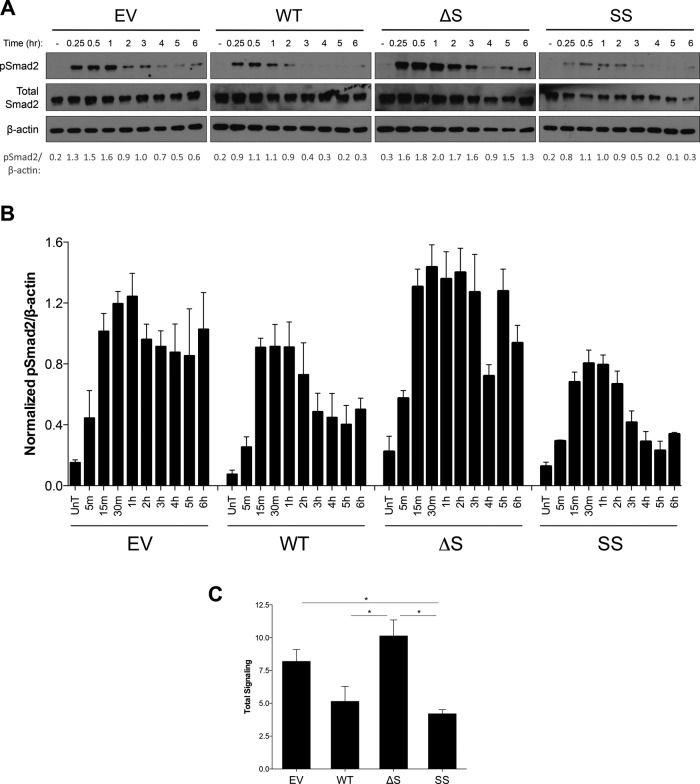
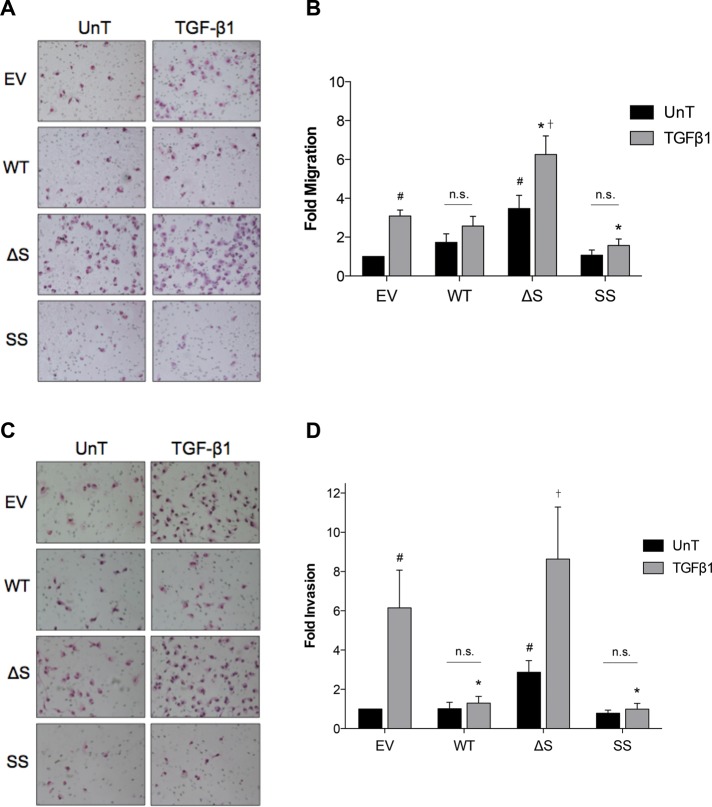
The type III transforming growth factor β (TGF-β) receptor (TβRIII), also known as betaglycan, is the most abundantly expressed TGF-β receptor. TβRIII suppresses breast cancer progression by inhibiting migration, invasion, metastasis, and angiogenesis. TβRIII binds TGF-β ligands, with membrane-bound TβRIII presenting ligand to enhance TGF-β signaling. However, TβRIII can also undergo ectodomain shedding, releasing soluble TβRIII, which binds and sequesters ligand to inhibit downstream signaling. To investigate the relative contributions of soluble and membrane-bound TβRIII on TGF-β signaling and breast cancer biology, we defined TβRIII mutants with impaired (ΔShed-TβRIII) or enhanced ectodomain shedding (SS-TβRIII). Inhibiting ectodomain shedding of TβRIII increased TGF-β responsiveness and abrogated TβRIII's ability to inhibit breast cancer cell migration and invasion. Conversely, expressing SS-TβRIII, which increased soluble TβRIII production, decreased TGF-β signaling and increased TβRIII-mediated inhibition of breast cancer cell migration and invasion. Of importance, SS-TβRIII-mediated increases in soluble TβRIII production also reduced breast cancer metastasis in vivo. Taken together, these studies suggest that the ratio of soluble TβRIII to membrane-bound TβRIII is an important determinant for regulation of TβRIII- and TGF-β-mediated signaling and biology.
III型转化生长因子β(TGF-β)受体(TβRIII),也称为β聚糖,是表达最为丰富的TGF-β受体。TβRIII通过抑制迁移、侵袭、转移和血管生成来抑制乳腺癌进展。TβRIII结合TGF-β配体,膜结合型TβRIII呈递配体以增强TGF-β信号传导。然而,TβRIII也可发生胞外域脱落,释放可溶性TβRIII,其结合并隔离配体以抑制下游信号传导。为了研究可溶性和膜结合型TβRIII对TGF-β信号传导和乳腺癌生物学的相对贡献,我们定义了胞外域脱落受损(ΔShed-TβRIII)或增强(SS-TβRIII)的TβRIII突变体。抑制TβRIII的胞外域脱落增加了TGF-β反应性,并消除了TβRIII抑制乳腺癌细胞迁移和侵袭的能力。相反地,表达增加可溶性TβRIII产生的SS-TβRIII降低了TGF-β信号传导,并增强了TβRIII介导的对乳腺癌细胞迁移和侵袭的抑制作用。重要的是,SS-TβRIII介导的可溶性TβRIII产生增加也减少了体内乳腺癌转移。综上所述,这些研究表明可溶性TβRIII与膜结合型TβRIII的比例是调节TβRIII和TGF-β介导的信号传导及生物学特性的重要决定因素。