Kirchoff Nicole S, Udell Monique A R, Sharpton Thomas J
Department of Microbiology, Oregon State University, Corvallis, OR, United States of America.
Department of Animal and Rangeland Science, Oregon State University, Corvallis, OR, United States of America.
PeerJ. 2019 Jan 9;7:e6103. doi: 10.7717/peerj.6103. eCollection 2019.
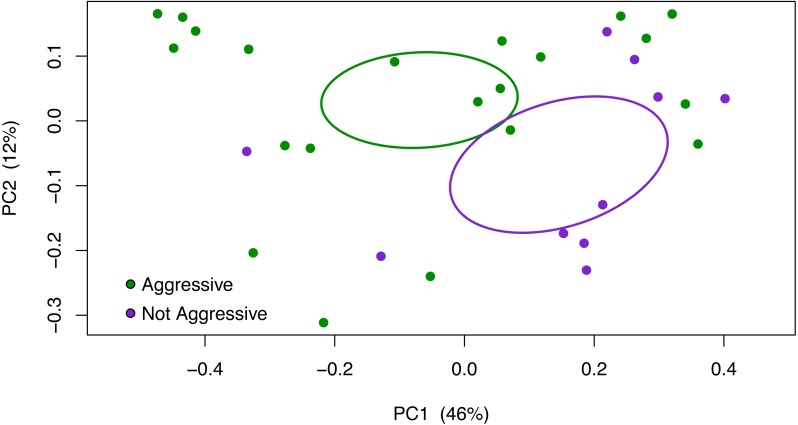
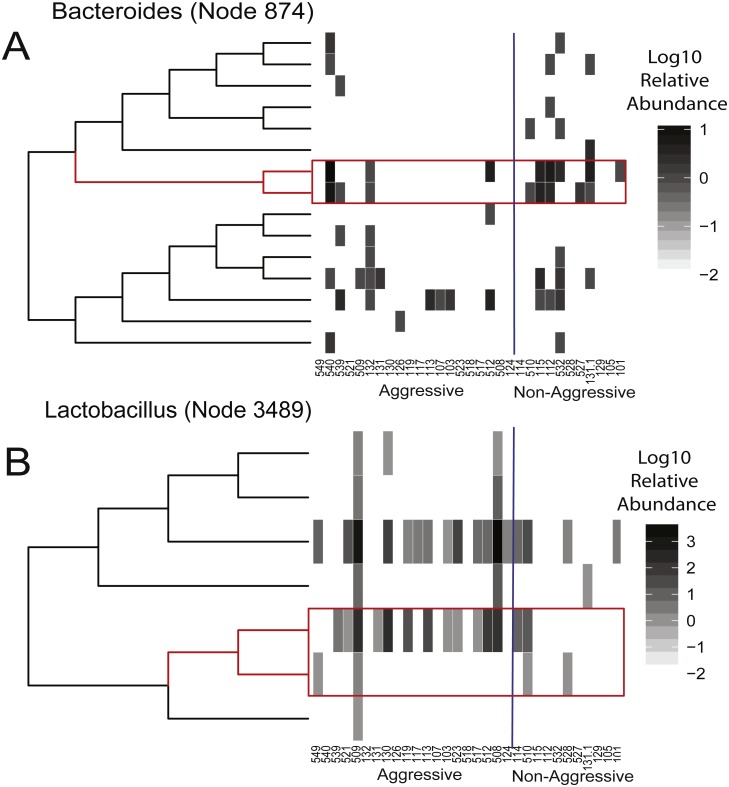
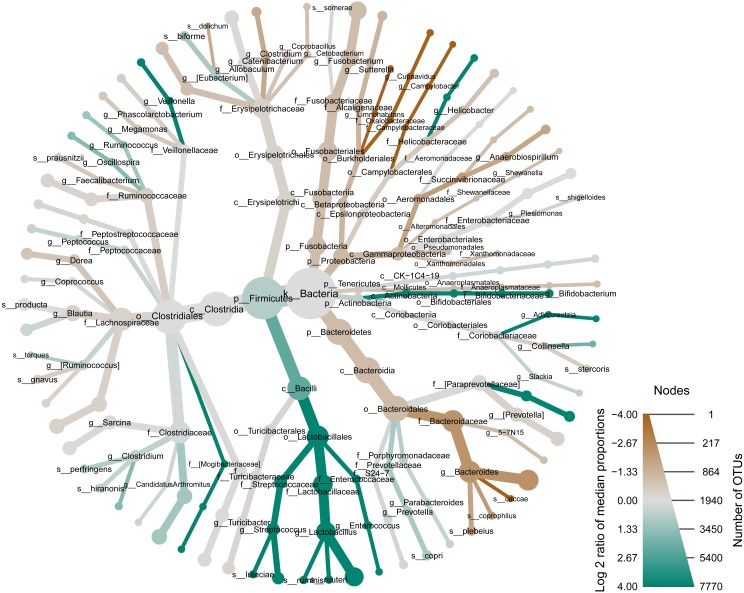
Aggression is a serious behavioral disorder in domestic dogs that endangers both dogs and humans. The underlying causes of canine aggression are poorly resolved and require illumination to ensure effective therapy. Recent research links the compositional diversity of the gut microbiome to behavioral and psychological regulation in other mammals, such as mice and humans. Given these observations, we hypothesized that the composition of the canine gut microbiome could associate with aggression. We analyzed fecal microbiome samples collected from a small population of pit bull type dogs seized from a dogfighting organization. This population included 21 dogs that displayed conspecific aggressive behaviors and 10 that did not. Beta-diversity analyses support an association between gut microbiome structure and dog aggression. Additionally, we used a phylogenetic approach to resolve specific clades of gut bacteria that stratify aggressive and non-aggressive dogs, including clades within , , , and . Several of these taxa have been implicated in modulating mammalian behavior as well as gastrointestinal disease states. Although sample size limits this study, our findings indicate that gut microorganisms are linked to dog aggression and point to an aggression-associated physiological state that interacts with the gut microbiome. These results also indicate that the gut microbiome may be useful for diagnosing aggressive behaviors prior to their manifestation and potentially discerning cryptic etiologies of aggression.
攻击行为是家犬中一种严重的行为障碍,对犬类和人类都构成威胁。犬类攻击行为的潜在原因尚未得到很好的解决,需要深入研究以确保有效的治疗。最近的研究将肠道微生物群的组成多样性与其他哺乳动物(如小鼠和人类)的行为和心理调节联系起来。基于这些观察结果,我们推测犬类肠道微生物群的组成可能与攻击行为有关。我们分析了从一个斗狗组织查获的一小群比特斗牛梗犬采集的粪便微生物群样本。这群狗包括21只表现出同种攻击行为的狗和10只没有攻击行为的狗。β多样性分析支持肠道微生物群结构与犬类攻击行为之间的关联。此外,我们使用系统发育方法来解析区分攻击性和非攻击性犬类的特定肠道细菌进化枝,包括 、 、 和 内的进化枝。其中一些分类群已被证明与调节哺乳动物行为以及胃肠道疾病状态有关。尽管样本量限制了本研究,但我们的发现表明肠道微生物与犬类攻击行为有关,并指出了一种与攻击行为相关的生理状态,该状态与肠道微生物群相互作用。这些结果还表明,肠道微生物群可能有助于在攻击行为表现之前进行诊断,并有可能识别攻击行为的潜在隐匿病因。