Department of Orthopedics, Xinqiao Hospital, Army Medical University (Third Military Medical University), Chongqing, 400038, People's Republic of China.
Institute of Rocket Force Medicine, State Key Laboratory of Trauma, Burns and Combined Injury, Army Medical University(Third Military Medical University), Chongqing, 400038, People's Republic of China.
Stem Cell Res Ther. 2019 Jan 15;10(1):30. doi: 10.1186/s13287-018-1121-9.
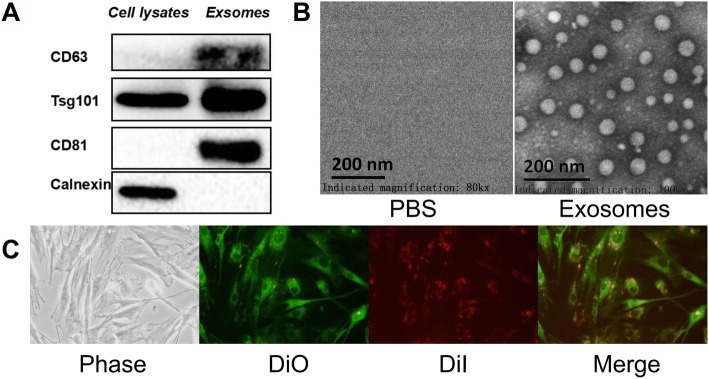
Radiotherapy to cancer patients is inevitably accompanied by normal tissue injury, and the bone is one of the most commonly damaged tissues. Damage to bone marrow mesenchymal stem cells (BM-MSCs) induced by radiation is thought to be a major cause of radiation-induced bone loss. Exosomes exhibit great therapeutic potential in the treatment of osteoporosis, but whether exosomes are involved in radiation-induced bone loss has not been thoroughly elucidated to date. The main purpose of this study is to investigate the role of exosomes derived from BM-MSCs in restoring recipient BM-MSC function and alleviating radiation-induced bone loss.
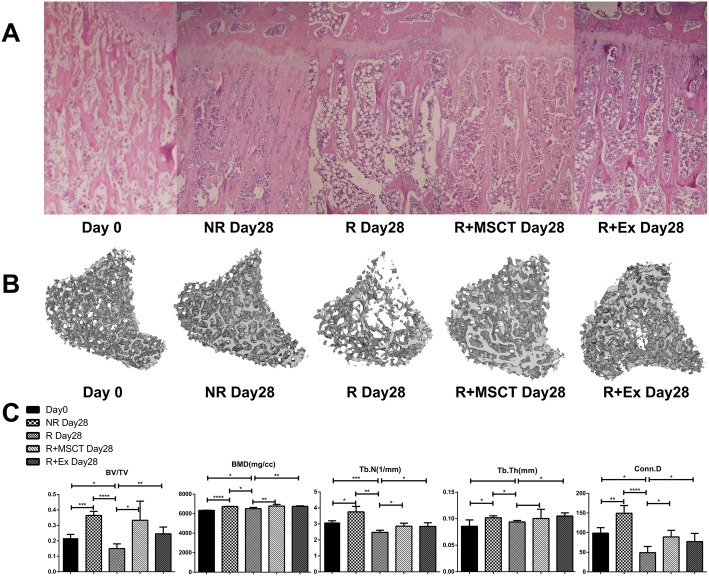
BM-MSC-derived exosomes were intravenously injected to rats immediately after irradiation. After 28 days, the left tibiae were harvested for micro-CT and histomorphometric analysis. The effects of exosomes on antioxidant capacity, DNA damage repair, proliferation, and cell senescence of recipient BM-MSCs were determined. Osteogenic and adipogenic differentiation assays were used to detect the effects of exosomes on the differentiation potential of recipient BM-MSCs, and related genes were measured by qRT-PCR and Western blot analysis. β-Catenin expression was detected at histological and cytological levels.
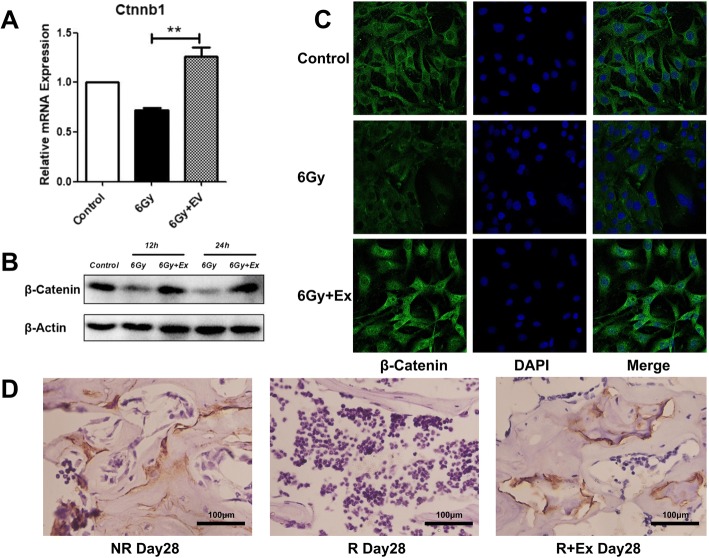
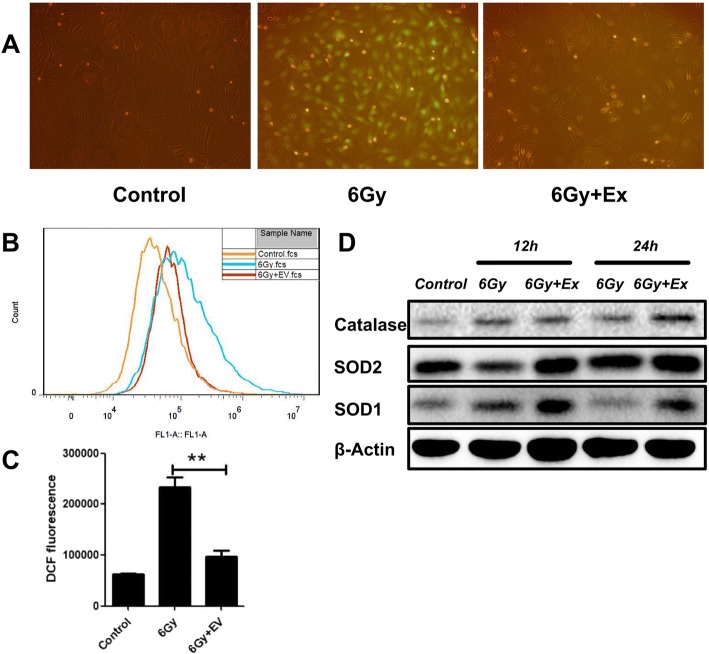
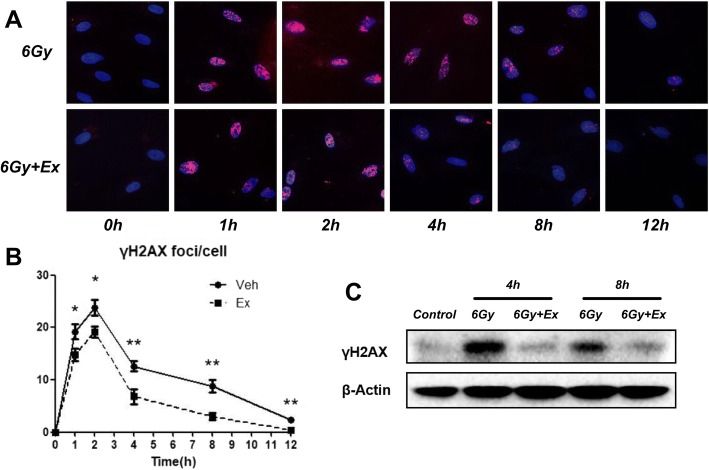
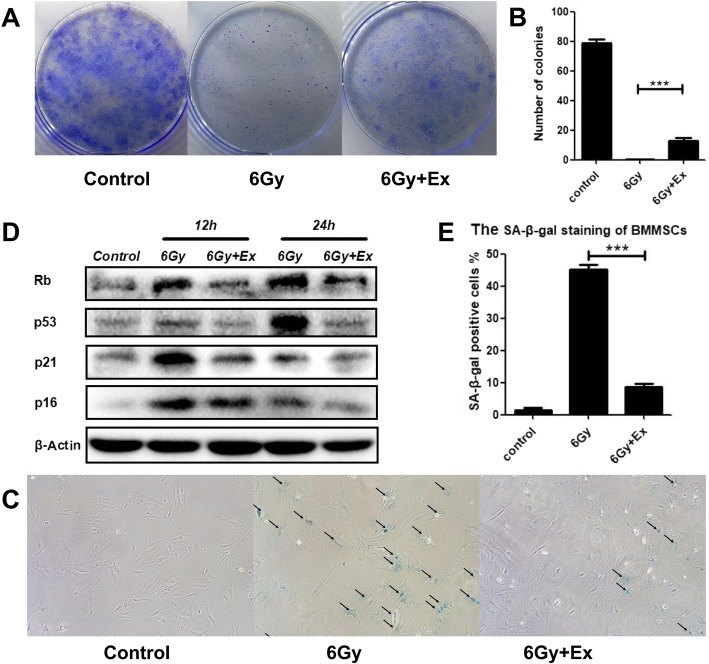
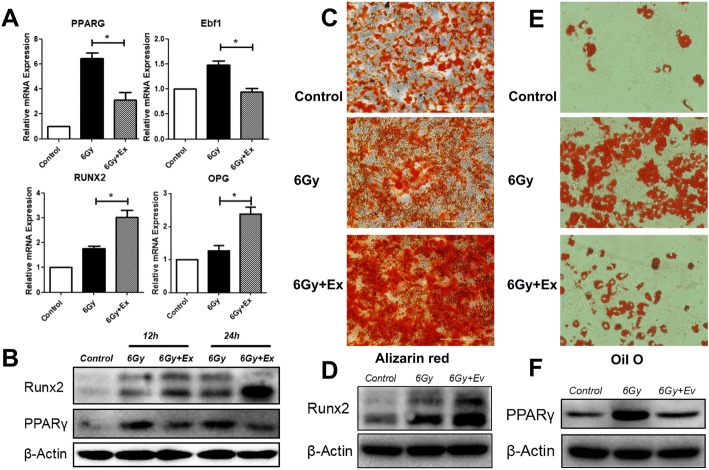
BM-MSC-derived exosomes can attenuate radiation-induced bone loss in a rat model that is similar to mesenchymal stem cell transplantation. Exosome-treated BM-MSCs exhibit reduced oxidative stress, accelerated DNA damage repair, and reduced proliferation inhibition and cell senescence-associate protein expression compared with BM-MSCs that exclusively received irradiation. Following irradiation, exosomes promote β-catenin expression in BM-MSCs and restore the balance between adipogenic and osteogenic differentiation.
Our findings indicate that BM-MSC-derived exosomes take effects by restoring the function of recipient BM-MSCs. Therefore, exosomes may represent a promising cell-free therapeutic approach for the treatment of radiation-induced bone loss.
癌症患者接受放疗时不可避免地会导致正常组织损伤,而骨骼是最常受损的组织之一。辐射诱导的骨髓间充质干细胞(BM-MSCs)损伤被认为是导致辐射性骨丢失的主要原因。外泌体在骨质疏松症的治疗中具有巨大的治疗潜力,但外泌体是否参与辐射性骨丢失尚未得到彻底阐明。本研究的主要目的是探讨 BM-MSC 来源的外泌体在恢复受者 BM-MSC 功能和缓解辐射性骨丢失中的作用。
在照射后立即将 BM-MSC 衍生的外泌体静脉注射到大鼠体内。28 天后,采集左侧胫骨进行 micro-CT 和组织形态计量学分析。测定外泌体对受者 BM-MSC 抗氧化能力、DNA 损伤修复、增殖和细胞衰老的影响。进行成骨和成脂分化实验,以检测外泌体对受者 BM-MSC 分化潜能的影响,并通过 qRT-PCR 和 Western blot 分析测定相关基因的表达。在组织学和细胞学水平检测β-连环蛋白的表达。
BM-MSC 衍生的外泌体可减轻类似间充质干细胞移植的大鼠模型中的辐射性骨丢失。与仅接受照射的 BM-MSCs 相比,外泌体处理的 BM-MSCs 表现出氧化应激减少、DNA 损伤修复加速以及增殖抑制和与细胞衰老相关的蛋白表达减少。照射后,外泌体促进 BM-MSCs 中β-连环蛋白的表达,并恢复成脂和成骨分化之间的平衡。
我们的研究结果表明,BM-MSC 衍生的外泌体通过恢复受者 BM-MSC 的功能发挥作用。因此,外泌体可能代表一种有前途的无细胞治疗方法,可用于治疗辐射性骨丢失。