Department of Neurobiology, Care Sciences and Society, Karolinska Institutet, Mandometer Clinic, Huddinge, Sweden.
BMJ Open. 2019 Jan 15;9(1):e024179. doi: 10.1136/bmjopen-2018-024179.
To report the outcomes of eating disorders treatment in Sweden in 2012-2016.
The number of patients treated and the number of patients not fulfilling an eating disorders diagnosis (remission) at 1 year of follow-up at the clinics listed in the National Quality Registry for Eating Disorders Treatment were analysed. The published outcomes at three clinics, which used survival analysis to estimate outcomes, were compared with their outcomes in the registry. Outcomes at the three biggest clinics were compared.
All eating disorders clinics.
All patients treated at eating disorders clinics.
Cognitive-behavioural therapy at most clinics and normalisation of eating behaviour at the three clinics with published outcomes.
Proportion of patients in remission.
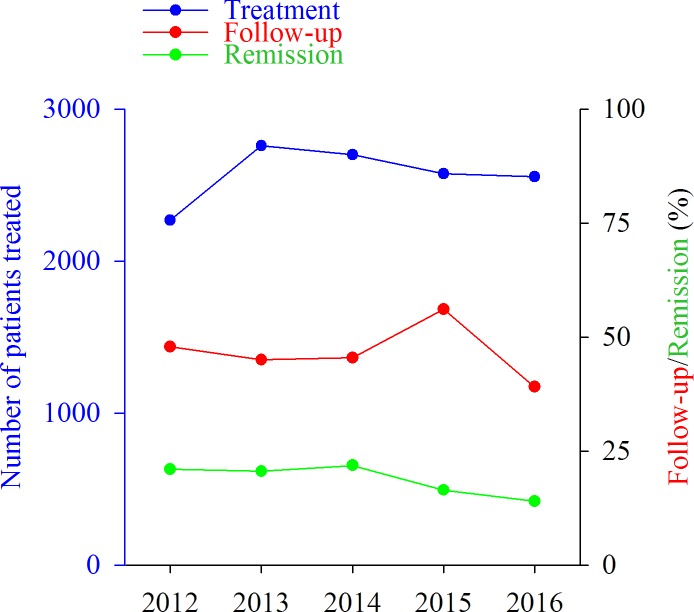
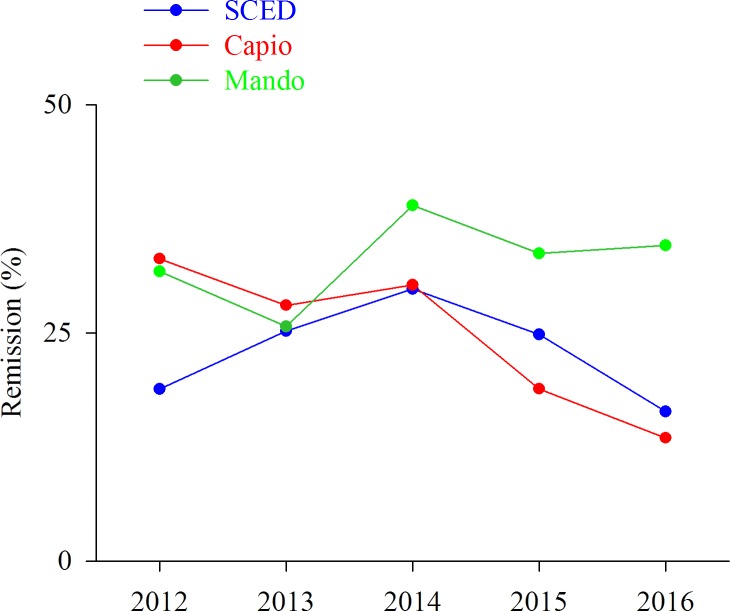
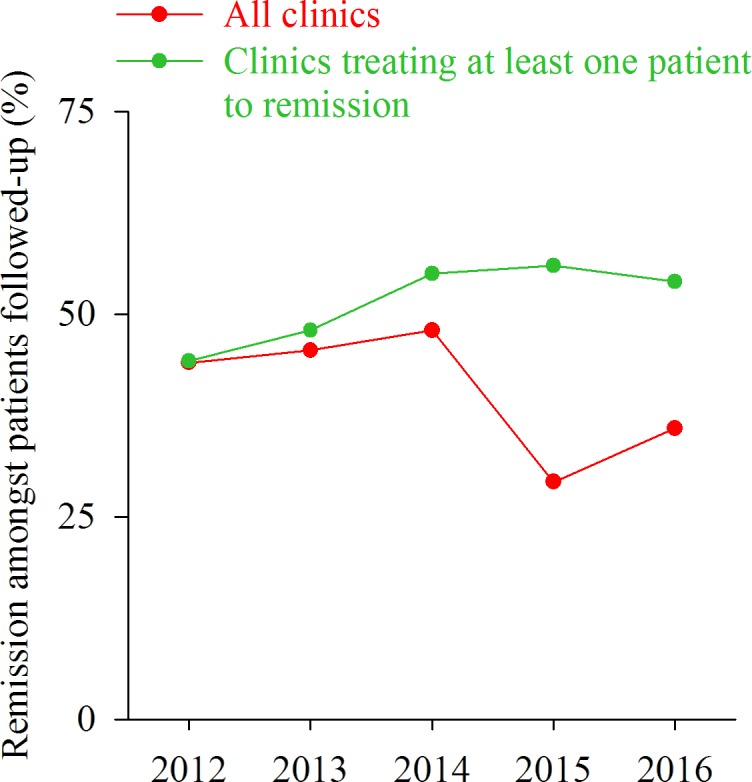
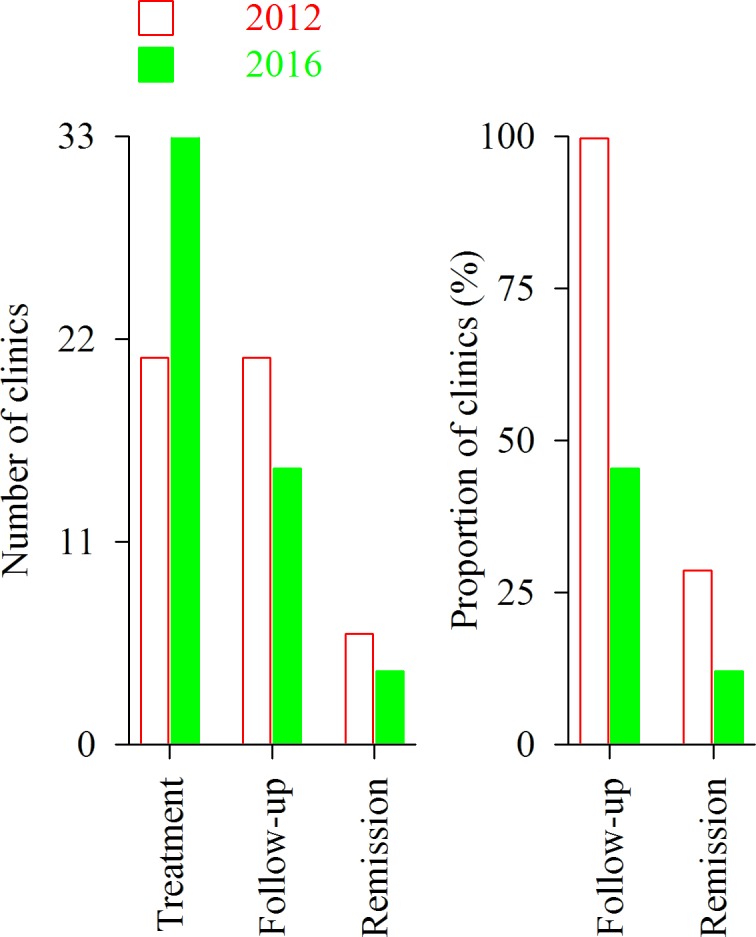
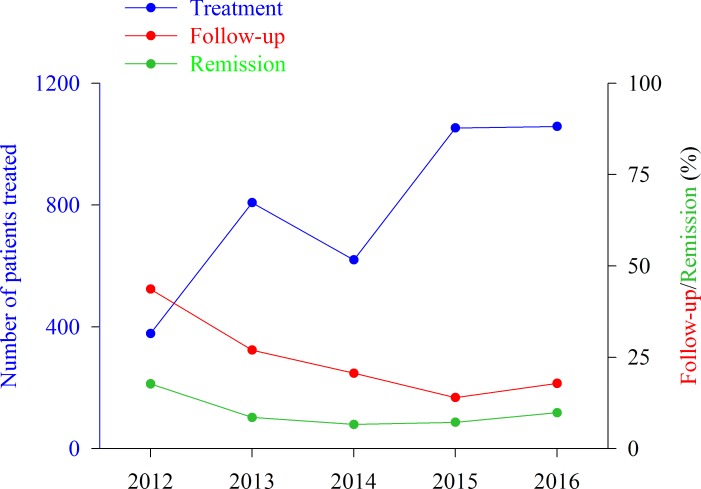
About 2600 patients were treated annually, fewer than half were followed up and remission rates decreased from 21% in 2014 to 14% in 2016. Outcomes, which differed among clinics and within clinics over time, have been publicly overestimated by excluding patients lost to follow-up. The published estimated rate of remission at three clinics that treated 1200 patients in 1993-2011 was 27%, 28% and 40% at 1 year of follow-up. The average rate of remission over the three last years at the biggest of these clinics was 36% but decreased from 29% and 30% to 16 and 14% at the two other of the biggest clinics.
With more than half the patients lost to follow-up and no data on relapse in the National Quality Registry, it is difficult to estimate the effects of eating disorders treatment in Sweden. Analysis of time to clinically significant events, including an extended period of follow-up, has improved the quality of the estimates at three clinics. Overestimation of remission rates has misled healthcare policies. The effect of eating disorders treatment has also been overestimated internationally.
报告 2012-2016 年瑞典进食障碍治疗的结果。
分析国家进食障碍治疗质量登记处列出的诊所中接受治疗的患者数量和 1 年随访时未达到进食障碍诊断标准(缓解)的患者数量。对使用生存分析来估计结果的三个诊所的已发表结果进行了比较,并与登记处的结果进行了比较。比较了三个最大的诊所的结果。
所有进食障碍诊所。
所有在进食障碍诊所接受治疗的患者。
大多数诊所采用认知行为疗法,三个有已发表结果的诊所采用饮食行为正常化。
缓解的患者比例。
每年约有 2600 名患者接受治疗,不到一半的患者接受随访,缓解率从 2014 年的 21%下降到 2016 年的 14%。在不同的诊所和同一诊所内,随着时间的推移,结果存在差异,排除了失访患者后,结果被高估。1993-2011 年治疗了 1200 名患者的三个诊所的已发表缓解估计率在 1 年随访时分别为 27%、28%和 40%。这些诊所中最大的三个诊所过去三年的平均缓解率为 36%,但在另外两个最大的诊所中,缓解率从 29%和 30%分别下降到 16%和 14%。
由于有一半以上的患者失访,且国家质量登记处没有关于复发的数据,因此很难估计瑞典进食障碍治疗的效果。对包括延长随访期在内的临床显著事件的时间分析,提高了三个诊所的估计质量。缓解率的高估误导了医疗保健政策。国际上对进食障碍治疗效果的估计也过高。