Department of Psychiatry and Health Behavior, Augusta University, Augusta, GA 30912, USA.
Department of Psychiatry, Weill Cornell Medical College, White Plains, NY, USA.
Neural Plast. 2018 Dec 13;2018:2019091. doi: 10.1155/2018/2019091. eCollection 2018.
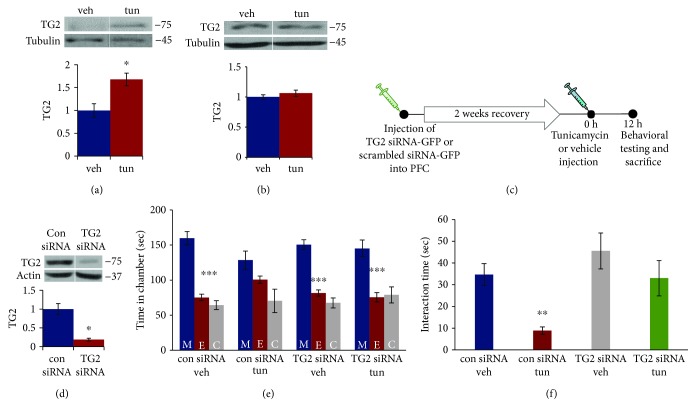
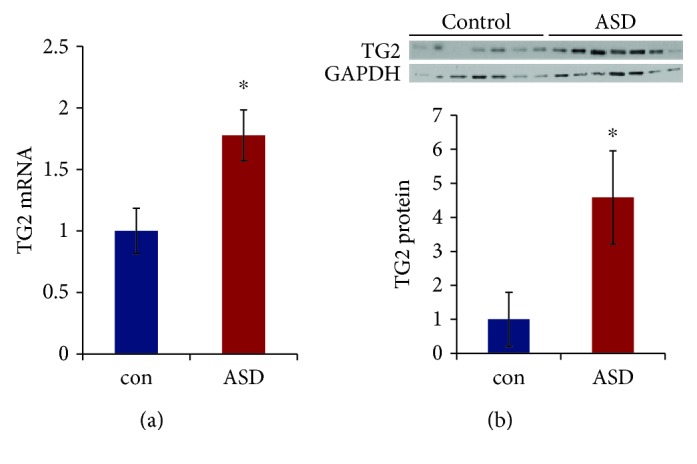
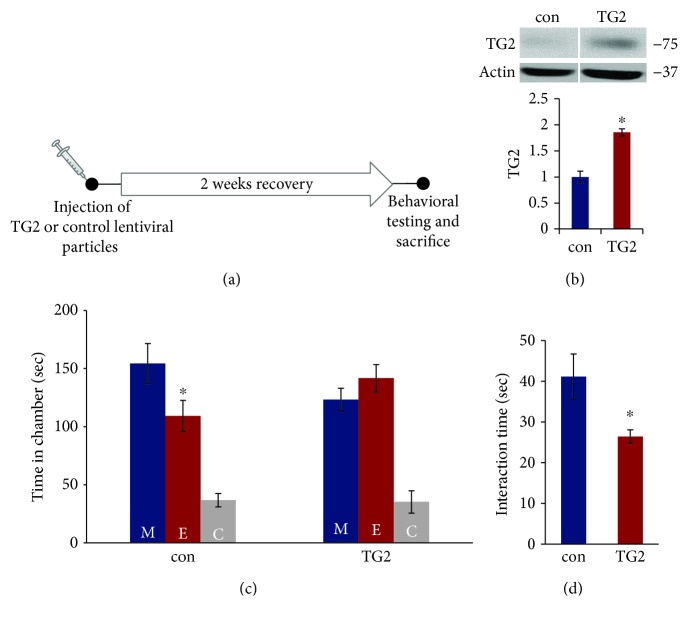
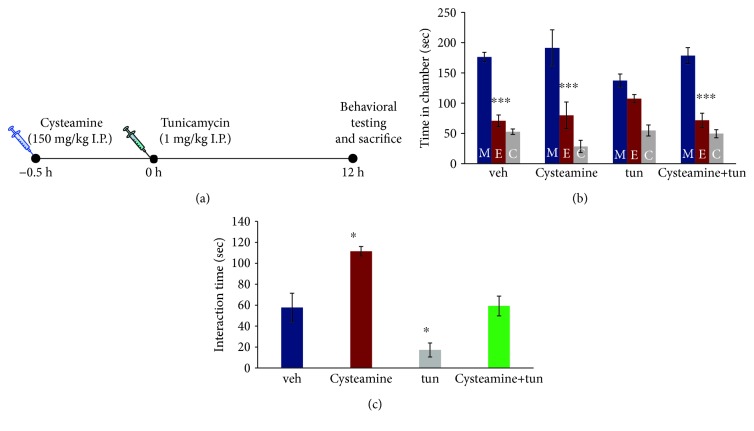
Impairments in social behavior are highly implicated in many neuropsychiatric disorders. Recent studies indicate a role for endoplasmic reticulum (ER) stress in altering social behavior, but the underlying mechanism is not known. In the present study, we examined the role of transglutaminase 2 (TG2), a calcium-dependent enzyme known to be induced following ER stress, in social behavior in mice. ER stress induced by tunicamycin administration increased TG2 protein levels in the mouse prefrontal cortex (PFC). PFC-specific inhibition of TG2 attenuated ER stress-induced deficits in social behavior. Conversely, overexpression of TG2 in the PFC resulted in social behavior impairments in mice. In addition, systemic administration of cysteamine, a TG2 inhibitor, attenuated social behavior deficits. Our preliminary findings using postmortem human brain samples found increases in TG2 mRNA and protein levels in the middle frontal gyrus of subjects with autism spectrum disorder. These findings in mice and human postmortem brain samples identify changes in TG2 activity in the possible dysregulation of social behavior.
社交行为障碍与许多神经精神疾病高度相关。最近的研究表明内质网(ER)应激在改变社交行为方面起作用,但具体机制尚不清楚。在本研究中,我们研究了转谷氨酰胺酶 2(TG2)在小鼠社交行为中的作用,TG2 是一种已知在 ER 应激后被诱导的钙依赖性酶。他莫昔芬给药诱导的 ER 应激增加了小鼠前额叶皮层(PFC)中的 TG2 蛋白水平。PFC 中 TG2 的特异性抑制减弱了 ER 应激引起的社交行为缺陷。相反,在 PFC 中过表达 TG2 会导致小鼠出现社交行为障碍。此外,全身性给予半胱胺,一种 TG2 抑制剂,可减轻社交行为缺陷。我们使用死后人类脑组织样本的初步研究结果发现,自闭症谱系障碍患者的中间额回 TG2 mRNA 和蛋白水平升高。这些在小鼠和人类死后脑组织样本中的发现表明 TG2 活性的变化可能与社交行为失调有关。