Villafuerte-Gutiérrez Paola, López Rubio Montserrat, Herrera Pilar, Arranz Eva
Department of Hematology, Hospital Universitario Príncipe de Asturias, Alcalá de Henares, Madrid, Spain.
Department of Hematology, Hospital Universitario Ramón y Cajal, Madrid, Spain.
Case Rep Hematol. 2018 Dec 6;2018:5724960. doi: 10.1155/2018/5724960. eCollection 2018.
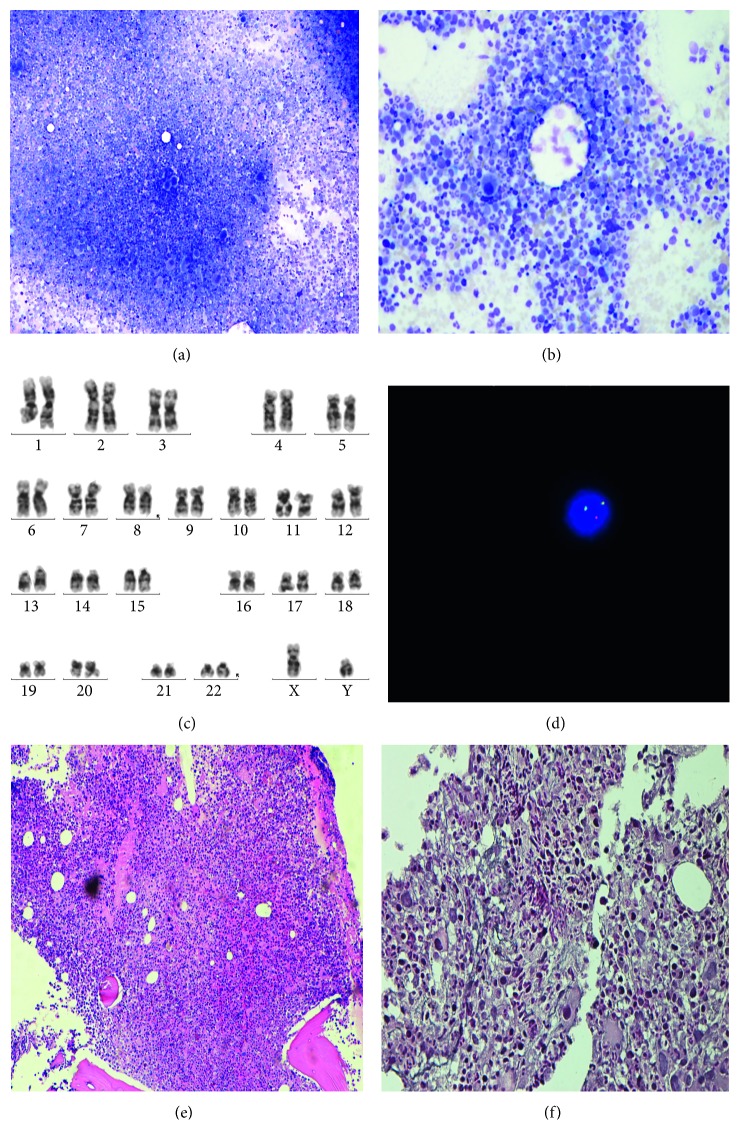
Hematopoietic myeloproliferative neoplasms with FGFR1 rearrangement result in the 8p11 myeloproliferative syndrome that in the current Word Health Organization classification is designated as "myeloid and lymphoid neoplasm with FGFR1 abnormalities." We report the case of a 66-year-old man who had clinical features that resembled chronic myeloid leukaemia (CML), but bone marrow cytogenetic and fluorescent in situ hybridization (FISH) studies showed t(8;22)(p11;q11) and BCR-FGFR1 fusion gene. He was initially managed with hydroxyurea, and given the aggressive nature of this disease, four months later, the patient underwent an allogeneic hematopoietic stem-cell transplantation (HSCT) from an HLA-haploidentical relative. Currently, HSCT may be the only therapeutic option for long-term survival at least until more efficacious tyrosine kinase inhibitors (TKIs) become available.
伴有FGFR1重排的造血性骨髓增殖性肿瘤会导致8p11骨髓增殖综合征,在当前世界卫生组织分类中被指定为“伴有FGFR1异常的髓系和淋巴系肿瘤”。我们报告了一例66岁男性病例,其临床特征类似于慢性髓性白血病(CML),但骨髓细胞遗传学和荧光原位杂交(FISH)研究显示存在t(8;22)(p11;q11)和BCR-FGFR1融合基因。他最初接受羟基脲治疗,鉴于该疾病的侵袭性,四个月后,患者接受了来自HLA单倍型相合亲属的异基因造血干细胞移植(HSCT)。目前,HSCT可能是实现长期生存的唯一治疗选择,至少在更有效的酪氨酸激酶抑制剂(TKIs)出现之前是这样。