Department of Internal Medicine, Seoul National University College of Medicine, Seoul, Korea.
Department of Internal Medicine, Seoul National University Bundang Hospital, Seongnam, Korea.
PLoS One. 2019 Jan 16;14(1):e0210703. doi: 10.1371/journal.pone.0210703. eCollection 2019.
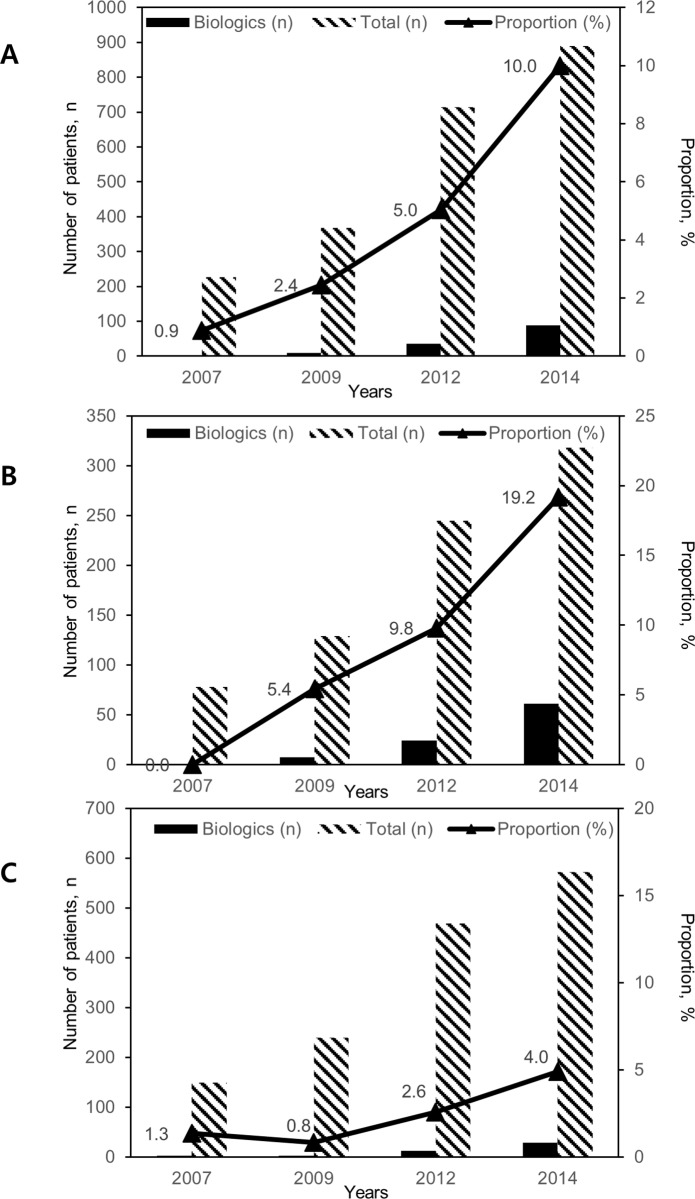
The use of biologics in inflammatory bowel disease (IBD) has increased recently. However, studies on whether the proportion of IBD patient visits to the emergency department (ED) has decreased are scarce. We investigated the trends in IBD-related ED visits and hospitalization rates.
Medical records of IBD-related visits to the ambulatory department (AD) and the ED of the Seoul National University Bundang Hospital in 2007, 2009, 2012, and 2014 were reviewed. Multiple-variable logistic regression analysis was used to identify significant risk factors for hospitalization.
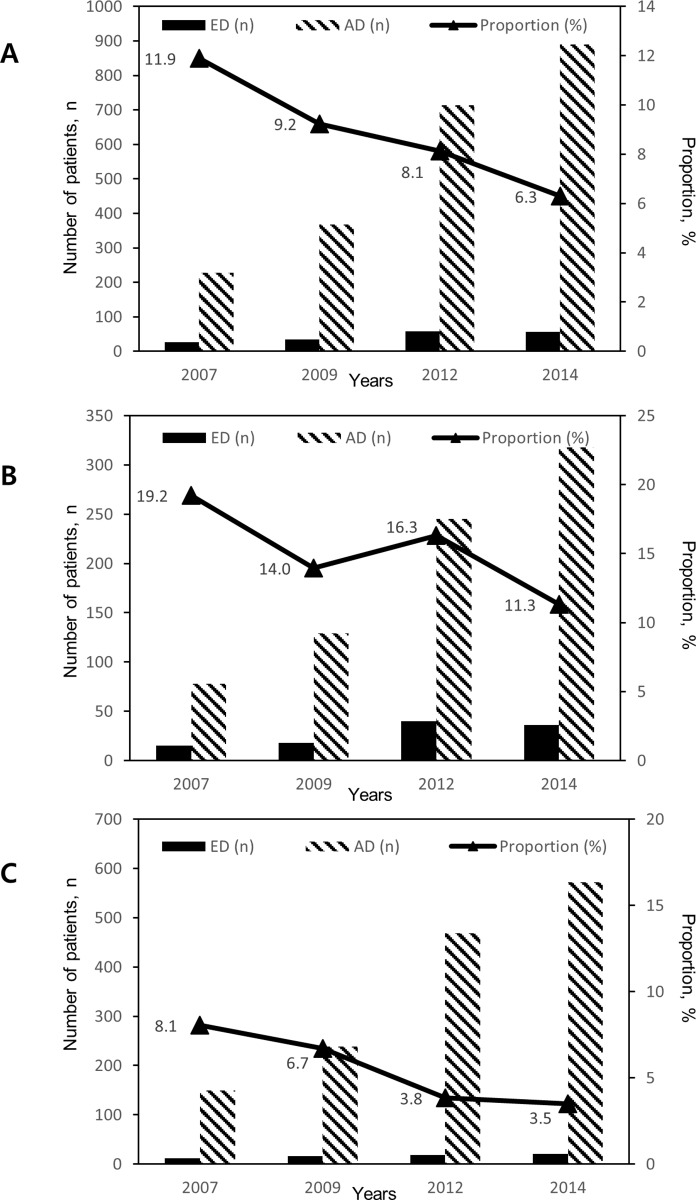
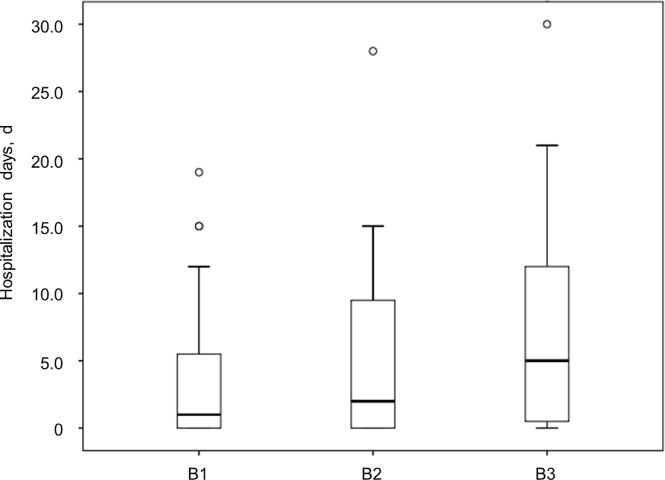
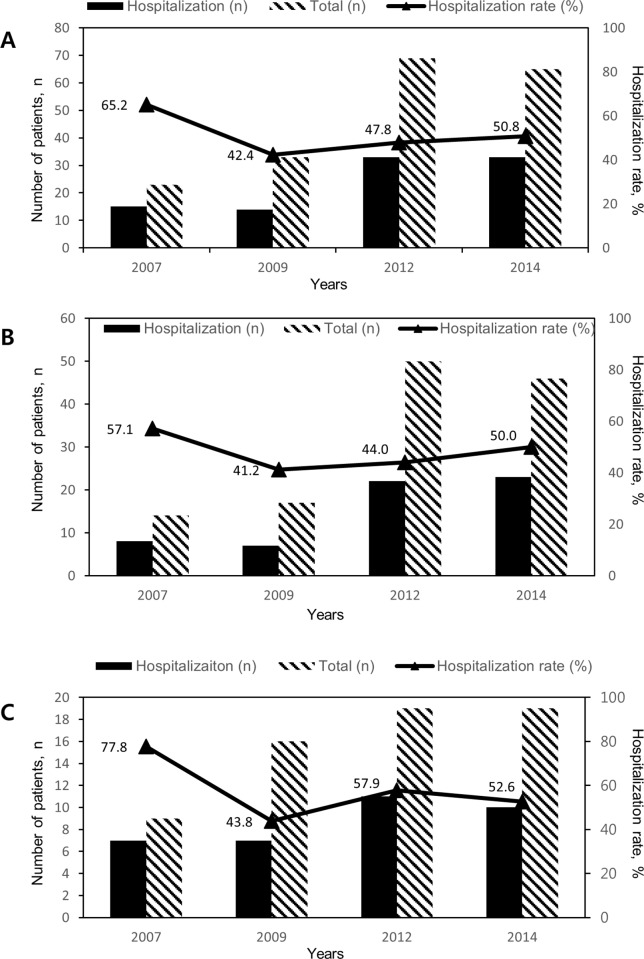
The proportion of IBD patients who visited ED was 12.3% in 2007, 9.7% in 2009, 8.3% in 2012, and 6.4% in 2014 (P = 0.002). The most common chief complaints were abdominal pain (66.9%) in Crohn's disease (CD) patients and hematochezia (36.5%) in ulcerative colitis (UC) patients. The hospitalization rate following ED visits was 47.2% in CD patients and 55.6% in UC patients (P = 0.100). Multiple-variable analysis showed that significant risk factors associated with hospitalization in CD were aggressive disease behavior (odds ratio[OR] 3.54, P = 0.017) and presence of steroid exposure (OR 2.35, P = 0.047). Elevated C-reactive protein (CRP) (>0.5 mg/dL) (OR 5.40, P = 0.016) was the only risk factor associated with hospitalization in UC.
The proportion of ED visits decreased from 2007 to 2014; there was no significant change in hospitalization rates. Disease behavior/presence of steroid exposure and elevated CRP were associated with hospitalization among CD and UC patients who visited the ED, respectively.
生物制剂在炎症性肠病(IBD)中的应用最近有所增加。然而,关于 IBD 患者就诊于急诊部(ED)的比例是否下降的研究却很少。我们调查了 IBD 相关 ED 就诊和住院率的趋势。
回顾了 2007 年、2009 年、2012 年和 2014 年在首尔国立大学盆唐医院的 IBD 相关门诊(AD)和 ED 就诊的病历。采用多变量逻辑回归分析确定住院的显著危险因素。
2007 年、2009 年、2012 年和 2014 年 ED 就诊的 IBD 患者比例分别为 12.3%、9.7%、8.3%和 6.4%(P = 0.002)。最常见的主要症状是克罗恩病(CD)患者的腹痛(66.9%)和溃疡性结肠炎(UC)患者的血便(36.5%)。ED 就诊后住院率在 CD 患者中为 47.2%,在 UC 患者中为 55.6%(P = 0.100)。多变量分析显示,与 CD 患者住院相关的显著危险因素是侵袭性疾病行为(比值比[OR]3.54,P = 0.017)和类固醇暴露(OR 2.35,P = 0.047)。C 反应蛋白(CRP)升高(>0.5 mg/dL)(OR 5.40,P = 0.016)是与 UC 患者住院相关的唯一危险因素。
从 2007 年到 2014 年,ED 就诊的比例有所下降;住院率没有显著变化。疾病行为/类固醇暴露的存在和 CRP 升高分别与 CD 和 UC 患者 ED 就诊的住院有关。