
肌营养不良蛋白缺失通过诱导型一氧化氮合酶引起的氧化应激导致人类多能干细胞基因组不稳定。
Dystrophin Deficiency Leads to Genomic Instability in Human Pluripotent Stem Cells via NO Synthase-Induced Oxidative Stress.
机构信息
Department of Biology, Faculty of Medicine, Masaryk University, 625 00 Brno, Czech Republic.
International Clinical Research Center ICRC, St. Anne's University Hospital Brno, 602 00 Brno, Czech Republic.
出版信息
Cells. 2019 Jan 15;8(1):53. doi: 10.3390/cells8010053.
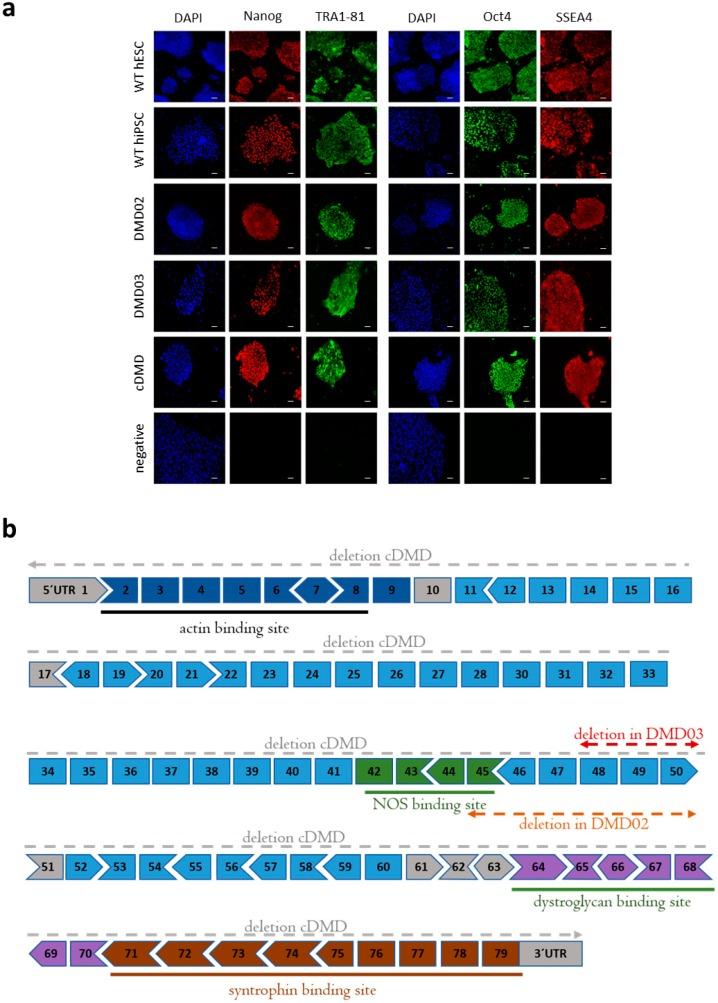
Recent data on Duchenne muscular dystrophy (DMD) show myocyte progenitor's involvement in the disease pathology often leading to the DMD patient's death. The molecular mechanism underlying stem cell impairment in DMD has not been described. We created dystrophin-deficient human pluripotent stem cell (hPSC) lines by reprogramming cells from two DMD patients, and also by introducing dystrophin mutation into human embryonic stem cells via CRISPR/Cas9. While dystrophin is expressed in healthy hPSC, its deficiency in DMD hPSC lines induces the release of reactive oxygen species (ROS) through dysregulated activity of all three isoforms of nitric oxide synthase (further abrev. as, NOS). NOS-induced ROS release leads to DNA damage and genomic instability in DMD hPSC. We were able to reduce both the ROS release as well as DNA damage to the level of wild-type hPSC by inhibiting NOS activity.
最近关于杜氏肌营养不良症(DMD)的数据表明,肌细胞祖细胞参与疾病病理过程,这通常导致 DMD 患者死亡。DMD 中干细胞损伤的分子机制尚未被描述。我们通过重新编程来自两位 DMD 患者的细胞,以及通过 CRISPR/Cas9 将肌营养不良蛋白突变引入人类胚胎干细胞,创建了肌营养不良蛋白缺陷的人类多能干细胞(hPSC)系。虽然肌营养不良蛋白在健康的 hPSC 中表达,但在 DMD hPSC 系中,其缺失通过三种同工型一氧化氮合酶(进一步缩写为 NOS)的失调活性诱导活性氧(ROS)的释放。NOS 诱导的 ROS 释放导致 DMD hPSC 中的 DNA 损伤和基因组不稳定性。我们能够通过抑制 NOS 活性将 ROS 释放和 DNA 损伤降低到野生型 hPSC 的水平。



 Zotero 插件