Dumont Nicolas A, Wang Yu Xin, von Maltzahn Julia, Pasut Alessandra, Bentzinger C Florian, Brun Caroline E, Rudnicki Michael A
Sprott Center for Stem Cell Research, Ottawa Hospital Research Institute, Regenerative Medicine Program, Ottawa, Ontario, Canada.
Department of Cellular and Molecular Medicine, Faculty of Medicine, University of Ottawa, Ottawa, Ontario, Canada.
Nat Med. 2015 Dec;21(12):1455-63. doi: 10.1038/nm.3990. Epub 2015 Nov 16.
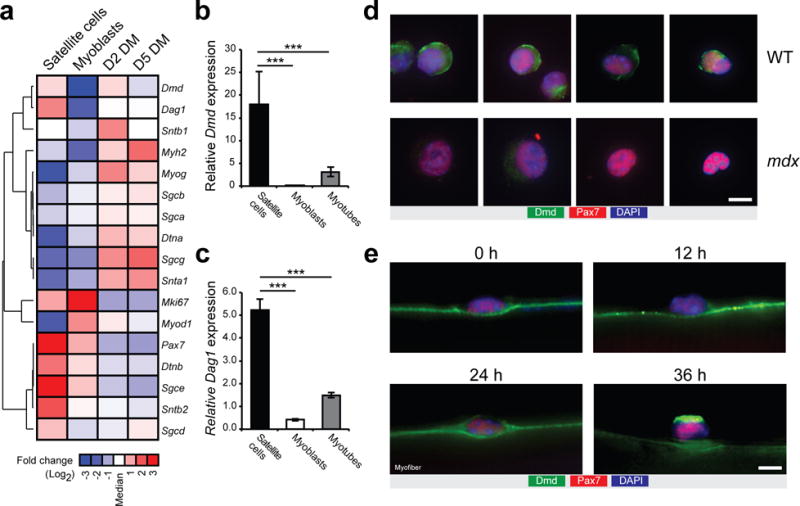
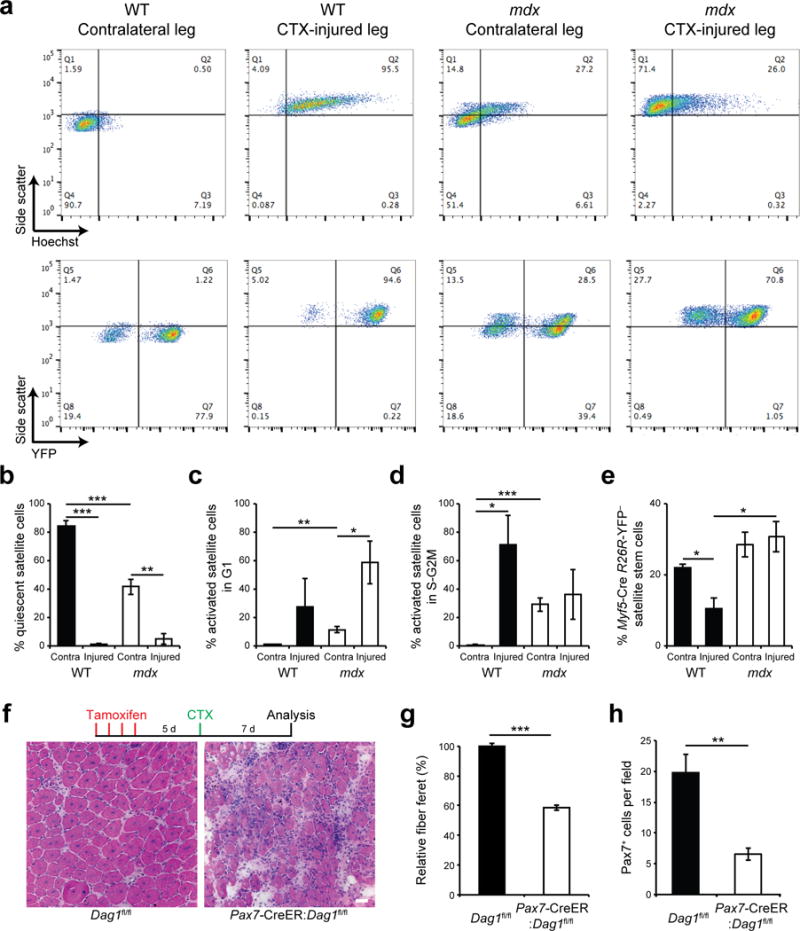
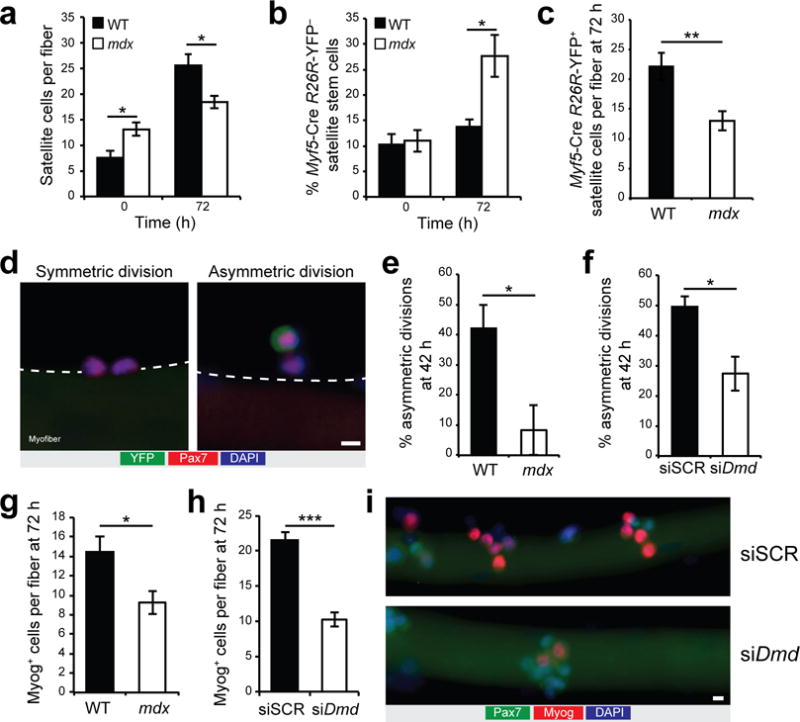
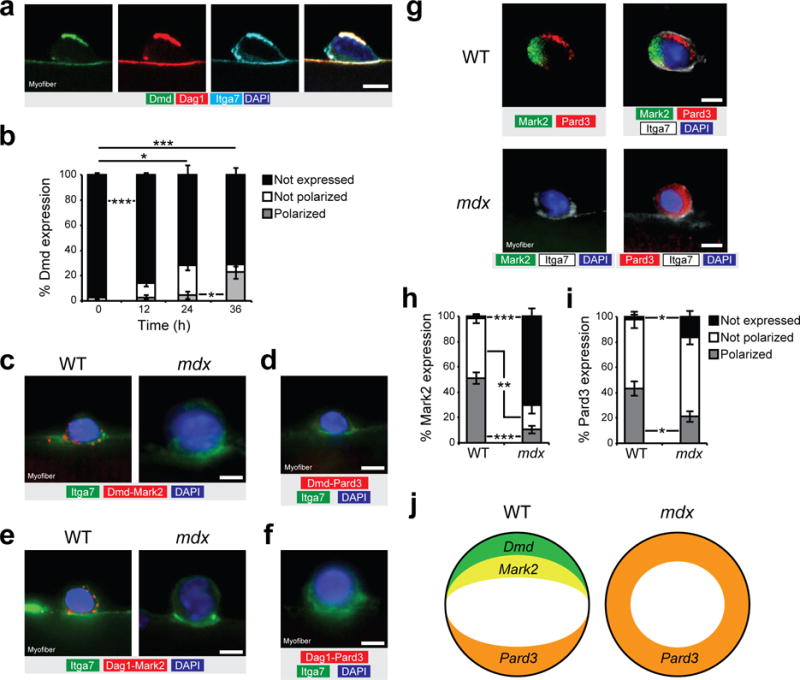
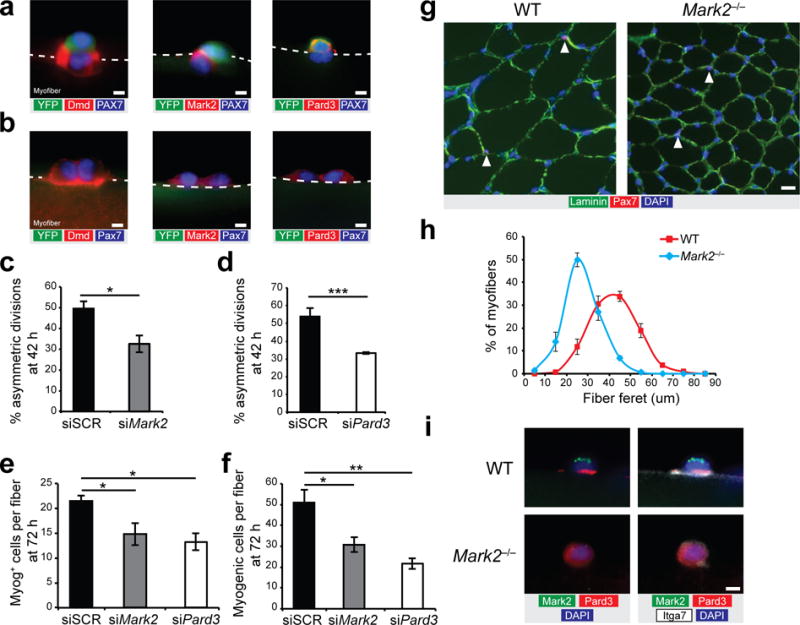
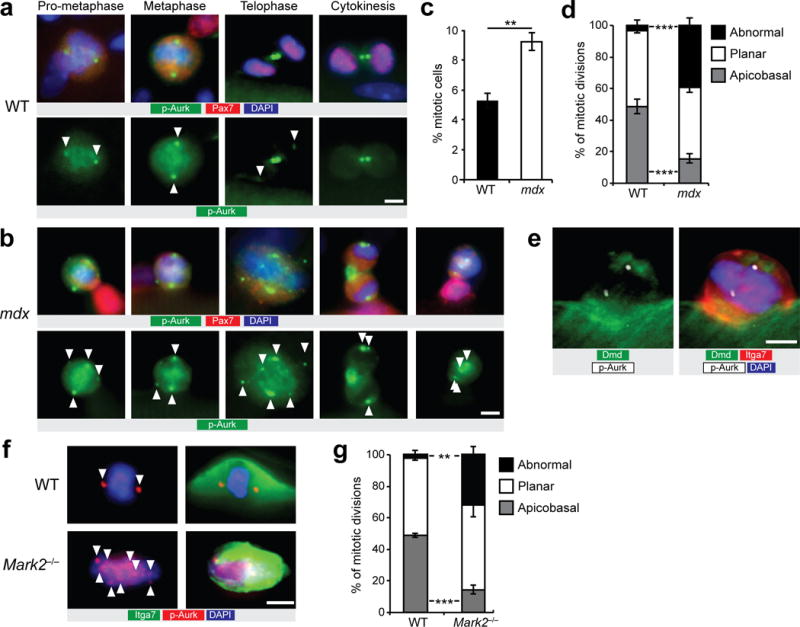
Dystrophin is expressed in differentiated myofibers, in which it is required for sarcolemmal integrity, and loss-of-function mutations in the gene that encodes it result in Duchenne muscular dystrophy (DMD), a disease characterized by progressive and severe skeletal muscle degeneration. Here we found that dystrophin is also highly expressed in activated muscle stem cells (also known as satellite cells), in which it associates with the serine-threonine kinase Mark2 (also known as Par1b), an important regulator of cell polarity. In the absence of dystrophin, expression of Mark2 protein is downregulated, resulting in the inability to localize the cell polarity regulator Pard3 to the opposite side of the cell. Consequently, the number of asymmetric divisions is strikingly reduced in dystrophin-deficient satellite cells, which also display a loss of polarity, abnormal division patterns (including centrosome amplification), impaired mitotic spindle orientation and prolonged cell divisions. Altogether, these intrinsic defects strongly reduce the generation of myogenic progenitors that are needed for proper muscle regeneration. Therefore, we conclude that dystrophin has an essential role in the regulation of satellite cell polarity and asymmetric division. Our findings indicate that muscle wasting in DMD not only is caused by myofiber fragility, but also is exacerbated by impaired regeneration owing to intrinsic satellite cell dysfunction.
肌营养不良蛋白在分化的肌纤维中表达,它对肌膜完整性至关重要,编码该蛋白的基因发生功能丧失突变会导致杜兴氏肌营养不良症(DMD),这是一种以进行性和严重骨骼肌退化为特征的疾病。我们发现,肌营养不良蛋白在活化的肌肉干细胞(也称为卫星细胞)中也高度表达,在这些细胞中它与丝氨酸 - 苏氨酸激酶Mark2(也称为Par1b)结合,Mark2是细胞极性的重要调节因子。在缺乏肌营养不良蛋白的情况下,Mark2蛋白的表达下调,导致细胞极性调节因子Pard3无法定位到细胞的另一侧。因此,肌营养不良蛋白缺陷的卫星细胞中不对称分裂的数量显著减少,这些细胞还表现出极性丧失、异常分裂模式(包括中心体扩增)、有丝分裂纺锤体定向受损和细胞分裂延长。总之,这些内在缺陷极大地减少了正常肌肉再生所需的肌源性祖细胞的产生。因此,我们得出结论,肌营养不良蛋白在调节卫星细胞极性和不对称分裂中起重要作用。我们的研究结果表明,DMD中的肌肉萎缩不仅是由肌纤维脆弱引起的,还因卫星细胞内在功能障碍导致的再生受损而加剧。