Debta Fakir Mohan, Debta Priyanka, Bhuyan Ruchi, Swain Santosh Kumar, Sahu Mahesh Chandra, Siddhartha Saswati
Department of Oral Medicine and Radiology, SCB Dental College and Hospital, Cuttack, Odisha, India.
Department of Oral Pathology and Microbiology, IDS, Siksha 'O' Anusandhan, Deemed to be University, Bhubaneswar, Odisha, India.
J Oral Maxillofac Pathol. 2018 Sep-Dec;22(3):451. doi: 10.4103/jomfp.JOMFP_216_17.
Twins are similar in many ways owing to the genetical and environmental factors. However, still, there are certain things that are not similar among them, and this is the challenge for personal identification among the twins.
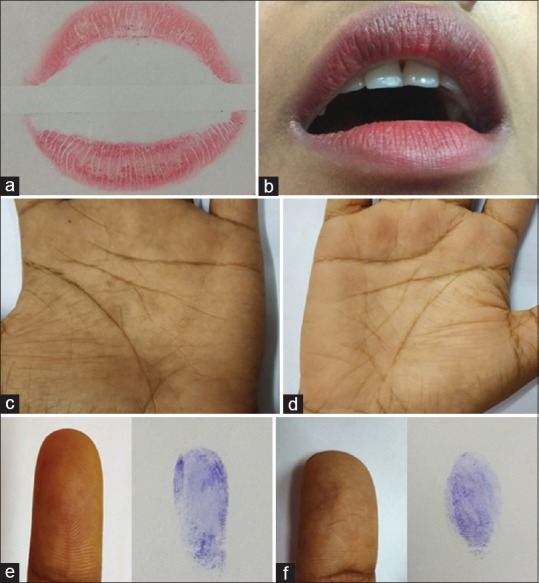
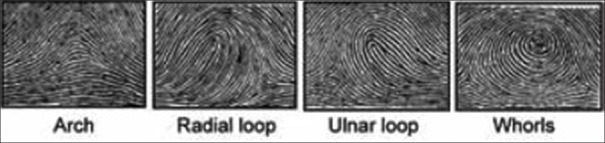
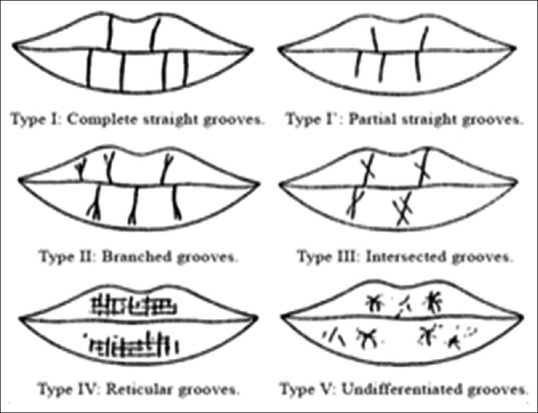
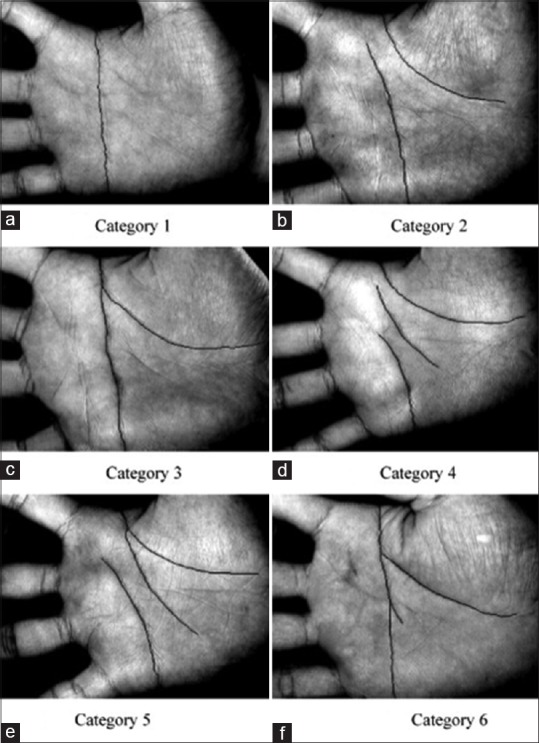
Our present study aimed to know and assess the similarities and differences present between the monozygotic (identical) and dizygotic (fraternal) twins in relation to lip prints, palm prints, fingerprints and blood group and to evaluate their heritability among parents and their offspring.
The study group comprised 30 twins and their parents - 15 identical and 15 nonidentical twins. The age of twins ranged from 15 years to 40 years. Lip print, palm print, fingerprint and blood group were statistically analyzed.
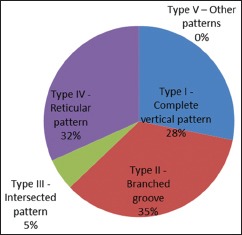
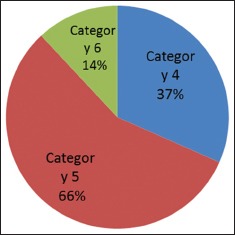
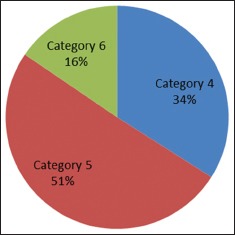
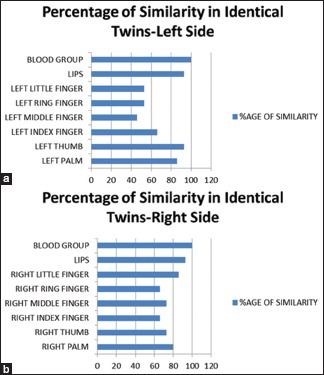
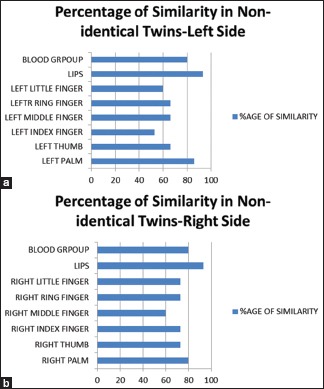
All the data were subjected to statistical analysis. The identical twins showed more percentage of similarities in comparison to the non identical twins. The inheritance pattern was significant for twins in case of their lip prints while palm prints and finger prints showed no such significance in inheritance pattern whereas there was significant association seen in case of blood groups of identical twins and their parents.
Lip prints, palm prints, fingerprints and blood groups are the important parameters in forensic science for individual identification. Many studies have been done till now in individual but very few studies done in twin population. To the best of knowledge, ours is the first study of its kind with multiple parameters and its heritability in twins. We have observed that heritability in twins with relation to lip print was statistically significant and all the parameters can be used independently to identify the twins.
由于遗传和环境因素,双胞胎在许多方面相似。然而,他们之间仍存在某些不同之处,这给双胞胎的个人识别带来了挑战。
我们目前的研究旨在了解和评估同卵(单卵)双胞胎和异卵(双卵)双胞胎在唇纹、掌纹、指纹和血型方面的异同,并评估这些特征在父母及其后代中的遗传性。
研究组包括30对双胞胎及其父母——15对同卵双胞胎和15对异卵双胞胎。双胞胎的年龄在15岁至40岁之间。对唇纹、掌纹、指纹和血型进行了统计分析。
所有数据均进行了统计分析。与异卵双胞胎相比,同卵双胞胎表现出更高的相似百分比。在唇纹方面,双胞胎的遗传模式具有显著性,而掌纹和指纹在遗传模式上没有显示出这种显著性,而异卵双胞胎及其父母的血型之间存在显著关联。
唇纹、掌纹、指纹和血型是法医学中用于个体识别的重要参数。到目前为止,已经有许多关于个体的研究,但针对双胞胎群体的研究很少。据我们所知,我们的研究是同类研究中首次涉及多个参数及其在双胞胎中的遗传性。我们观察到,双胞胎唇纹的遗传性在统计学上具有显著性,并且所有参数都可以独立用于识别双胞胎。