Ma Gang, Bi Shuting
Department of Cardiac Surgery, Center Hospital of Zibo, Zibo, Shandong 255036, P.R. China.
Exp Ther Med. 2019 Jan;17(1):332-336. doi: 10.3892/etm.2018.6923. Epub 2018 Nov 2.
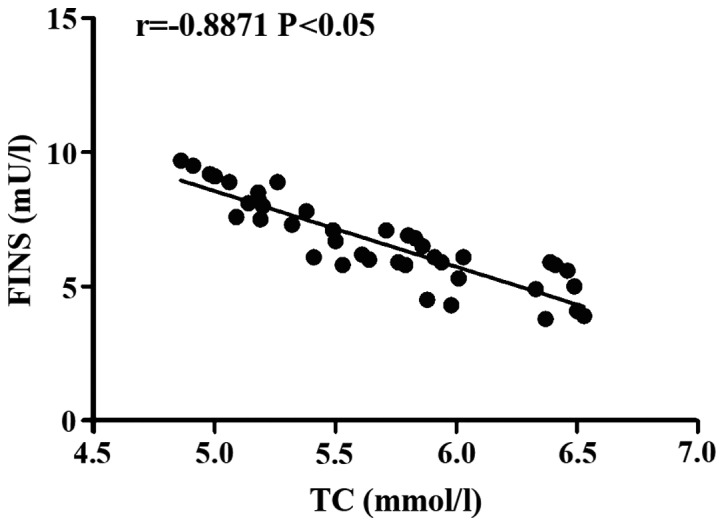
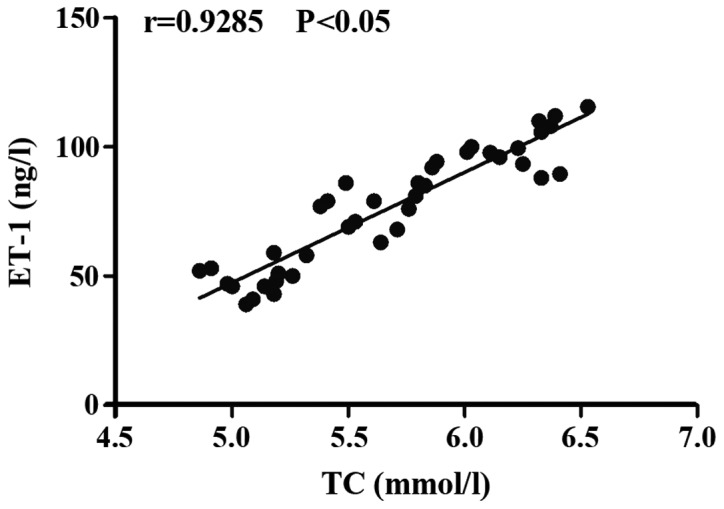
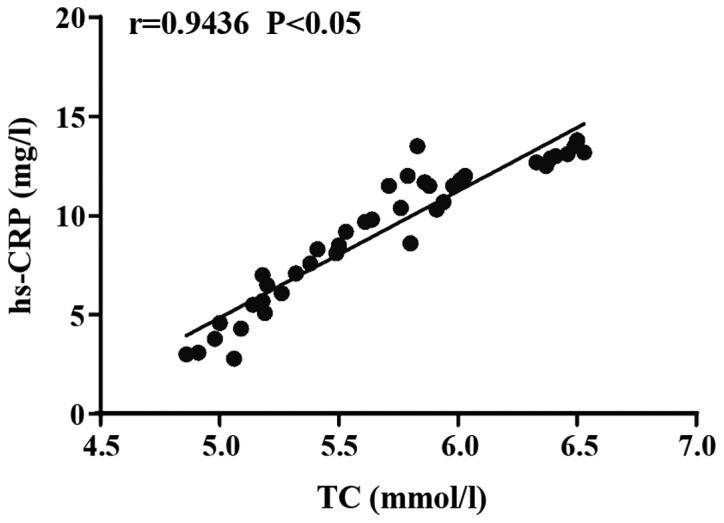
Effects of rosuvastatin on vascular endothelial functions and inflammatory factors of patients with type 2 diabetes mellitus and coronary heart disease were investigated. Eighty patients with type 2 diabetes mellitus and coronary heart disease, who were admitted and treated in Center hospital of Zibo from January 2016 to January 2017, were selected and divided into observation group (n=40) and control group (n=40) by the random number table; symptomatic and supporting therapy, including use of metformin, captopril, asprin and levocarnitine, was used in control group while rosuvastatin was adopted in observation group in addition to the symptomatic and supporting therapy. Patients in both groups were treated for a treatment cycle, namely, 3 consecutive months. After that, indexes related to blood lipid, diabetes mellitus and vascular endothelial activity, as well as variations in inflammation-associated cytokines, before and after intervention were compared; the correlation of changes in total cholesterol (TC) with those in fasting insulin (FINS), high-sensitivity C-reactive protein (hs-CRP) and endothelin-1 (ET-1), respectively, was analyzed. Among the blood lipid indexes of the patients, the levels of TC, triglyceride (TG) and low-density lipoprotein cholesterol (LDL-C) after intervention were significantly lower than those before intervention (P<0.05), while the post-intervention level of high-density lipoprotein cholesterol (HDL-C) was higher than that before intervention (P<0.05). Compared with those before intervention, the level of FINS after intervention was remarkably higher (P<0.05), while the homeostasis model assessment of insulin resistance (HOMA-IR) level after intervention was significantly lower (P<0.05). After intervention, the levels of hs-CRP and tumor necrosis factor-α (TNF-α) in the patients were obviously decreased compared with those before intervention (P<0.05). Compared with that before intervention, the ET-1 level was decreased (P<0.05), while the nitric oxide (NO) level was elevated after intervention (P<0.05). The TC level was negatively correlated with FINS level (P<0.05) but positively correlated with the levels of hs-CRP (P<0.05) and ET-1 (P<0.05). For patients with type 2 diabetes mellitus and coronary heart disease, treatment with rosuvastatin can effectively lower the level of blood lipid and regulate insulin functions; moreover, potent decrease in blood lipid level has great significance in improving the vascular endothelial functions and reducing inflammatory response levels.
研究了瑞舒伐他汀对2型糖尿病合并冠心病患者血管内皮功能及炎症因子的影响。选取2016年1月至2017年1月在淄博市中心医院收治的80例2型糖尿病合并冠心病患者,采用随机数字表法分为观察组(n = 40)和对照组(n = 40);对照组采用对症及支持治疗,包括使用二甲双胍、卡托普利、阿司匹林和左卡尼汀,观察组在对症及支持治疗基础上加用瑞舒伐他汀。两组患者均治疗1个疗程,即连续3个月。之后,比较干预前后血脂、糖尿病及血管内皮活性相关指标,以及炎症相关细胞因子的变化;分析总胆固醇(TC)变化分别与空腹胰岛素(FINS)、高敏C反应蛋白(hs-CRP)和内皮素-1(ET-1)变化的相关性。患者血脂指标中,干预后TC、甘油三酯(TG)和低密度脂蛋白胆固醇(LDL-C)水平均显著低于干预前(P<0.05),而干预后高密度脂蛋白胆固醇(HDL-C)水平高于干预前(P<0.05)。与干预前相比,干预后FINS水平显著升高(P<0.05),而胰岛素抵抗稳态模型评估(HOMA-IR)水平显著降低(P<0.05)。干预后,患者hs-CRP和肿瘤坏死因子-α(TNF-α)水平较干预前明显降低(P<0.05)。与干预前相比,ET-1水平降低(P<0.05),而干预后一氧化氮(NO)水平升高(P<0.05)。TC水平与FINS水平呈负相关(P<0.05),但与hs-CRP水平(P<0.05)和ET-1水平(P<0.05)呈正相关。对于2型糖尿病合并冠心病患者,瑞舒伐他汀治疗可有效降低血脂水平并调节胰岛素功能;此外,血脂水平的有效降低对改善血管内皮功能和降低炎症反应水平具有重要意义。