Department of Endocrinology, Anhui Provincial Hospital, The First Affiliated Hospital of USTC, Division of Life Science and Medicine, University of Science and Technology of China, Hefei 230001, China.
J Diabetes Res. 2018 Aug 16;2018:7329861. doi: 10.1155/2018/7329861. eCollection 2018.
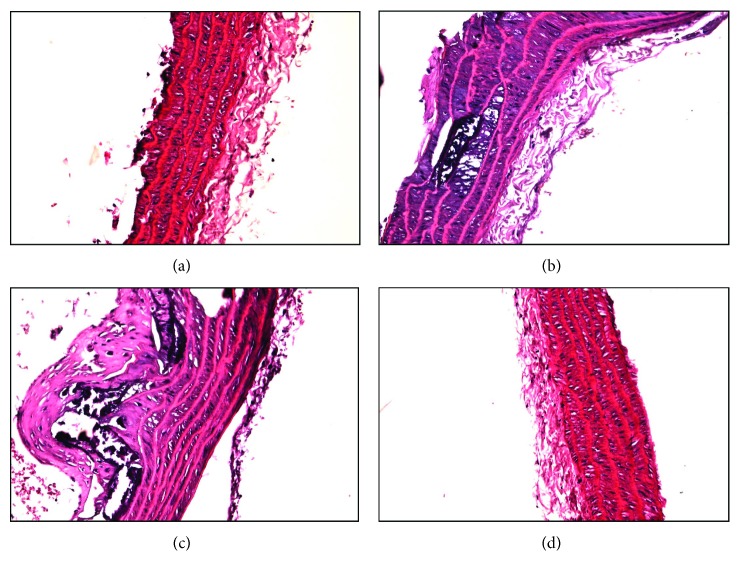
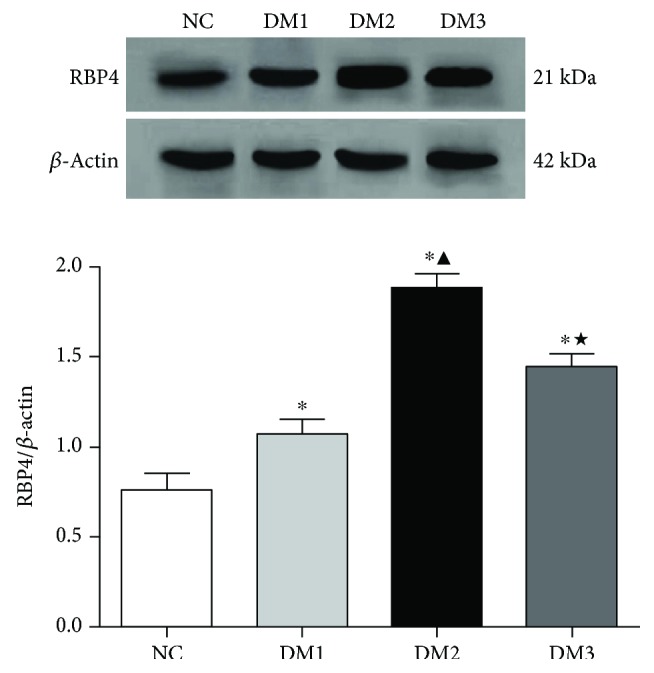
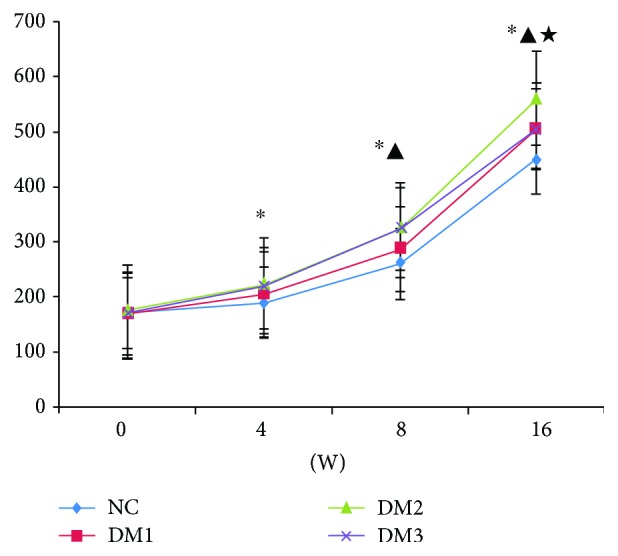
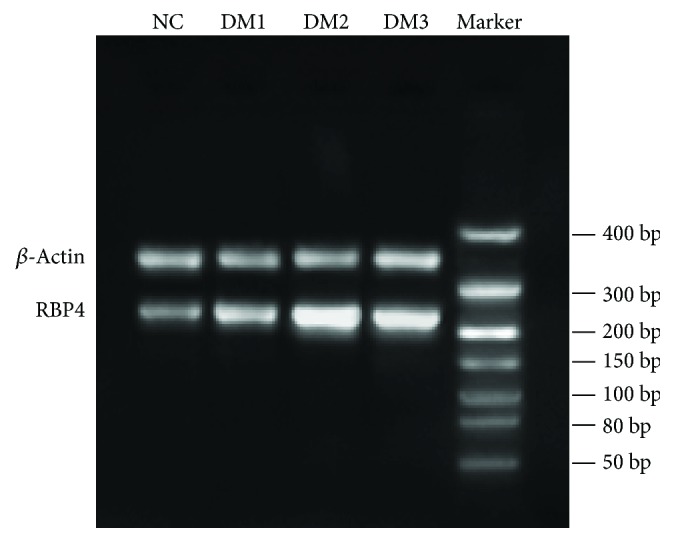
The purposes of this study were to evaluate the expression of retinol-binding protein 4 (RBP4) in diabetic rats with atherosclerosis and to investigate the role of vitamin D intervention. Male Wistar rats were randomly divided into 4 groups, including the control group (NC), the diabetic rats (DM1), the untreated diabetic atherosclerosis rats (DM2), and the vitamin D-treated diabetic atherosclerosis rats (DM3). The levels of serum and adipose RBP4, fasting insulin (FINS), fasting plasma glucose (FPG), total cholesterol (TC), high-density lipoprotein cholesterol (HDL-c), triglycerides (TG), low-density lipoprotein cholesterol (LDL-c), 25-hydroxyvitamin D [25(OH)D], C-reactive protein (CRP), and systolic blood pressure (SBP) were measured. Homeostasis model assessment of insulin resistance (HOMA-IR), homeostasis model assessment -cell function index (HOMA-), and atherogenic indexes (AI) were calculated. Compared with group NC, the levels of RBP4, TG, LDL-c, FPG, FINS, CRP, AI1, AI2, SBP, and HOMA-IR increased, while the levels of HDL-c, 25(OH)D, and HOMA- decreased in groups DM1 and DM2. After 8 weeks of vitamin D supplementation in group DM3, the levels of 25(OH)D and HOMA- increased and the levels of LDL-c, TC, HOMA-IR, FINS, CRP, RBP4, AI1, AI2, and SBP decreased significantly when compared with group DM2 ( < 0.05); Pearson analysis showed that serum RBP4 was positively correlated with TG, FINS, HOMA-IR, SBP, CRP, and AI and negatively correlated with 25(OH)D. In addition, multivariable logistic regression analysis showed that serum RBP4, SBP, and HDL-c were predictors for the presence of diabetic atherosclerosis. These findings suggested that RBP4 could involve in the improvement of diabetic atherosclerosis; vitamin D had the ability to decrease the level of RBP4 and eventually played an important role in preventing atherosclerosis in diabetes.
本研究旨在评估视黄醇结合蛋白 4(RBP4)在糖尿病伴动脉粥样硬化大鼠中的表达,并探讨维生素 D 干预的作用。雄性 Wistar 大鼠随机分为 4 组,包括对照组(NC)、糖尿病大鼠组(DM1)、未经治疗的糖尿病动脉粥样硬化大鼠组(DM2)和维生素 D 治疗的糖尿病动脉粥样硬化大鼠组(DM3)。测量血清和脂肪组织 RBP4、空腹胰岛素(FINS)、空腹血糖(FPG)、总胆固醇(TC)、高密度脂蛋白胆固醇(HDL-c)、甘油三酯(TG)、低密度脂蛋白胆固醇(LDL-c)、25-羟维生素 D [25(OH)D]、C 反应蛋白(CRP)和收缩压(SBP)的水平。计算胰岛素抵抗的稳态模型评估(HOMA-IR)、β细胞功能指数的稳态模型评估(HOMA-β)和动脉粥样硬化指数(AI)。与 NC 组相比,DM1 和 DM2 组 RBP4、TG、LDL-c、FPG、FINS、CRP、AI1、AI2、SBP 和 HOMA-IR 水平升高,而 HDL-c、25(OH)D 和 HOMA-β水平降低。在 DM3 组补充维生素 D 8 周后,与 DM2 组相比,25(OH)D 和 HOMA-β水平升高,LDL-c、TC、HOMA-IR、FINS、CRP、RBP4、AI1、AI2、SBP 水平显著降低(<0.05);Pearson 分析显示,血清 RBP4 与 TG、FINS、HOMA-IR、SBP、CRP 和 AI 呈正相关,与 25(OH)D 呈负相关。此外,多元逻辑回归分析显示,血清 RBP4、SBP 和 HDL-c 是糖尿病伴动脉粥样硬化发生的预测因子。这些发现表明,RBP4 可能参与改善糖尿病性动脉粥样硬化;维生素 D 具有降低 RBP4 水平的能力,最终在预防糖尿病性动脉粥样硬化中发挥重要作用。