The Brooke Laboratory, Clinical and Experimental Sciences, Faculty of Medicine, University of Southampton, Southampton, United Kingdom.
Department of Civil, Environmental, Aerospace, Materials Engineering (DICAM), University of Palermo, Palermo, Italy.
PLoS One. 2019 Jan 17;14(1):e0210830. doi: 10.1371/journal.pone.0210830. eCollection 2019.
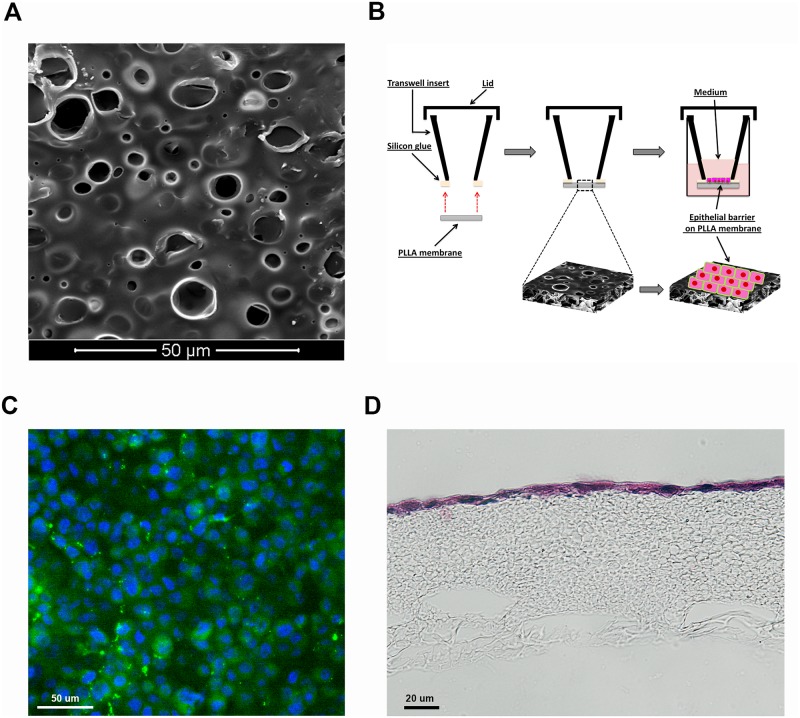
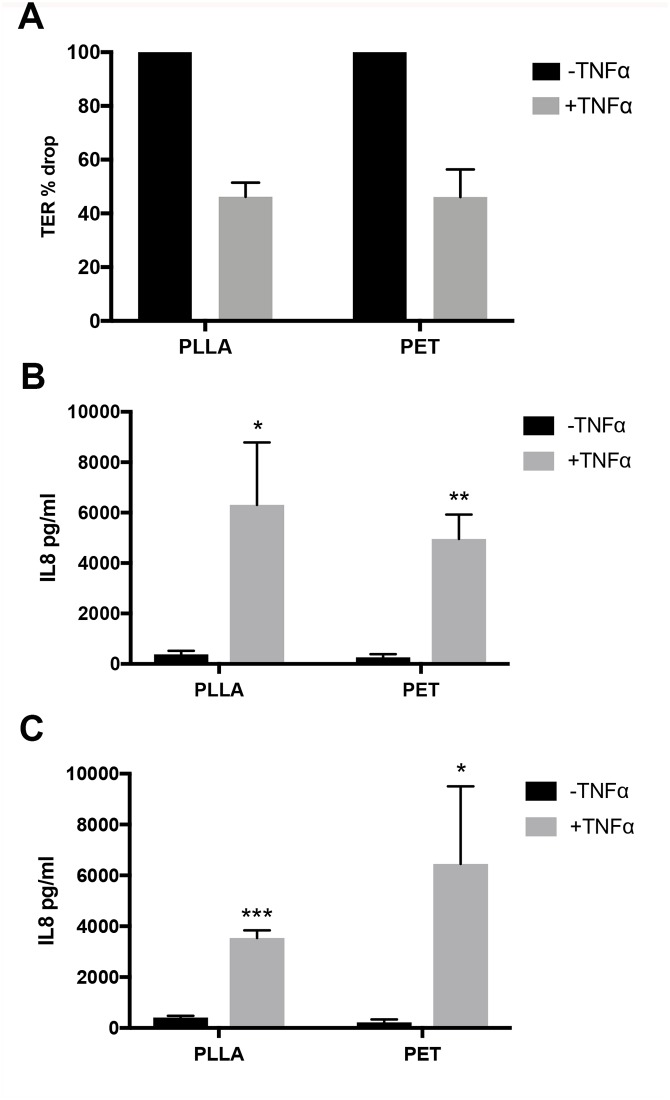
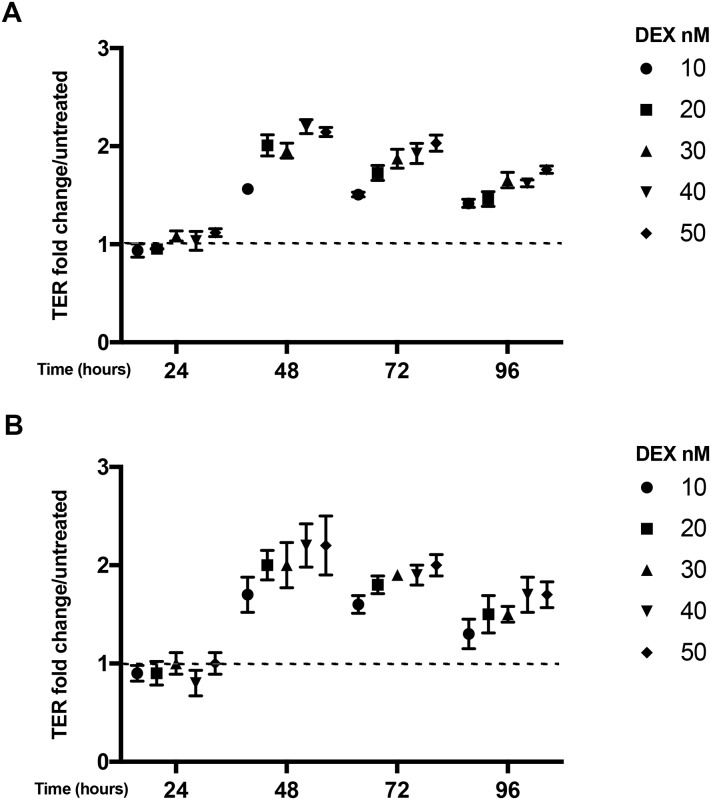
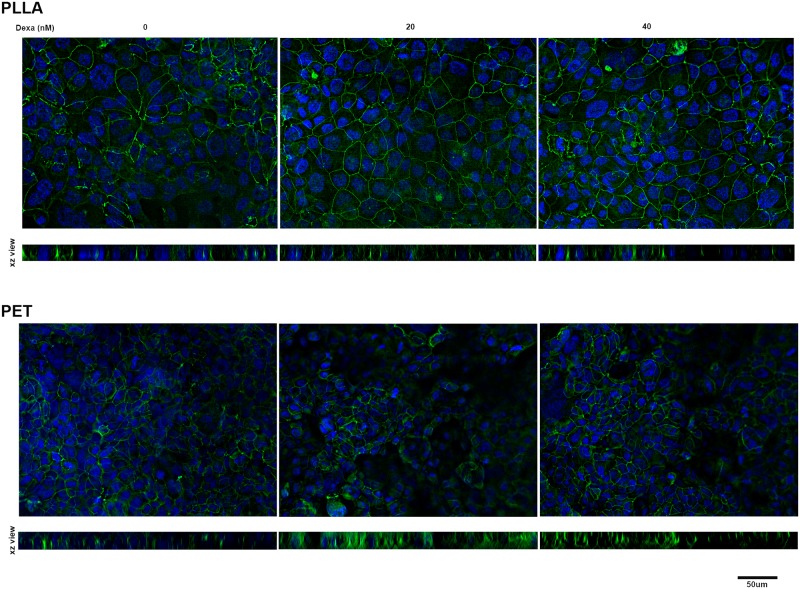
Development of biocompatible and functional scaffolds for tissue engineering is a major challenge, especially for development of polarised epithelia that are critical structures in tissue homeostasis. Different in vitro models of the lung epithelial barrier have been characterized using non-degradable polyethylene terephthalate membranes which limits their uses for tissue engineering. Although poly-L-lactic acid (PLLA) membranes are biodegradable, those prepared via conventional Diffusion Induced Phase Separation (DIPS) lack open-porous geometry and show limited permeability compromising their use for epithelial barrier studies. Here we used PLLA membranes prepared via a modification of the standard DIPS protocol to control the membrane surface morphology and permeability. These were bonded to cell culture inserts for use in barrier function studies. Pulmonary epithelial cells (H441) readily attached to the PLLA membranes and formed a confluent cell layer within two days. This was accompanied by a significant increase in trans-epithelial electrical resistance and correlated with the formation of tight junctions and vectorial cytokine secretion in response to TNFα. Our data suggest that a structurally polarized and functional epithelial barrier can be established on PLLA membranes produced via a non-standard DIPS protocol. Therefore, PLLA membranes have potential utility in lung tissue engineering applications requiring bio-absorbable membranes.
用于组织工程的生物相容性和功能性支架的开发是一个主要挑战,特别是对于极性上皮的开发,因为极性上皮是组织稳态的关键结构。已经使用不可生物降解的聚对苯二甲酸乙二醇酯膜对肺上皮屏障的不同体外模型进行了表征,这限制了它们在组织工程中的用途。尽管聚 L-乳酸(PLLA)膜是可生物降解的,但通过常规的扩散诱导相分离(DIPS)制备的那些膜缺乏开放多孔的几何形状,并且渗透性有限,这限制了它们在上皮屏障研究中的使用。在这里,我们使用通过修改标准 DIPS 协议制备的 PLLA 膜来控制膜表面形态和渗透性。将这些膜与细胞培养插入物结合使用,用于屏障功能研究。肺上皮细胞(H441)很容易附着在 PLLA 膜上,并在两天内形成一个连续的细胞层。这伴随着跨上皮电阻的显著增加,并与紧密连接的形成以及对 TNFα 的矢量细胞因子分泌相关。我们的数据表明,可以在通过非标准 DIPS 协议制备的 PLLA 膜上建立结构极化和功能性上皮屏障。因此,PLLA 膜在需要生物可吸收膜的肺组织工程应用中具有潜在的用途。