Loxham Matthew, Davies Donna E
Clinical and Experimental Sciences and the Southampton NIHR Respiratory Biomedical Research Unit, University of Southampton Faculty of Medicine, Sir Henry Wellcome Laboratories, University Hospital Southampton, Southampton, United Kingdom.
Clinical and Experimental Sciences and the Southampton NIHR Respiratory Biomedical Research Unit, University of Southampton Faculty of Medicine, Sir Henry Wellcome Laboratories, University Hospital Southampton, Southampton, United Kingdom.
J Allergy Clin Immunol. 2017 Jun;139(6):1736-1751. doi: 10.1016/j.jaci.2017.04.005.
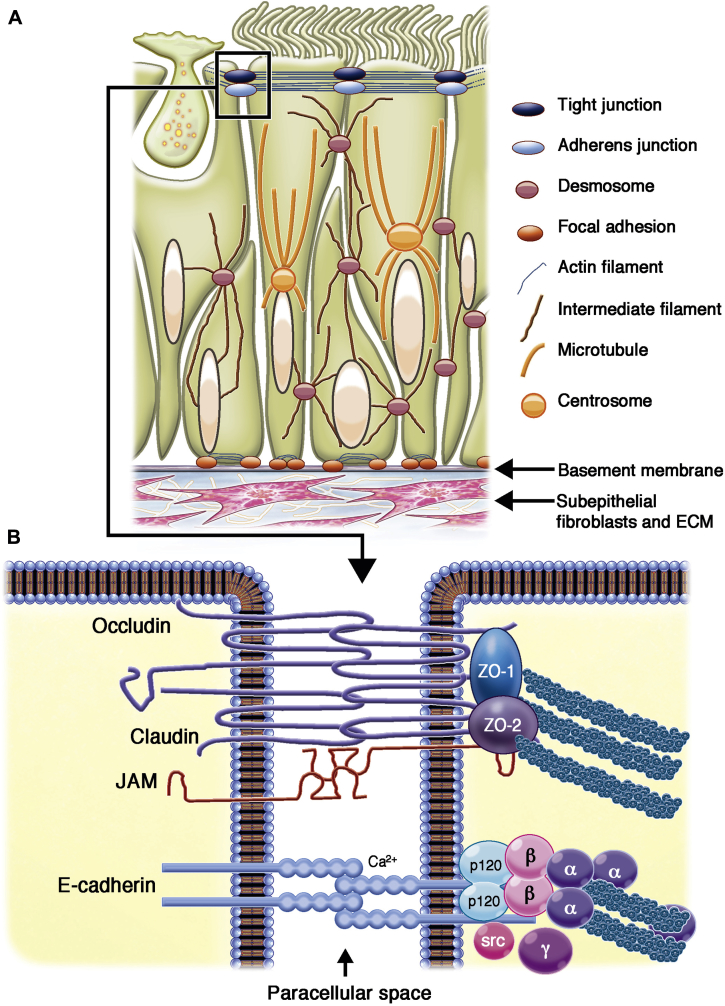
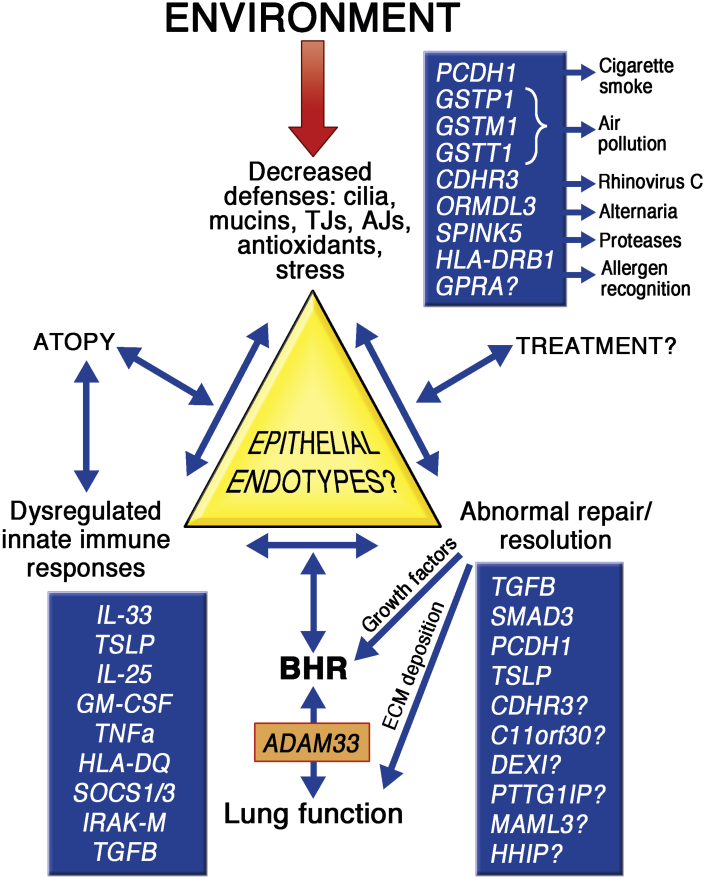
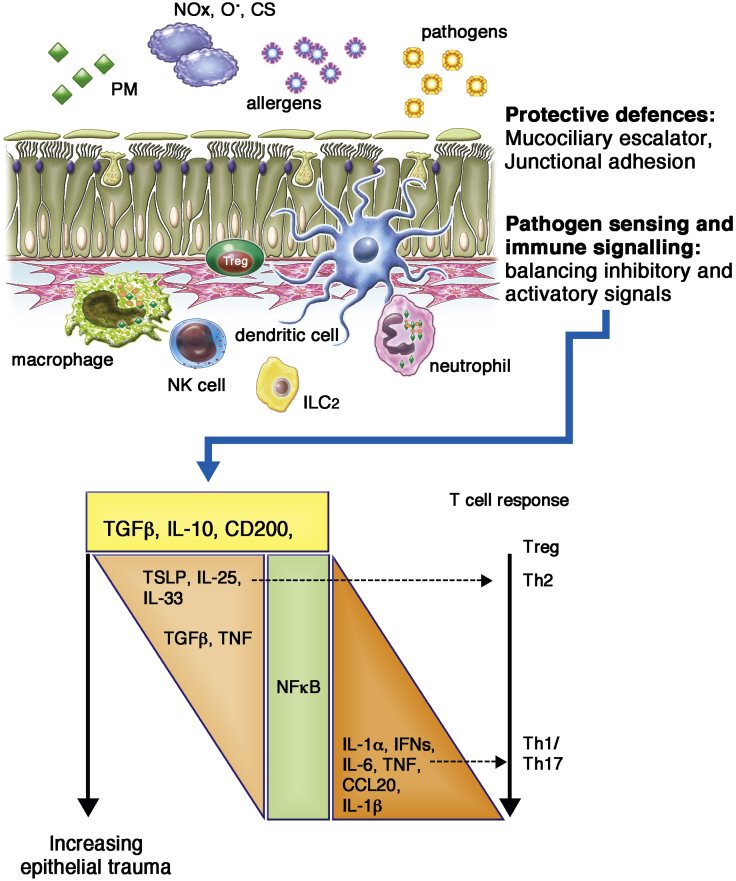
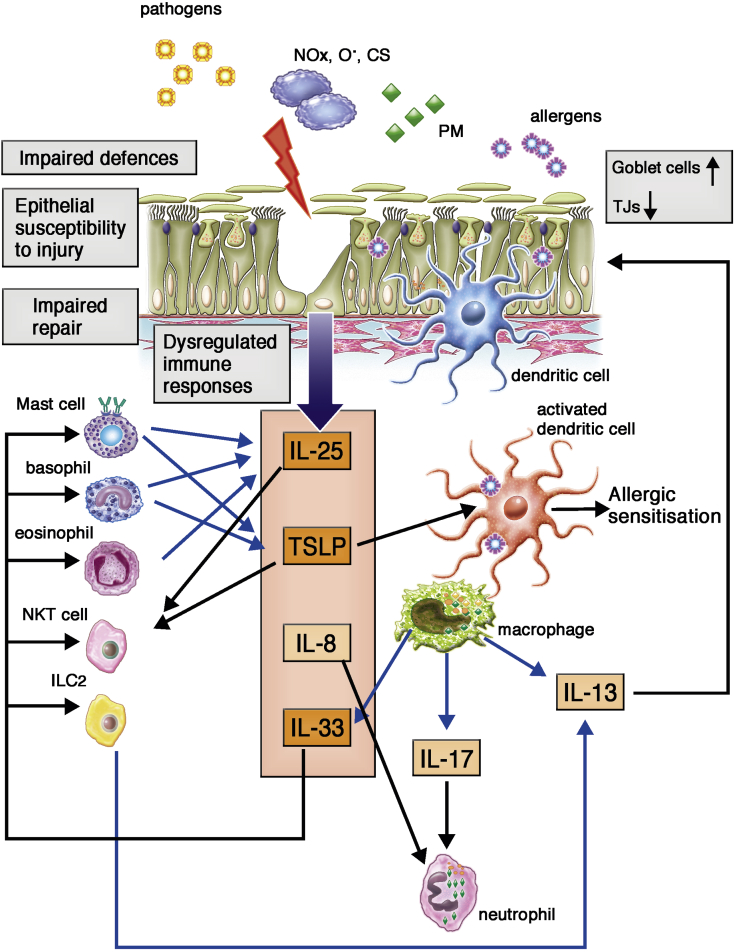
The bronchial epithelium is continuously exposed to a multitude of noxious challenges in inhaled air. Cellular contact with most damaging agents is reduced by the action of the mucociliary apparatus and by formation of a physical barrier that controls passage of ions and macromolecules. In conjunction with these defensive barrier functions, immunomodulatory cross-talk between the bronchial epithelium and tissue-resident immune cells controls the tissue microenvironment and barrier homeostasis. This is achieved by expression of an array of sensors that detect a wide variety of viral, bacterial, and nonmicrobial (toxins and irritants) agents, resulting in production of many different soluble and cell-surface molecules that signal to cells of the immune system. The ability of the bronchial epithelium to control the balance of inhibitory and activating signals is essential for orchestrating appropriate inflammatory and immune responses and for temporally modulating these responses to limit tissue injury and control the resolution of inflammation during tissue repair. In asthmatic patients abnormalities in many aspects of epithelial barrier function have been identified. We postulate that such abnormalities play a causal role in immune dysregulation in the airways by translating gene-environment interactions that underpin disease pathogenesis and exacerbation.
支气管上皮持续暴露于吸入空气中的多种有害刺激物。通过黏液纤毛装置的作用以及形成控制离子和大分子通过的物理屏障,可减少细胞与大多数损伤因子的接触。与这些防御屏障功能相结合,支气管上皮与组织驻留免疫细胞之间的免疫调节相互作用控制着组织微环境和屏障稳态。这是通过一系列传感器的表达来实现的,这些传感器可检测多种病毒、细菌和非微生物(毒素和刺激物)因子,从而产生许多不同的可溶性和细胞表面分子,向免疫系统的细胞发出信号。支气管上皮控制抑制性和激活性信号平衡的能力对于协调适当的炎症和免疫反应以及在时间上调节这些反应以限制组织损伤并控制组织修复过程中的炎症消退至关重要。在哮喘患者中,已发现上皮屏障功能在许多方面存在异常。我们推测,这些异常通过转化基因-环境相互作用在气道免疫失调中起因果作用,而这种相互作用是疾病发病机制和病情加重的基础。