Loizzo Monica Rosa, Sicari Vincenzo, Tundis Rosa, Leporini Mariarosaria, Falco Tiziana, Calabrò Vincenza
Department of Pharmacy, Health Science and Nutrition, University of Calabria, Via Pietro Bucci, 87036 Arcavacata di Rende (CS), Italy.
Department of Agricultural Science, Mediterranean University of Reggio Calabria, Via Graziella, Feo di Vito, 89123 Reggio Calabria, Italy.
Antioxidants (Basel). 2019 Jan 16;8(1):23. doi: 10.3390/antiox8010023.
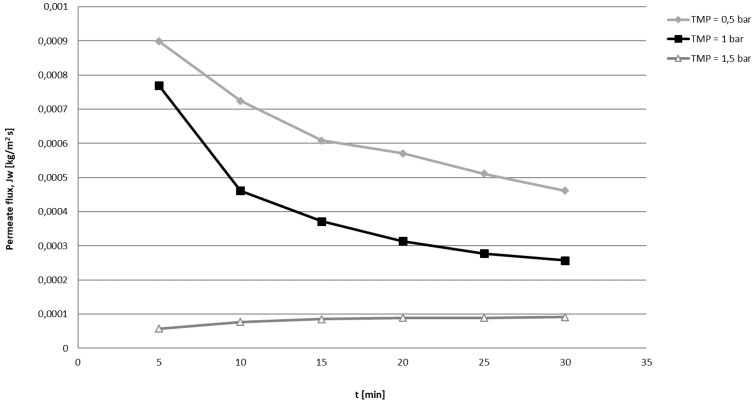
Membrane separation has brought about a significant change in the food processing industry because it could operate separation at low temperature without a reduction of nutrients and bioactive compounds. L. Burm. cv Femminello comune juice, an Italian IGP (Protected Geographical Indication) product, was subjected to the ultrafiltation (UF) process using a cellulose acetate membrane, with a cut-off of 100 kDa, subjected to different transmembrane pressures (TMP, 05⁻1.5 bar). Untreated and ultra-filtrated (UF) juices were investigated for physicochemical parameters including pH, titratable acidity (TA), total soluble solids (TSS) and ascorbic acid content. Total phenols (TPC) and flavonoids (TFC) contents were also determined. Rutin, hesperidin, eriocitrin, and neohesperidin were selected as markers and quantified by HPLC. Antioxidant potential was investigated by using DPPH, ABTS, and FRAP tests. RACI was used to identify the sample with highest antioxidant potential. The hypoglycemic activity was examined using carbohydrates hydrolyzing enzymes assay. The application of increasing pressures across the membrane led to a reduction in TSS without causing a loss of bioactive compounds in terms of TPC and TFC. UF juice obtained with TMP of 1.5 bar (J3) showed a significant amount of eriocitrin and hesperidin with concentrations of 15.8 and 10.5 mg/100 mL, respectively. This sample showed the highest antioxidant potential and exhibited a promising α-amylase and α-glucosidase inhibitory activity with IC values of 31.1 and 35.3 mg/mL, respectively. Collectively our results support the use of cellulose acetate membrane to obtain an ultra-filtered juice with significant health potential.
膜分离技术给食品加工业带来了重大变革,因为它能够在低温下进行分离,同时不会减少营养成分和生物活性化合物。意大利地理标志保护产品(IGP)费米内洛普通型柠檬(L. Burm. cv Femminello comune)果汁,采用截留分子量为100 kDa的醋酸纤维素膜进行超滤(UF)处理,并施加不同的跨膜压力(TMP,0.5⁻1.5 bar)。对未处理和超滤后的果汁进行了理化参数研究,包括pH值、可滴定酸度(TA)、总可溶性固形物(TSS)和抗坏血酸含量。还测定了总酚(TPC)和类黄酮(TFC)含量。选择芦丁、橙皮苷、圣草次苷和新橙皮苷作为标志物,并通过高效液相色谱法进行定量分析。通过DPPH、ABTS和FRAP试验研究了抗氧化潜力。采用RACI法确定抗氧化潜力最高的样品。使用碳水化合物水解酶测定法检测了降血糖活性。随着膜两侧压力的增加,TSS降低,但就TPC和TFC而言,生物活性化合物并未损失。在1.5 bar的TMP下获得的超滤果汁(J3)显示出大量的圣草次苷和橙皮苷,浓度分别为15.8和10.5 mg/100 mL。该样品显示出最高的抗氧化潜力,并表现出有前景的α-淀粉酶和α-葡萄糖苷酶抑制活性,IC值分别为31.1和35.3 mg/mL。总体而言,我们的结果支持使用醋酸纤维素膜来获得具有显著健康潜力的超滤果汁。