Connelly Sheila, Parsley Todd, Ge Hui, Kaleko Michael
Synthetic Biologics, Inc., Rockville, MD 20850, USA.
SynPhaGen, LLC, Rockville, MD 20850, USA.
Microorganisms. 2019 Jan 16;7(1):22. doi: 10.3390/microorganisms7010022.
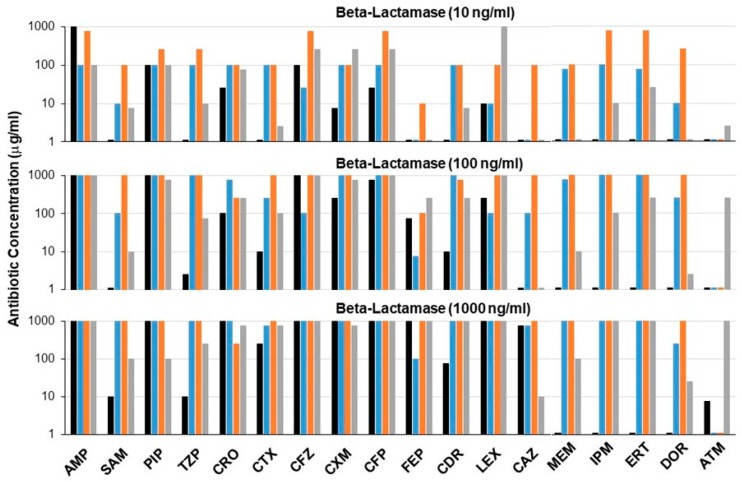
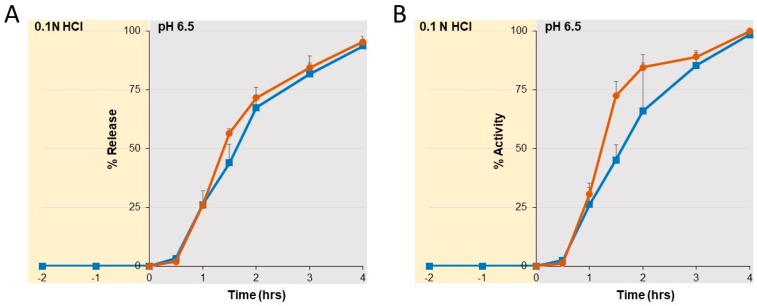
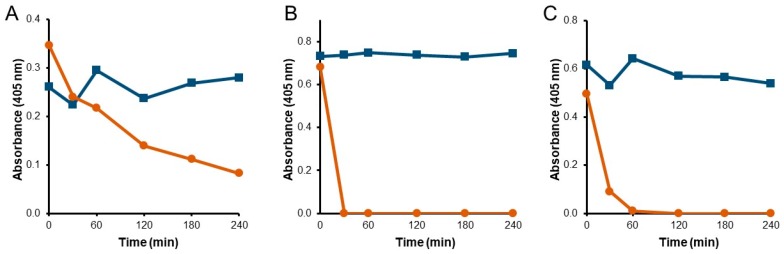
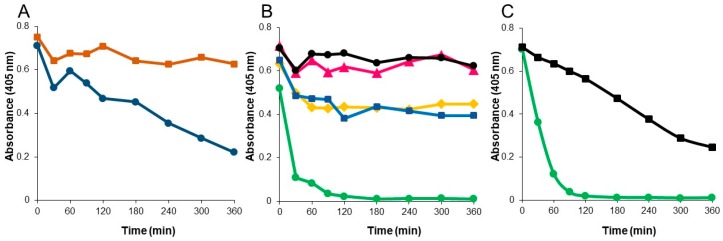
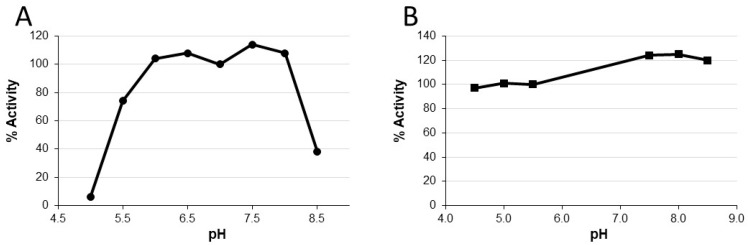
Antibiotics can damage the gut microbiome leading to opportunistic infections and the emergence of antibiotic resistance. Microbiome protection via antibiotic inactivation in the gastrointestinal (GI) tract represents a strategy to limit antibiotic exposure of the colonic microbiota. Proof of concept for this approach was achieved with an orally-administered beta-lactamase enzyme, SYN-004 (ribaxamase), that was demonstrated to degrade ceftriaxone excreted into the GI tract and protect the gut microbiome from antibiotic-mediated dysbiosis. Ribaxamase efficiently degrades penicillin and cephalosporin beta-lactam antibiotics, but is not active against carbapenems. To expand this microbiome protection strategy to include all classes of beta-lactams, three distinct carbapenemases were evaluated for manufacturability, antibiotic degradation spectrum, and stability in human intestinal fluid. production strains were generated for P2A, a novel metallo-enzyme isolated from , New Delhi metallo-beta-lactamase (NDM), and carbapenemase (KPC). While all three enzymes effectively inactivated a broad range of antibiotics, including penicillins, most cephalosporins, and carbapenems in vitro, only P2A retained biological activity when incubated with human chyme. As functional stability in the intestinal tract is a key requirement for an orally-delivered enzyme, P2A was chosen as a potential clinical candidate. An enteric formulation of P2A was developed, called SYN-006, that was inert under high acid conditions, with enzyme dissolution occurring at pH > 5.5. SYN-006 has the potential to expand microbiome protection via antibiotic inactivation to include all classes of beta-lactam antibiotics.
抗生素会损害肠道微生物群,导致机会性感染和抗生素耐药性的出现。通过胃肠道(GI)中的抗生素失活来保护微生物群是一种限制结肠微生物群接触抗生素的策略。口服β-内酰胺酶SYN-004(瑞巴派特酶)实现了这一方法的概念验证,该酶被证明可降解排泄到胃肠道中的头孢曲松,并保护肠道微生物群免受抗生素介导的生态失调影响。瑞巴派特酶能有效降解青霉素和头孢菌素β-内酰胺抗生素,但对碳青霉烯类无活性。为了将这种微生物群保护策略扩展到包括所有类别的β-内酰胺类抗生素,评估了三种不同的碳青霉烯酶在可制造性、抗生素降解谱和人肠液中的稳定性。为从[未提及来源]分离出的新型金属酶P2A、新德里金属β-内酰胺酶(NDM)和碳青霉烯酶(KPC)构建了生产菌株。虽然这三种酶在体外均能有效灭活多种抗生素,包括青霉素、大多数头孢菌素和碳青霉烯类,但只有P2A与人食糜孵育时仍保留生物活性。由于肠道中的功能稳定性是口服酶的关键要求,P2A被选为潜在的临床候选药物。开发了一种P2A的肠溶制剂,称为SYN-006,它在高酸性条件下呈惰性,酶在pH>5.5时溶解。SYN-006有可能通过抗生素失活将微生物群保护扩展到包括所有类别的β-内酰胺抗生素。