College of Computer Science and Technology, Jilin University, Changchun 130012, China.
Sensors (Basel). 2019 Jan 16;19(2):350. doi: 10.3390/s19020350.
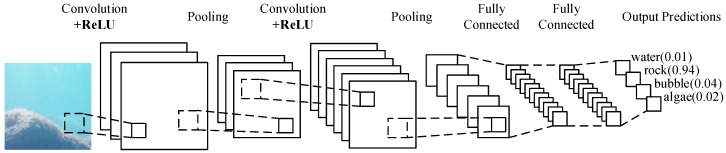
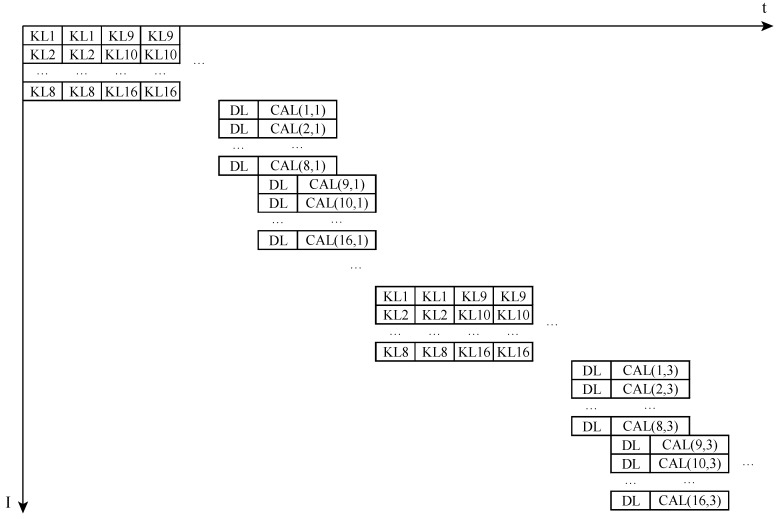
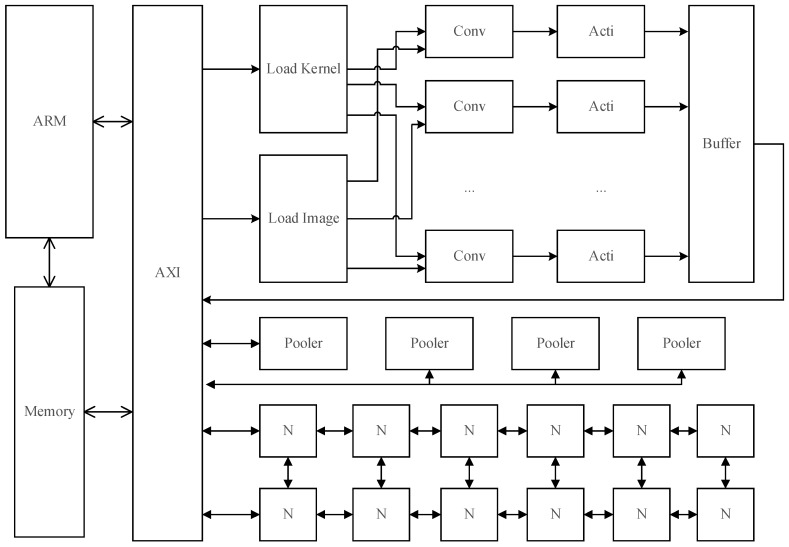
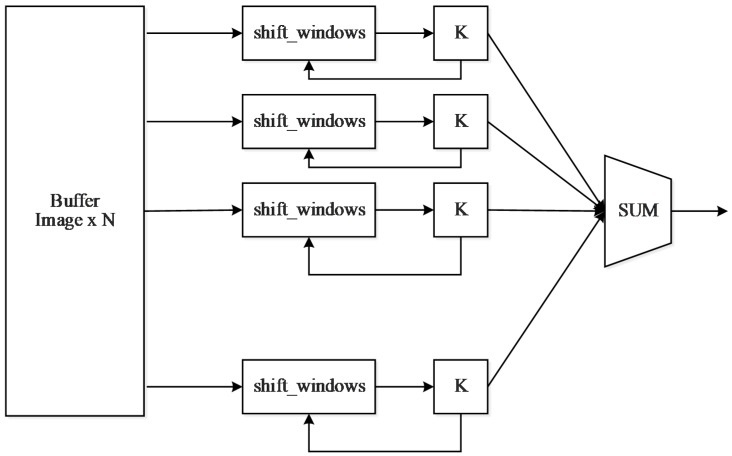
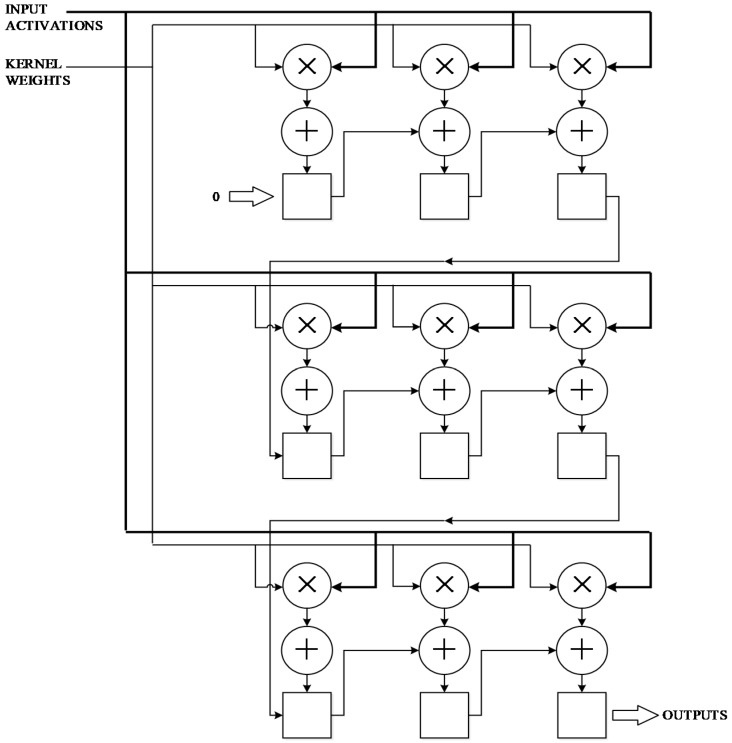
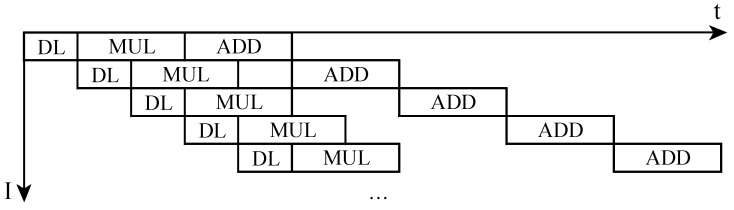
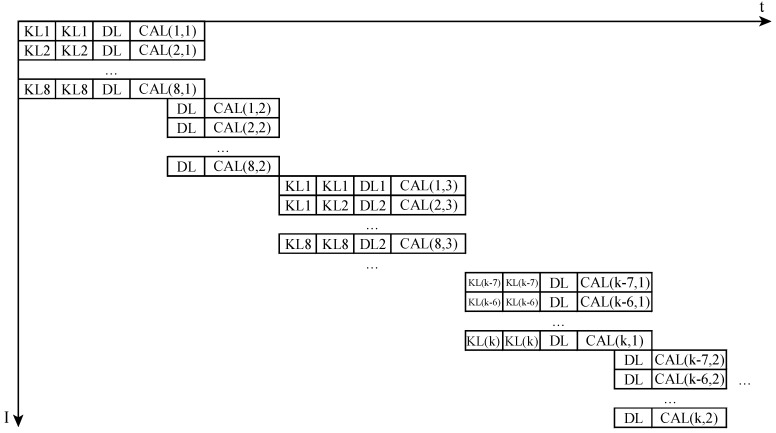
The underwater environment is still unknown for humans, so the high definition camera is an important tool for data acquisition at short distances underwater. Due to insufficient power, the image data collected by underwater submersible devices cannot be analyzed in real time. Based on the characteristics of Field-Programmable Gate Array (FPGA), low power consumption, strong computing capability, and high flexibility, we design an embedded FPGA image recognition system on Convolutional Neural Network (CNN). By using two technologies of FPGA, parallelism and pipeline, the parallelization of multi-depth convolution operations is realized. In the experimental phase, we collect and segment the images from underwater video recorded by the submersible. Next, we join the tags with the images to build the training set. The test results show that the proposed FPGA system achieves the same accuracy as the workstation, and we get a frame rate at 25 FPS with the resolution of 1920 × 1080. This meets our needs for underwater identification tasks.
水下环境对人类来说仍然是未知的,因此高清摄像机是在水下短距离获取数据的重要工具。由于功率不足,水下潜水器设备收集的图像数据无法实时分析。基于现场可编程门阵列(FPGA)的特点,低功耗、强大的计算能力和高度灵活性,我们设计了基于卷积神经网络(CNN)的嵌入式 FPGA 图像识别系统。通过使用 FPGA 的两项技术——并行性和流水线,实现了多深度卷积操作的并行化。在实验阶段,我们从潜水器记录的水下视频中采集和分割图像。然后,我们将标签与图像结合起来构建训练集。实验结果表明,所提出的 FPGA 系统与工作站具有相同的精度,我们以 1920×1080 的分辨率获得了 25 FPS 的帧率。这满足了我们对水下识别任务的需求。