Department of Hematology, The First Affiliated Hospital of China Medical University, Shenyang, Liaoning 110001, P.R. China.
Oncol Rep. 2019 Mar;41(3):1678-1690. doi: 10.3892/or.2019.6968. Epub 2019 Jan 11.
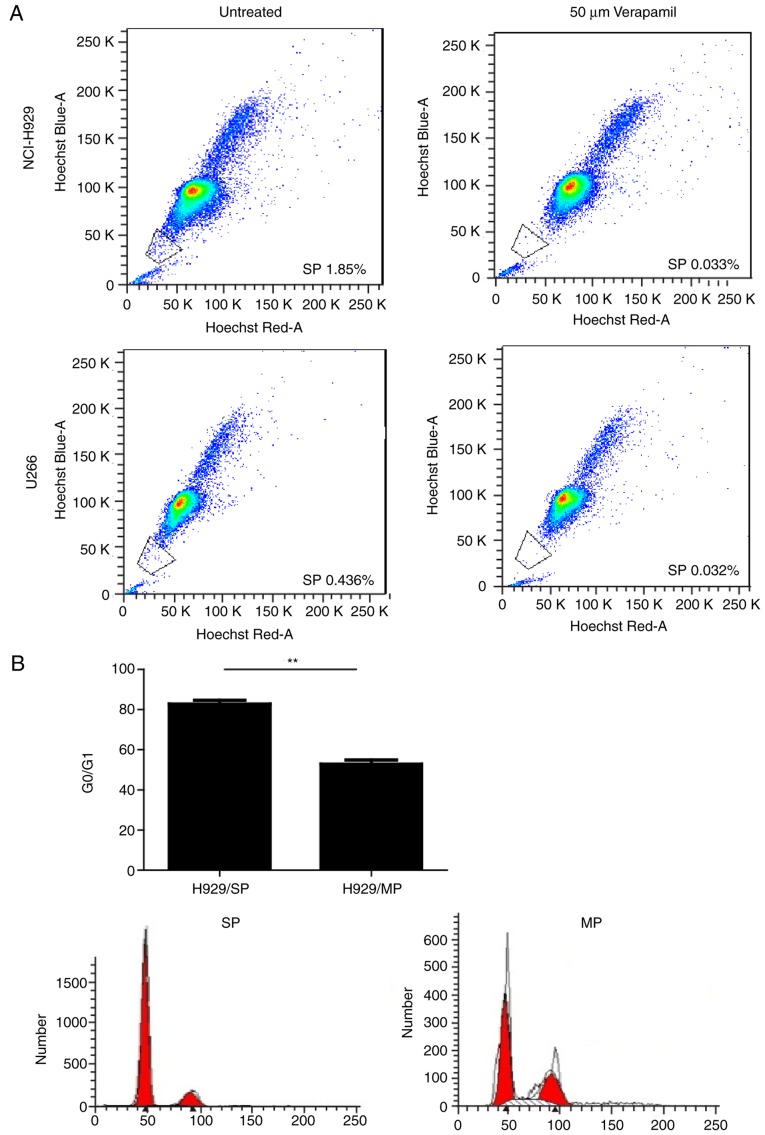
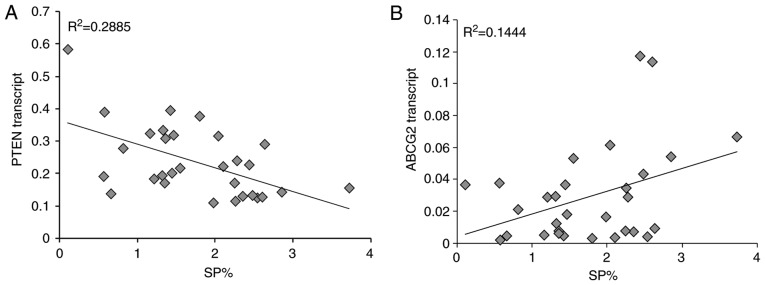
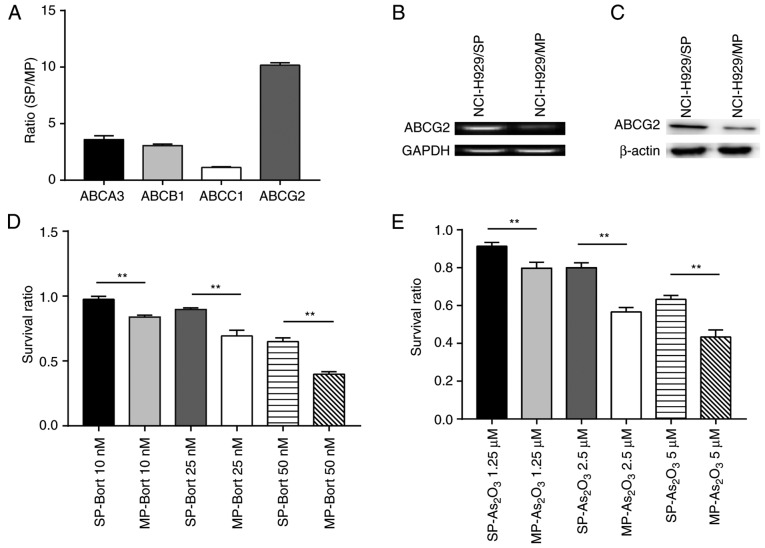
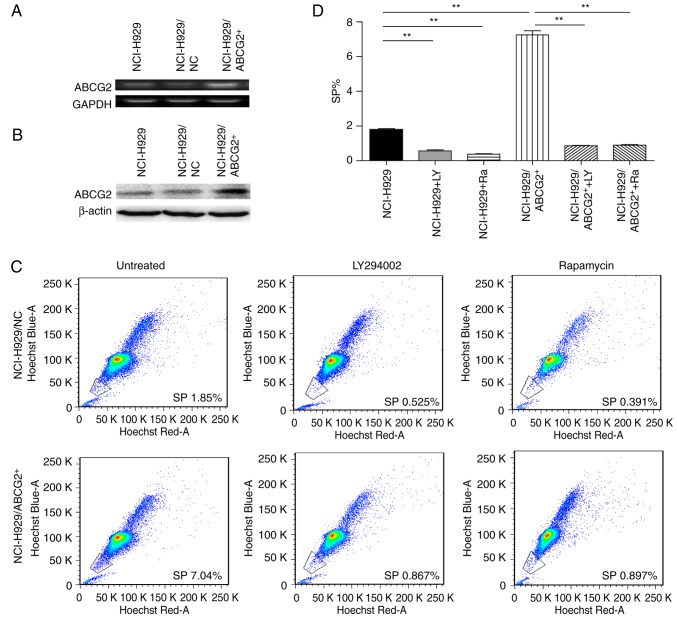
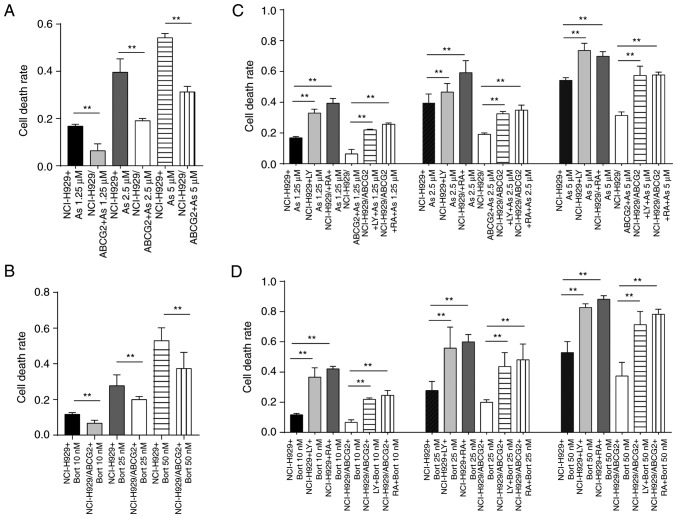
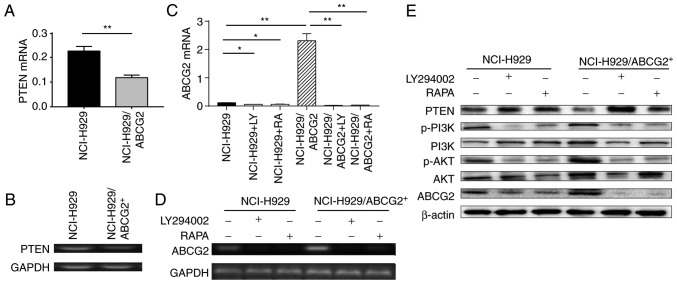
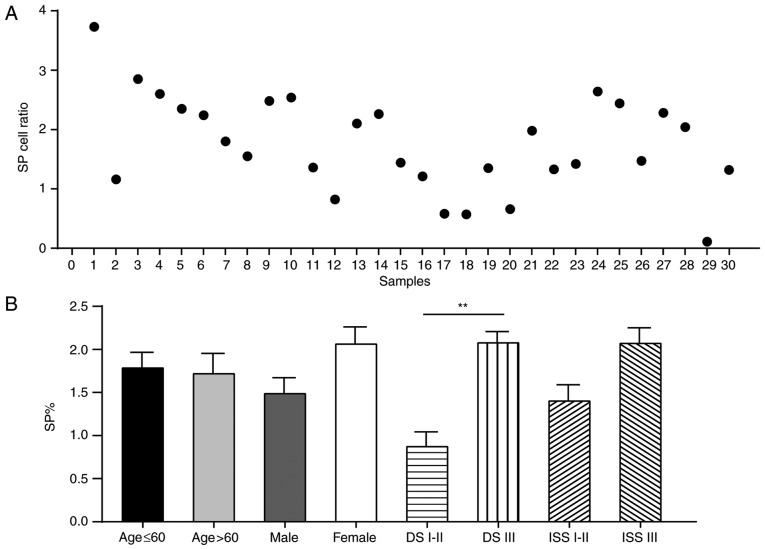
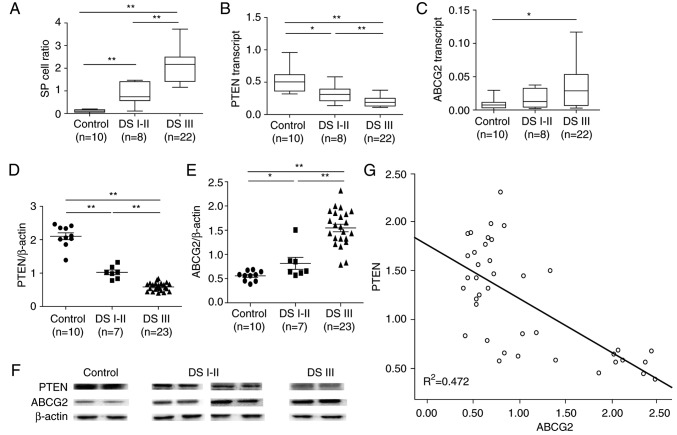
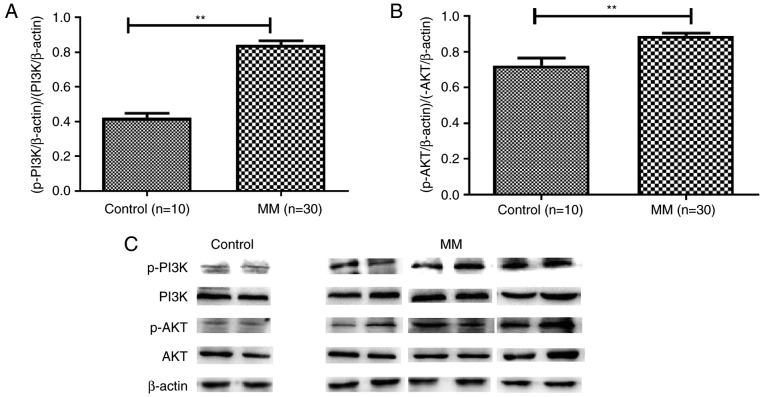
Side population (SP) cells are involved in the development of multidrug resistance (MDR) in human multiple myeloma (MM), due to their cancer stem cell (CSC)‑like phenotypes. ATP‑binding cassette (ABC) drug transporter proteins have been reported to be closely associated with MDR in leukemia; however, the correlation between ABC proteins and the progression of MM remains unclear. The present study used MM cell lines and clinical samples to determine the role of ABC subfamily G member 2 (ABCG2) in MM via flow cytometry, reverse transcription‑quantitative polymerase chain reaction and western blotting. SP cells sorted from MM cell lines, including NCI‑H929 cells, via fluorescence‑activated cell sorting, exhibited CSC‑like phenotypes and expressed high levels of ABCG2. Expression of ABCG2 and activation of the phosphatidylinositol 3‑kinase (PI3K)/AKT serine/threonine kinase (AKT) signaling pathway was positively associated with the proportion of SP cells in the NCI‑H929 cell line. In addition, suppression of the PI3K/AKT pathway using LY294002 or rapamycin counteracted the protective effects of ABCG2 against chemotherapeutic drug treatment. Mechanistically, PI3K/AKT signaling may regulate ABCG2 expression, and ABCG2 may regulate phosphatase and tensin homolog expression via a potential negative feedback loop. Furthermore, SP cell proportion, ABCG2 expression and PI3K/AKT pathway activation were associated with disease progression in patients with MM. These findings indicated the critical roles of ABCG2 and PI3K/AKT signaling in controlling stemness of MM cells, and suggested a novel strategy for targeting ABCG2 and PI3K/AKT signaling to treat MM with MDR.
侧群 (SP) 细胞参与了人多发性骨髓瘤 (MM) 多药耐药 (MDR) 的发展,这是由于其具有癌症干细胞 (CSC) 样表型。已有报道称,三磷酸腺苷 (ATP) 结合盒 (ABC) 药物转运蛋白与白血病中的 MDR 密切相关;然而,ABC 蛋白与 MM 进展之间的相关性尚不清楚。本研究通过流式细胞术、逆转录 - 定量聚合酶链反应和蛋白质印迹法,使用 MM 细胞系和临床样本来确定 ABC 亚家族 G 成员 2 (ABCG2) 在 MM 中的作用。通过荧光激活细胞分选从 MM 细胞系(包括 NCI-H929 细胞)中分选的 SP 细胞表现出 CSC 样表型,并表达高水平的 ABCG2。ABCG2 的表达和磷脂酰肌醇 3-激酶 (PI3K)/丝氨酸/苏氨酸激酶 (AKT) 信号通路的激活与 NCI-H929 细胞系中 SP 细胞的比例呈正相关。此外,使用 LY294002 或雷帕霉素抑制 PI3K/AKT 通路可抵消 ABCG2 对化疗药物治疗的保护作用。从机制上讲,PI3K/AKT 信号可能调节 ABCG2 的表达,ABCG2 可能通过潜在的负反馈环调节磷酸酶和张力蛋白同源物的表达。此外,SP 细胞比例、ABCG2 表达和 PI3K/AKT 通路的激活与 MM 患者的疾病进展相关。这些发现表明 ABCG2 和 PI3K/AKT 信号在控制 MM 细胞干性方面具有重要作用,并为靶向 ABCG2 和 PI3K/AKT 信号治疗 MDR 提供了一种新策略。