Department of General Surgery, Ruijin Hospital, Shanghai Jiao Tong University School of Medicine, Shanghai 200025, P.R. China.
Mol Med Rep. 2019 Mar;19(3):2065-2076. doi: 10.3892/mmr.2019.9849. Epub 2019 Jan 11.
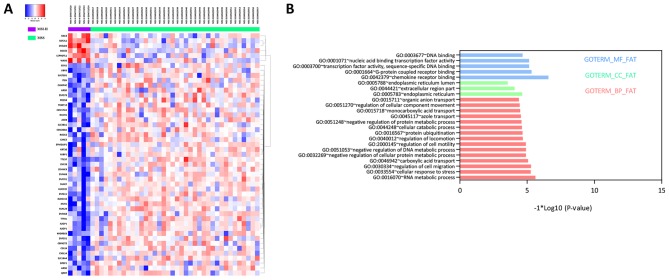
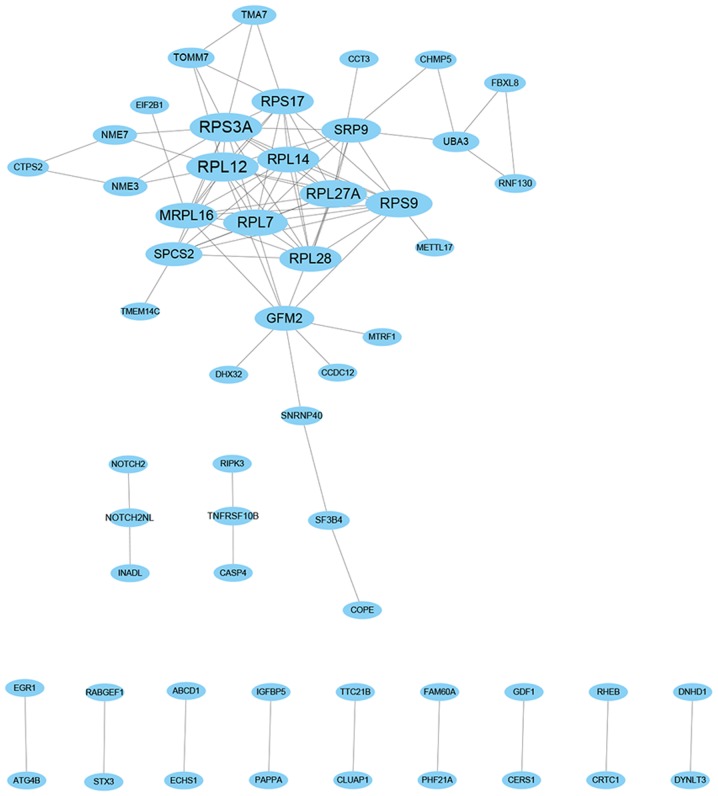
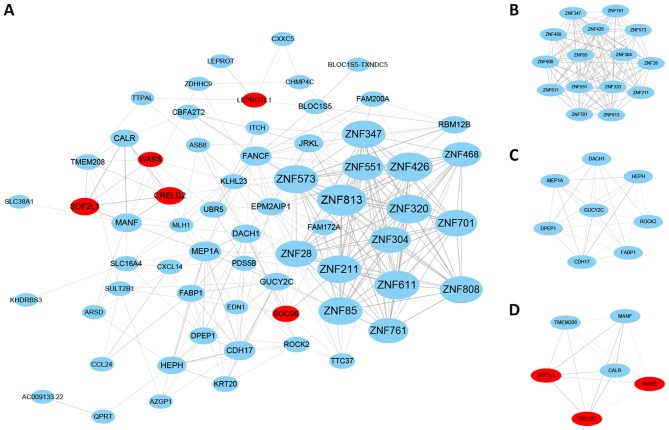
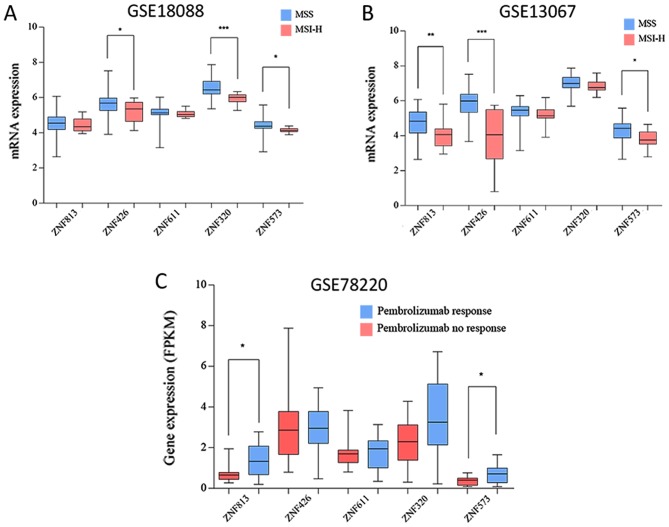
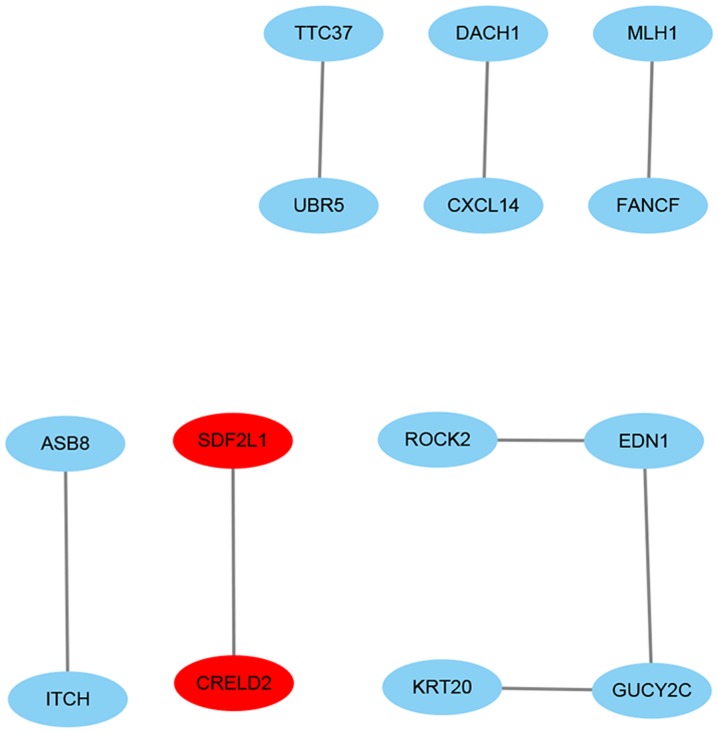
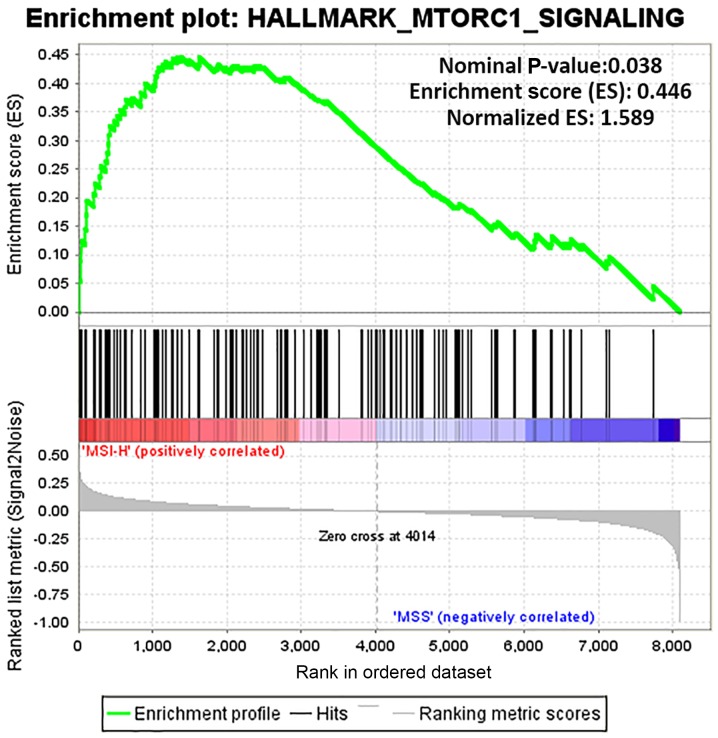
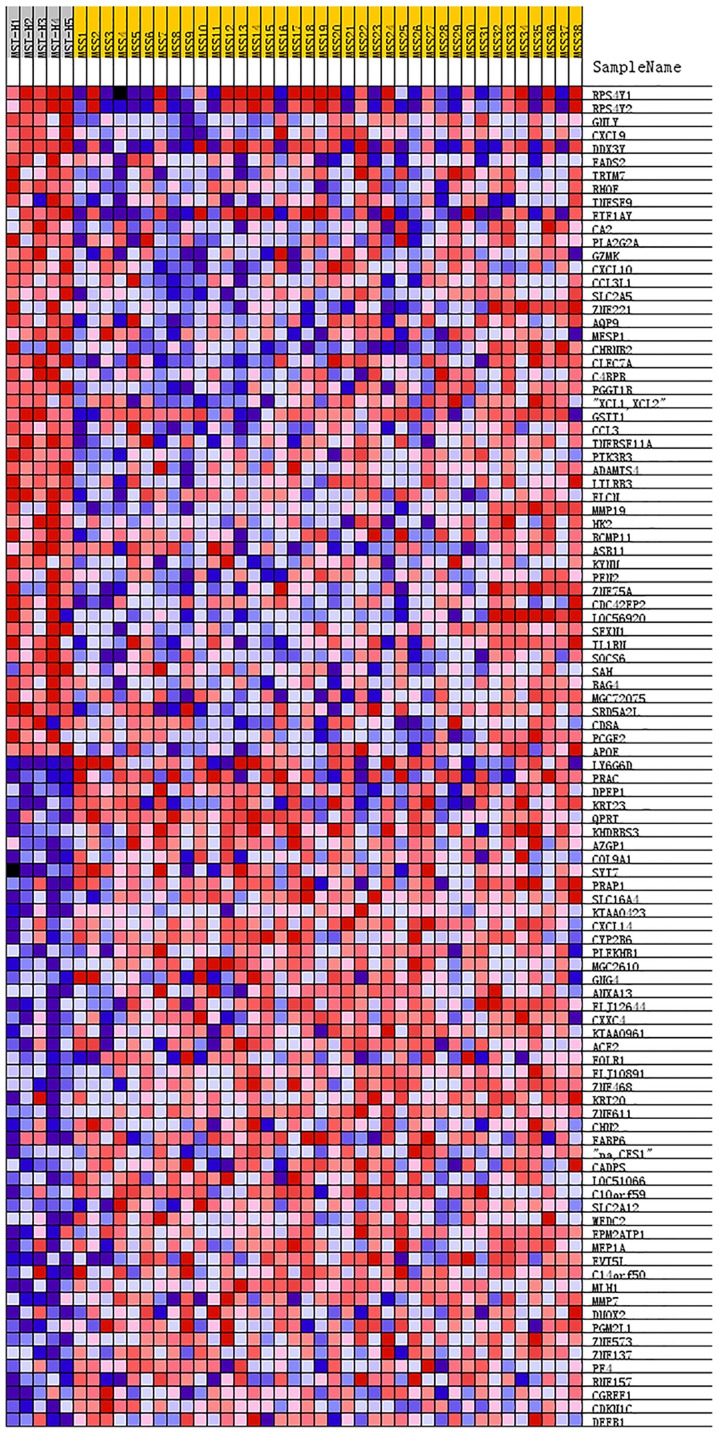
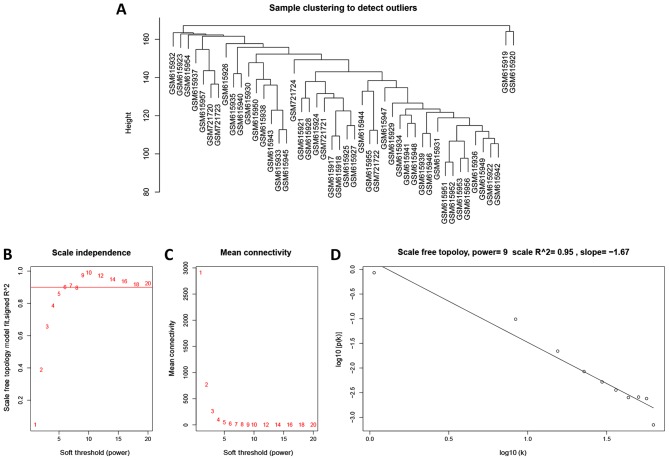
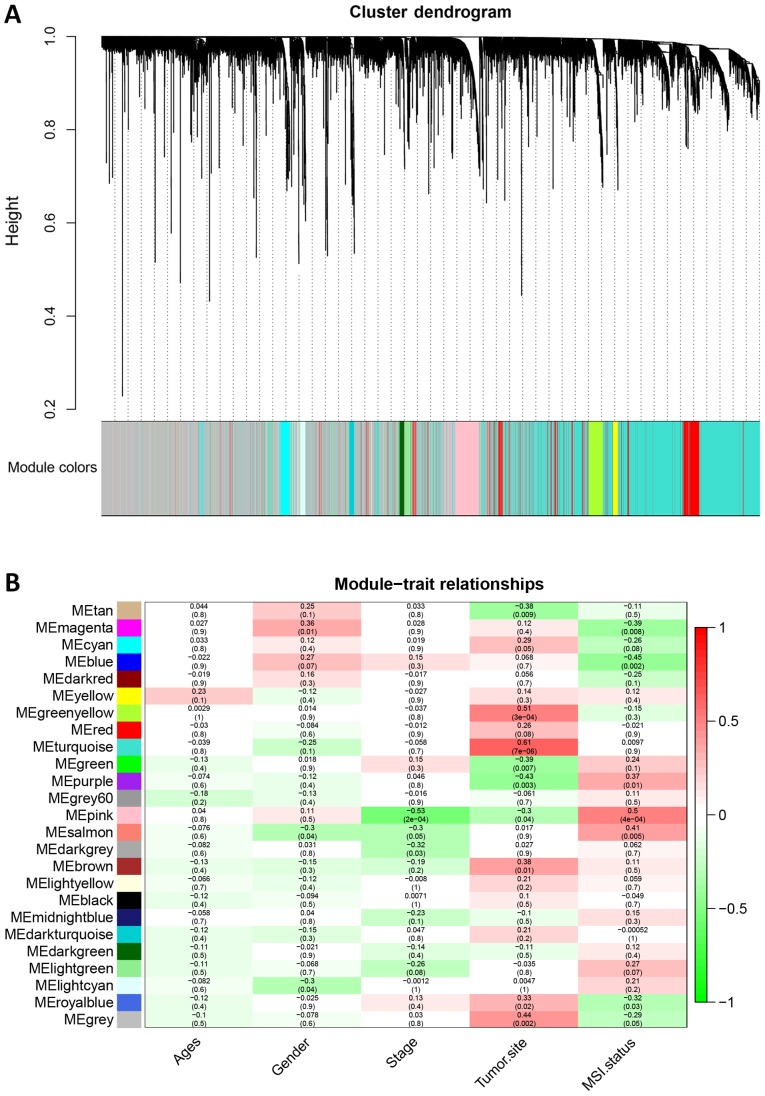
Microsatellite instability (MSI) has emerged as one of the key biological features of colorectal cancer (CRC). However, controversies remain regarding the association between the MSI status and clinicopathological characteristics of CRC. Therefore, it is crucial to identify potential key genes and pathways associated with MSI in CRC. In the present study, the GSE25071 gene expression profile was retrieved, with thirty‑eight cases of microsatellite stable (MSS), five of MSI‑High (MSI‑H) and three of MSI‑Low (MSI‑L) CRC patients. The differentially expressed genes (DEGs) were analyzed by Gene Ontology (GO), Kyoto Encyclopedia of Genes and Genomes pathway enrichment, gene set enrichment analysis (GSEA) and gene co‑expression network analysis. Weighted gene correlation network analysis (WGCNA) was used for the gene modules and correlation of clinical traits. A total of forty‑nine DEGs were identified between MSI‑H and MSS, including six upregulated and forty‑three downregulated DEGs. Only the DEGs of MSI‑H and MSS were subjected to subsequent analysis (limited number of DEGs of MSI‑L and MSS, MSI‑H and MSI‑L). RNA metabolic process, endoplasmic reticulum and chemokine receptor binding were the top ranked terms in GO enrichment. The hub genes of co‑expression network of DEGs included zinc finger protein (ZNF) 813, ZNF426, ZNF611, ZNF320 and ZNF573. The GSEA of MSI‑H and MSS indicated that the mammalian target of rapamycin complex 1 signaling was significantly enriched with a nominal P‑value of 0.038 and normalized enrichment score of 0.446. The WGCNA results showed that the pink module was the top in correlation with MSI status (R2=0.5, P=0.0004). The genes in the pink module were significantly enriched in proteins targeting to endoplasmic reticulum, cytosolic part, structural constituent of ribosome and ribosome pathway. The hub genes identified in the pink module were ribosomal protein L12 (RPL12), RPS3A, RPS9, RPL27A, RPL7, RPL28, RPL14, RPS17, mitochondrial ribosomal protein L16, and G elongation factor, mitochondrial 2. The present study identified key genes and pathways associated with MSI, providing insightful mechanisms.
微卫星不稳定性 (MSI) 已成为结直肠癌 (CRC) 的关键生物学特征之一。然而,MSI 状态与 CRC 的临床病理特征之间的关联仍存在争议。因此,确定与 CRC 中 MSI 相关的潜在关键基因和途径至关重要。在本研究中,检索了 GSE25071 基因表达谱,其中包括 38 例微卫星稳定 (MSS)、5 例 MSI-高 (MSI-H) 和 3 例 MSI-低 (MSI-L) CRC 患者。通过基因本体论 (GO)、京都基因与基因组百科全书通路富集、基因集富集分析 (GSEA) 和基因共表达网络分析对差异表达基因 (DEG) 进行了分析。加权基因相关网络分析 (WGCNA) 用于基因模块和临床特征的相关性。在 MSI-H 和 MSS 之间鉴定出 49 个 DEG,包括 6 个上调和 43 个下调的 DEG。仅对 MSI-H 和 MSS 的 DEG 进行了后续分析(MSI-L 和 MSS、MSI-H 和 MSI-L 的 DEG 数量有限)。GO 富集的顶级排名项包括 RNA 代谢过程、内质网和趋化因子受体结合。DEG 共表达网络的枢纽基因包括锌指蛋白 (ZNF) 813、ZNF426、ZNF611、ZNF320 和 ZNF573。MSI-H 和 MSS 的 GSEA 表明,雷帕霉素靶蛋白复合物 1 信号显著富集,名义 P 值为 0.038,归一化富集得分 0.446。WGCNA 结果表明,粉红色模块与 MSI 状态的相关性最高 (R2=0.5,P=0.0004)。粉红色模块中的基因在靶向内质网、细胞质部分、核糖体结构成分和核糖体途径的蛋白质中显著富集。在粉红色模块中鉴定出的枢纽基因包括核糖体蛋白 L12 (RPL12)、RPS3A、RPS9、RPL27A、RPL7、RPL28、RPL14、RPS17、线粒体核糖体蛋白 L16 和 G 延伸因子,线粒体 2。本研究确定了与 MSI 相关的关键基因和途径,为其提供了深入的机制见解。