Department of Neuroscience, Medical University of South Carolina, Charleston, SC, 29425, United States.
Department of Neuroscience, Medical University of South Carolina, Charleston, SC, 29425, United States.
Alcohol. 2019 Sep;79:93-103. doi: 10.1016/j.alcohol.2019.01.006. Epub 2019 Jan 18.
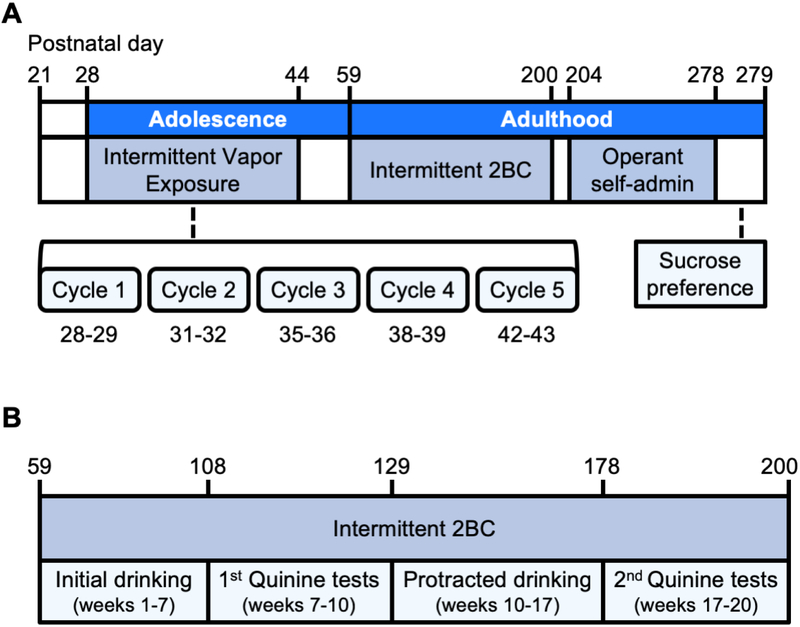
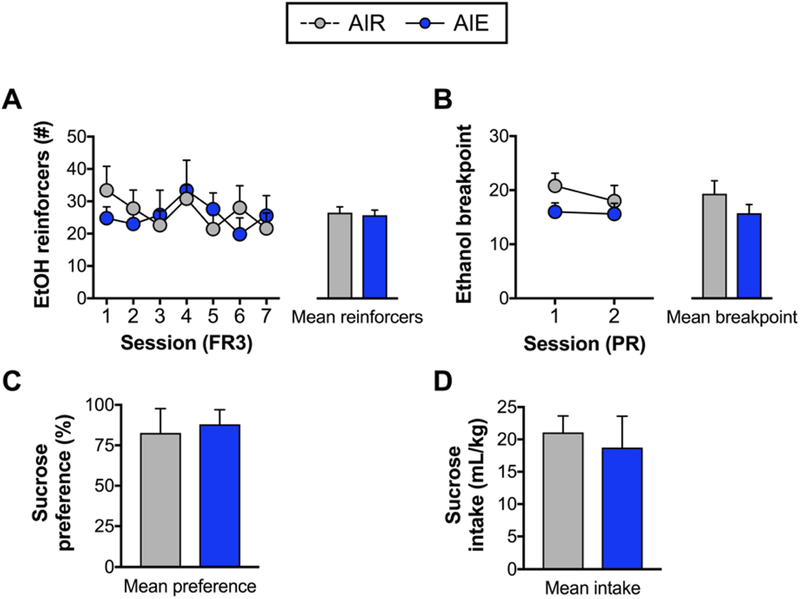
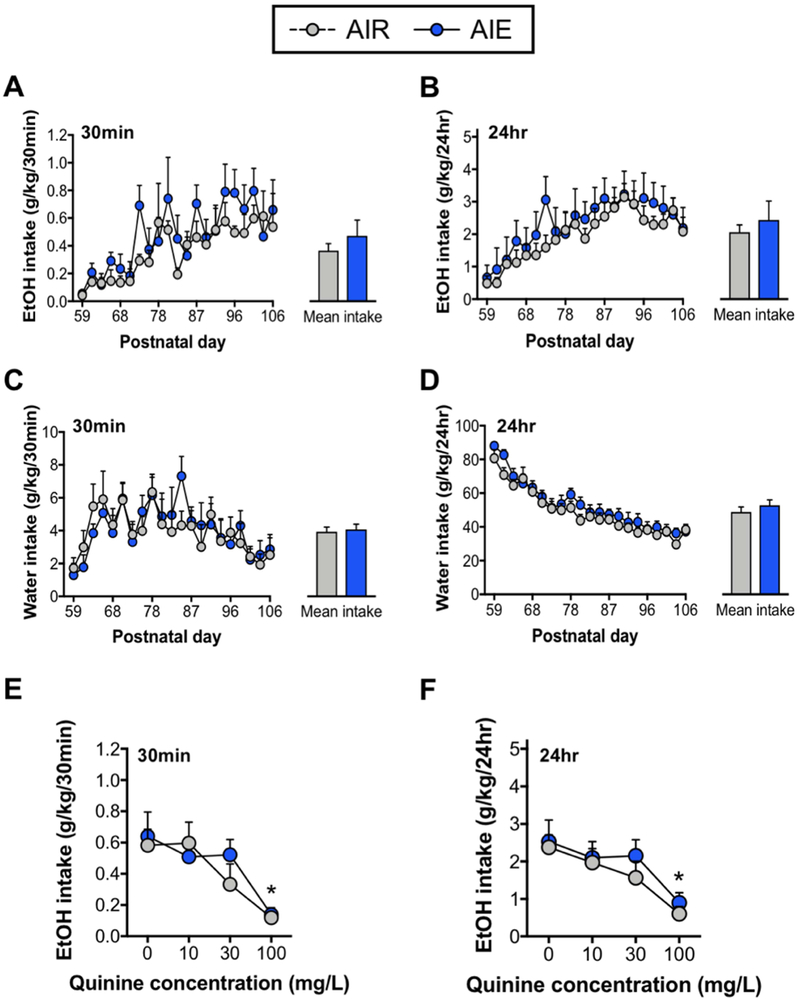
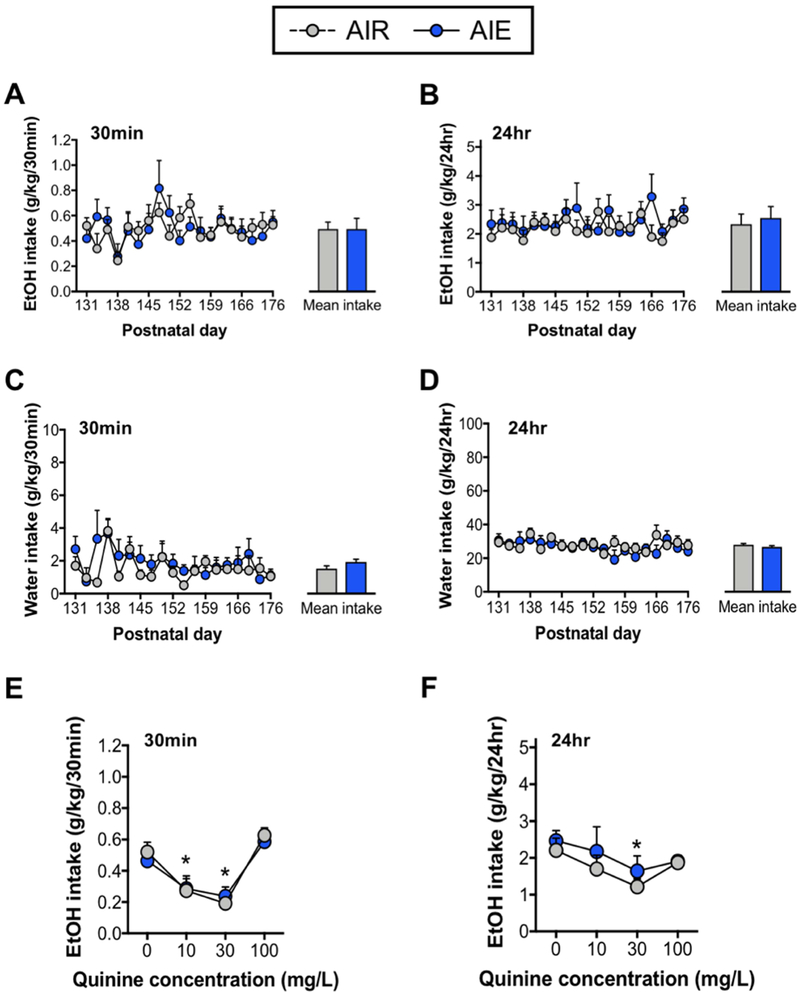
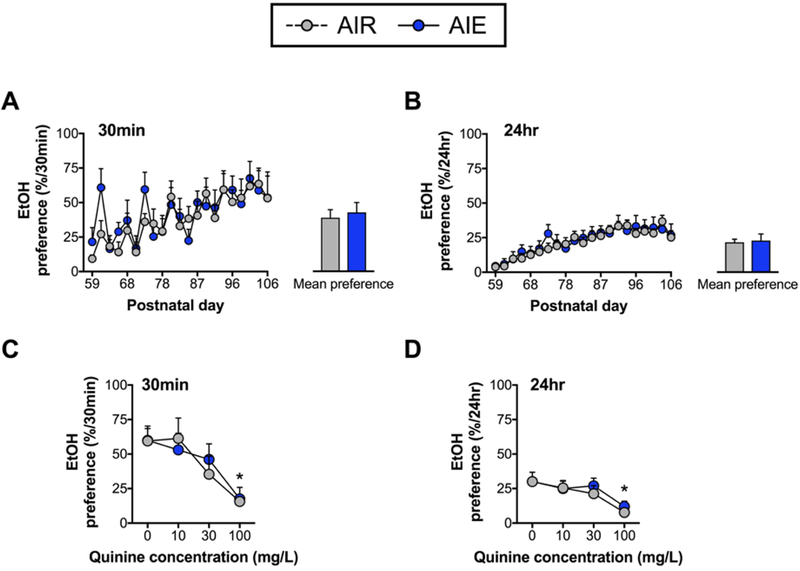
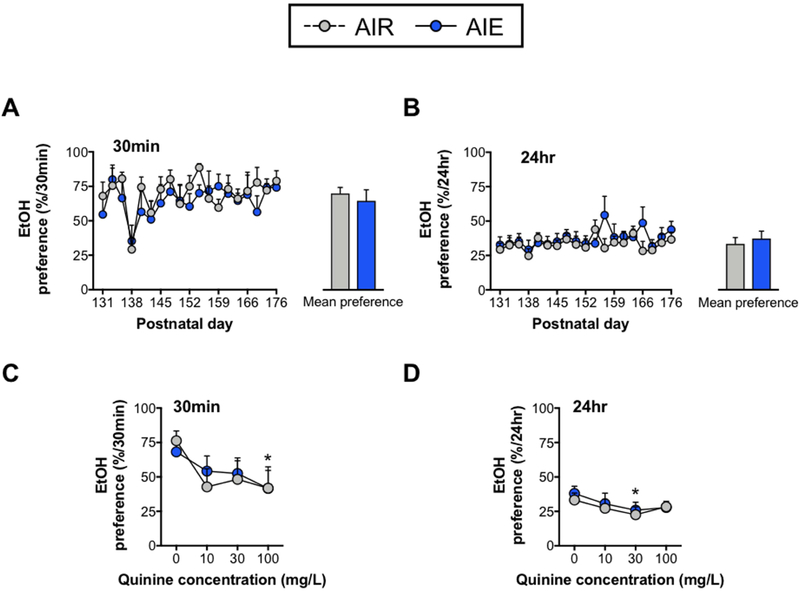
The abuse of alcohol during adolescence is widespread and represents a particular concern, given that earlier age of drinking onset is associated with increased risk for the development of alcohol use disorders (AUDs). Despite this risk, it remains unclear whether binge-like adolescent alcohol exposure facilitates drinking despite aversive consequences, a characteristic common among individuals with AUDs. The present study examined voluntary alcohol consumption and aversion-resistant drinking in adult male Long-Evans rats that had undergone adolescent intermittent ethanol (AIE) exposure by vapor inhalation between postnatal days (PD) 28-44. Ethanol consumption during adulthood was examined using a two-bottle choice (2BC) intermittent access procedure. Rats were tested for aversion-resistant drinking using ethanol adulterated with quinine (10, 30, 100 mg/L) after two 7-week periods of 2BC drinking. After completion of the second test of aversion-resistant drinking, rats were trained to operantly self-administer ethanol. The results revealed that both air control (AIR) and AIE-exposed rats exhibited similar ethanol intake and preference in the 2BC paradigm. After 7 weeks of 2BC drinking, quinine adulteration significantly suppressed ethanol intake, but only at the highest concentration examined (100 mg/L). However, upon retesting after a total of 17 weeks of 2BC drinking, 30-mg/L quinine suppressed ethanol intake. Notably, AIR- and AIE-exposed rats were equally sensitive to quinine-adulterated ethanol at both time points. In addition, AIR- and AIE-exposed rats responded similarly during operant ethanol self-administration on both fixed and progressive ratio schedules of reinforcement. Finally, both AIR- and AIE-exposed rats exhibited similar preference for sucrose. The results of this study show that binge-like ethanol vapor exposure during adolescence does not alter voluntary ethanol consumption, motivation to operantly respond for ethanol, or promote aversion-resistant ethanol consumption in adulthood. These data, together with previous work reporting conflicting results across various rodent models of adolescent alcohol exposure, underscore the need to further explore the role that exposure to alcohol during adolescence has on the development of heavy and compulsive drinking phenotypes in adulthood.
青少年时期酗酒现象普遍存在,令人尤为关注,因为饮酒起始年龄较早与出现酒精使用障碍(AUD)的风险增加有关。尽管存在这种风险,但目前仍不清楚青少年期类似 binge 的酒精暴露是否会促进饮酒,即使存在不良后果,这也是 AUD 患者的一个共同特征。本研究通过蒸气吸入在雄性 Long-Evans 大鼠中进行青春期间歇性乙醇(AIE)暴露,以检测成年期自愿饮酒和抗厌恶性饮酒,这些大鼠在出生后第 28-44 天(PD)期间进行了暴露。使用双瓶选择(2BC)间歇性获得程序检查成年期的乙醇消耗。在完成 2BC 饮酒的两个 7 周周期后,用含有奎宁(10、30、100mg/L)的乙醇对大鼠进行抗厌恶性饮酒测试。在完成第二次抗厌恶性饮酒测试后,大鼠被训练进行操作性自我摄取乙醇。结果表明,空气对照(AIR)和 AIE 暴露的大鼠在 2BC 范式中表现出相似的乙醇摄入量和偏好。在 2BC 饮酒 7 周后,奎宁的添加显著抑制了乙醇的摄取,但仅在研究的最高浓度(100mg/L)下。然而,在总共进行了 17 周 2BC 饮酒后再次测试时,30mg/L 的奎宁抑制了乙醇的摄取。值得注意的是,在这两个时间点,AIR 和 AIE 暴露的大鼠对含有奎宁的乙醇都同样敏感。此外,在固定和递增比例强化时间表的操作性乙醇自我给药期间,AIR 和 AIE 暴露的大鼠的反应也相似。最后,AIR 和 AIE 暴露的大鼠对蔗糖的偏好也相似。本研究的结果表明,青春期类似 binge 的乙醇蒸气暴露不会改变自愿性乙醇消耗、操作反应获取乙醇的动机,或促进成年期抗厌恶性乙醇消耗。这些数据,以及之前报告的不同青春期酒精暴露的啮齿动物模型存在冲突结果的工作,强调需要进一步探索青春期暴露于酒精对成年期重度和强迫性饮酒表型发展的作用。