Casey Eye Institute, Department of Ophthalmology, Oregon Health & Science University, Portland, Oregon, United States.
Invest Ophthalmol Vis Sci. 2019 Jan 2;60(1):312-321. doi: 10.1167/iovs.18-25447.
Optic nerve head (ONH) astrocytes provide support for axons, but exhibit structural and functional changes (termed reactivity) in a number of glaucoma models. The purpose of this study was to determine if ONH astrocyte structural reactivity is axon-dependent.
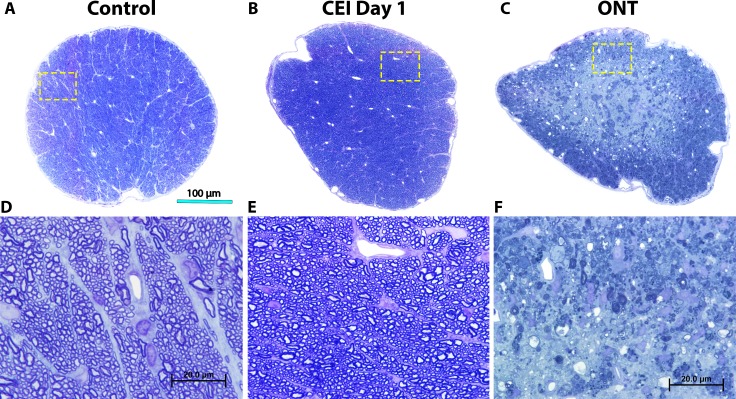
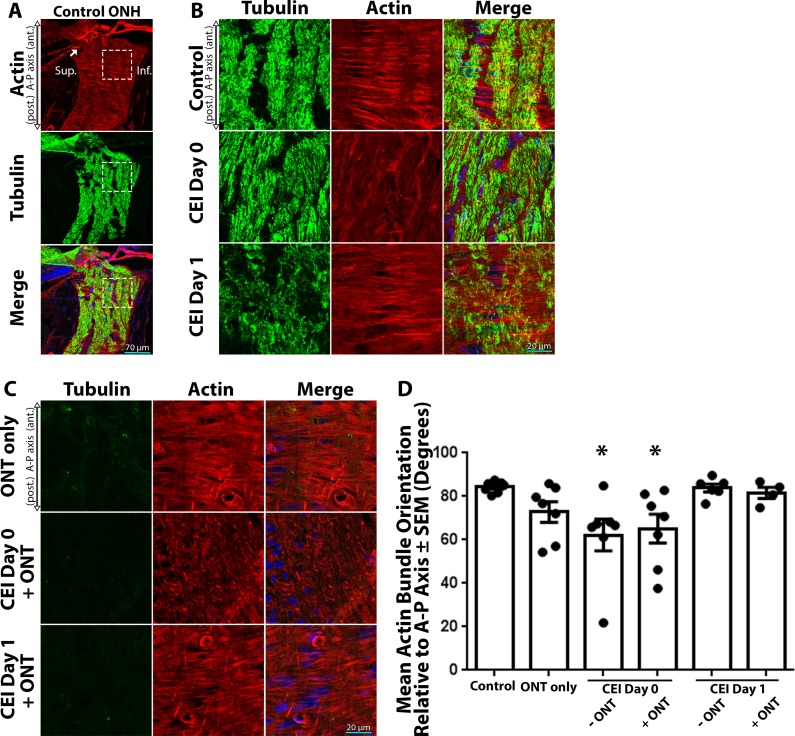
Using rats, we combine retrobulbar optic nerve transection (ONT) with acute controlled elevation of intraocular pressure (CEI), to induce total optic nerve axon loss and ONH astrocyte reactivity, respectively. Animals were euthanized immediately or 1 day post CEI, in the presence or absence of ONT. ONH sections were labeled with fluorescent-tagged phalloidin and antibodies against β3 tubulin, phosphorylated cortactin, phosphorylated paxillin, or complement C3. ONH label intensities were quantified after confocal microscopy. Retrobulbar nerves were assessed for axon injury by light microscopy.
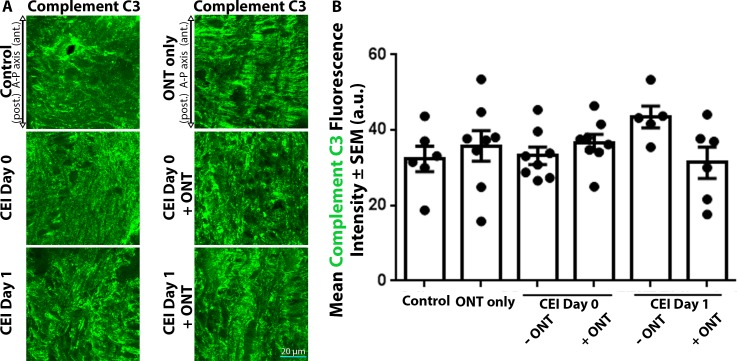
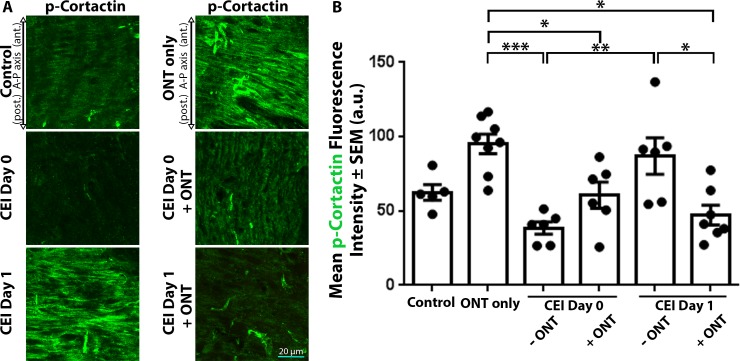
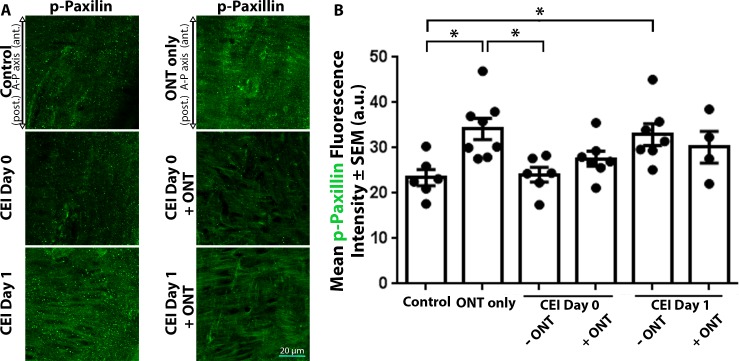
While ONT alone had no effect on ONH astrocyte structural orientation, astrocytes demonstrated significant reorganization of cellular extensions within hours after CEI, even when combined with ONT. However, ONH astrocytes displayed differential intensities of actin (phosphorylated cortactin) and focal adhesion (phosphorylated paxillin) mediators in response to CEI alone, ONT alone, or the combination of CEI and ONT. Lastly, label intensities of complement C3 within the ONH were unchanged in eyes subjected to CEI alone, ONT alone, or the combination of CEI and ONT, relative to controls.
Early ONH astrocyte structural reactivity to elevated IOP is multifaceted, displaying both axon dependent and independent responses. These findings have important implications for pursuing astrocytes as diagnostic and therapeutic targets in neurodegenerative disorders with fluctuating levels of axon injury.
视神经头部(ONH)星形胶质细胞为轴突提供支持,但在许多青光眼模型中表现出结构和功能变化(称为反应性)。本研究的目的是确定 ONH 星形胶质细胞结构反应是否依赖于轴突。
使用大鼠,我们将球后视神经横断(ONT)与急性控制眼压升高(CEI)相结合,分别诱导视神经轴突完全丢失和 ONH 星形胶质细胞反应性。动物在 CEI 后立即或 1 天处死,存在或不存在 ONT。ONH 切片用荧光标记鬼笔环肽和抗 β3 微管蛋白、磷酸化皮质肌动蛋白、磷酸化桩蛋白或补体 C3 的抗体进行标记。在共聚焦显微镜下定量 ONH 标记强度。通过光镜评估球后神经的轴突损伤。
虽然 ONT 本身对 ONH 星形胶质细胞结构取向没有影响,但星形胶质细胞在 CEI 后数小时内表现出细胞延伸的显著重组,即使与 ONT 结合也是如此。然而,ONH 星形胶质细胞对 CEI 单独、ONT 单独或 CEI 和 ONT 的组合表现出不同强度的肌动蛋白(磷酸化皮质肌动蛋白)和焦点黏附(磷酸化桩蛋白)介质。最后,与对照组相比,单独接受 CEI、ONT 或 CEI 和 ONT 组合的眼睛中,ONH 内补体 C3 的标记强度没有变化。
早期 ONH 星形胶质细胞对升高的 IOP 的结构反应是多方面的,表现出依赖于轴突和独立于轴突的反应。这些发现对于将星形胶质细胞作为具有波动轴突损伤水平的神经退行性疾病的诊断和治疗靶点具有重要意义。