Department of Chemistry and Biochemistry, University of Oklahoma, Norman, OK, 73019, USA.
Present Address: University of North Carolina, Chapel Hill, NC, 27599, USA.
BMC Biochem. 2019 Jan 21;20(1):1. doi: 10.1186/s12858-019-0104-5.
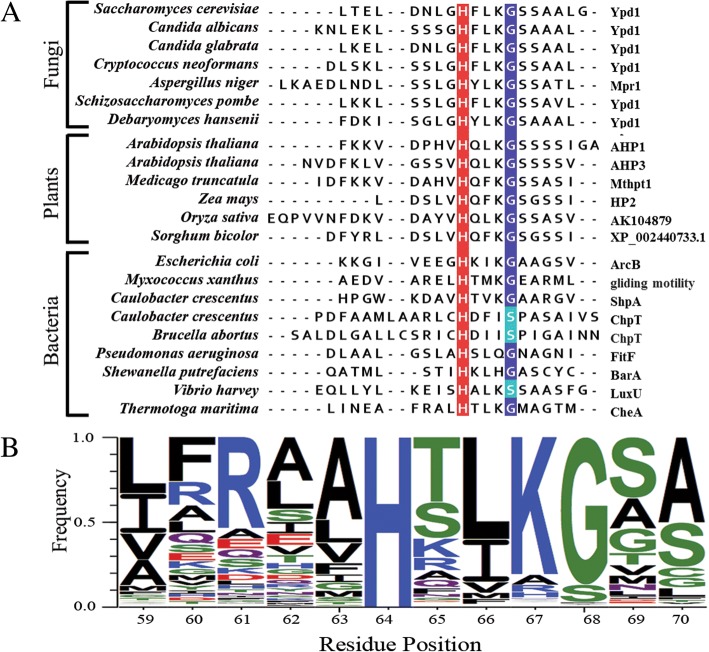
Many bacteria and certain eukaryotes utilize multi-step His-to-Asp phosphorelays for adaptive responses to their extracellular environments. Histidine phosphotransfer (HPt) proteins function as key components of these pathways. HPt proteins are genetically diverse, but share a common tertiary fold with conserved residues near the active site. A surface-exposed glycine at the H + 4 position relative to the phosphorylatable histidine is found in a significant number of annotated HPt protein sequences. Previous reports demonstrated that substitutions at this position result in diminished phosphotransfer activity between HPt proteins and their cognate signaling partners.
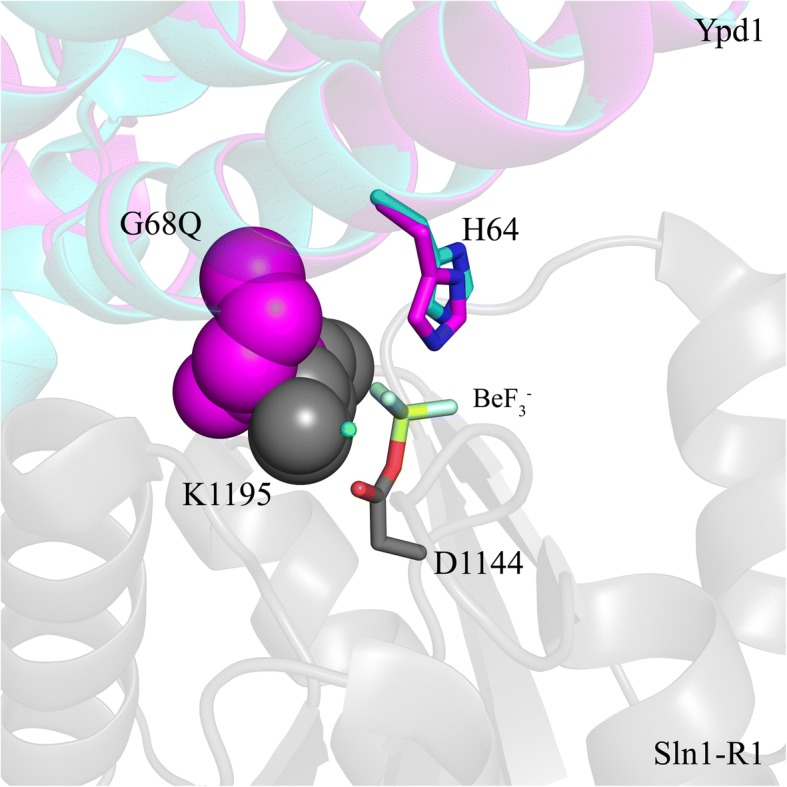
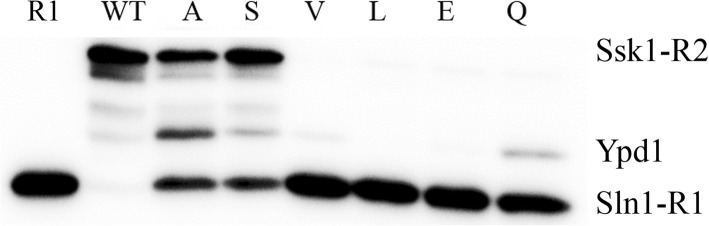
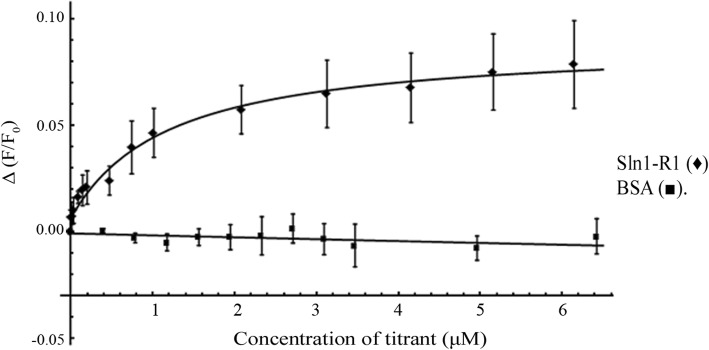
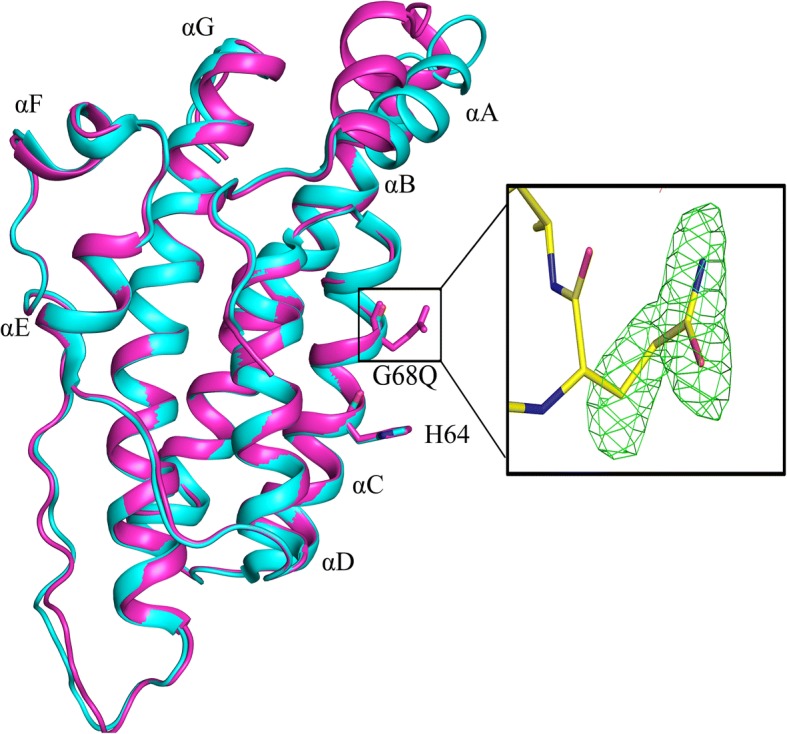
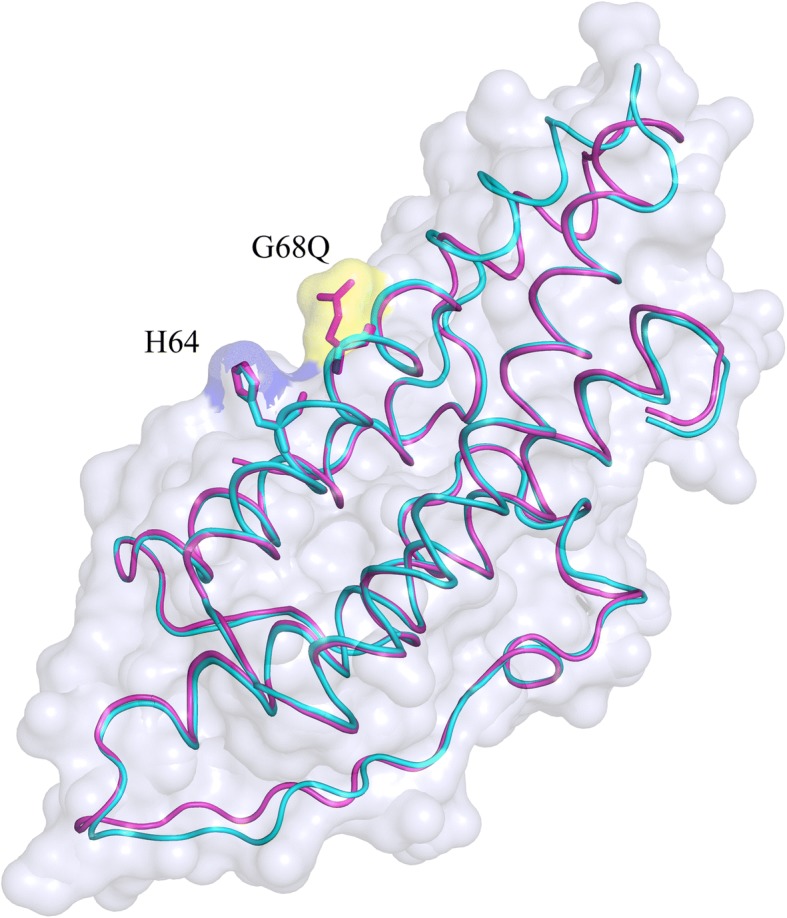
We report the analysis of partner binding interactions and phosphotransfer activity of the prototypical HPt protein Ypd1 from Saccharomyces cerevisiae using a set of H + 4 (G68) substituted proteins. Substitutions at this position with large, hydrophobic, or charged amino acids nearly abolished phospho-acceptance from the receiver domain of its upstream signaling partner, Sln1 (Sln1-R1). An in vitro binding assay indicated that G68 substitutions caused only modest decreases in affinity between Ypd1 and Sln1-R1, and these differences did not appear to be large enough to account for the observed decrease in phosphotransfer activity. The crystal structure of one of these H + 4 mutants, Ypd1-G68Q, which exhibited a diminished ability to participate in phosphotransfer, shows a similar overall structure to that of wild-type. Molecular modelling suggests that the highly conserved active site residues within the receiver domain of Sln1 must undergo rearrangement to accommodate larger H + 4 substitutions in Ypd1.
Phosphotransfer reactions require precise arrangement of active site elements to align the donor-acceptor atoms and stabilize the transition state during the reaction. Any changes likely result in an inability to form a viable transition state during phosphotransfer. Our data suggest that the high degree of evolutionary conservation of residues with small side chains at the H + 4 position in HPt proteins is required for optimal activity and that the presence of larger residues at the H + 4 position would cause alterations in the positioning of active site residues in the partner response regulator.
许多细菌和某些真核生物利用多步组氨酸到天冬氨酸磷酸传递来适应其细胞外环境。组氨酸磷酸转移(HPt)蛋白是这些途径的关键组成部分。HPt 蛋白具有遗传多样性,但具有共同的三级结构,其活性位点附近具有保守残基。在大量注释的 HPt 蛋白序列中,在相对磷酸化组氨酸的 H+4 位置发现了一个表面暴露的甘氨酸。先前的报告表明,该位置的取代会导致 HPt 蛋白与其同源信号伴侣之间的磷酸转移活性降低。
我们使用一组 H+4(G68)取代蛋白报告了来自酿酒酵母的典型 HPt 蛋白 Ypd1 的伴侣结合相互作用和磷酸转移活性的分析。用大的、疏水的或带电荷的氨基酸取代该位置几乎完全消除了其上游信号伴侣 Sln1(Sln1-R1)的磷酸接受。体外结合测定表明,G68 取代仅导致 Ypd1 与 Sln1-R1 之间的亲和力略有降低,并且这些差异似乎不足以解释观察到的磷酸转移活性降低。这些 H+4 突变体之一,Ypd1-G68Q,其参与磷酸转移的能力减弱,其晶体结构显示出与野生型相似的整体结构。分子建模表明,Sln1 的受体结构域内高度保守的活性位点残基必须重新排列以适应 Ypd1 中较大的 H+4 取代。
磷酸转移反应需要精确排列活性位点元素,以在反应过程中对准供体-受体原子并稳定过渡态。任何变化都可能导致在磷酸转移过程中无法形成可行的过渡态。我们的数据表明,HPt 蛋白中 H+4 位置的小侧链残基的高度进化保守性是最佳活性所必需的,而 H+4 位置较大残基的存在会导致伴侣响应调节剂中活性位点残基的定位发生改变。