Integrative Genetics and Genomics Graduate Group, University of California, Davis, CA 95616, USA.
Genomics to Improve Poultry Innovation Lab, University of California, Davis, CA 95616, USA.
Genes (Basel). 2019 Jan 18;10(1):61. doi: 10.3390/genes10010061.
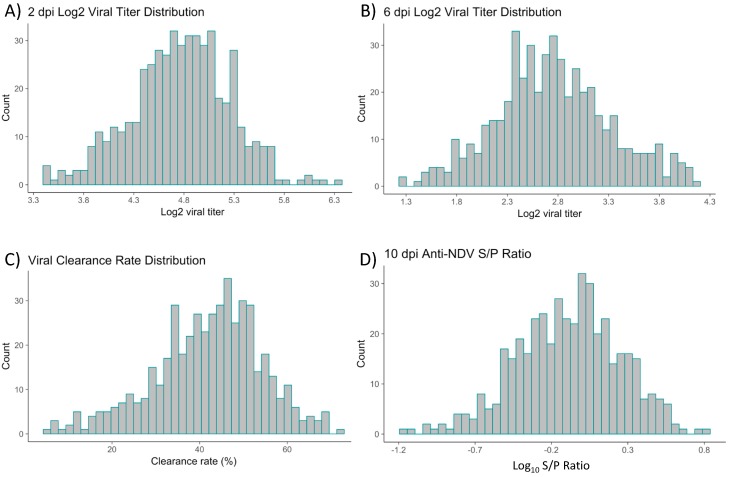
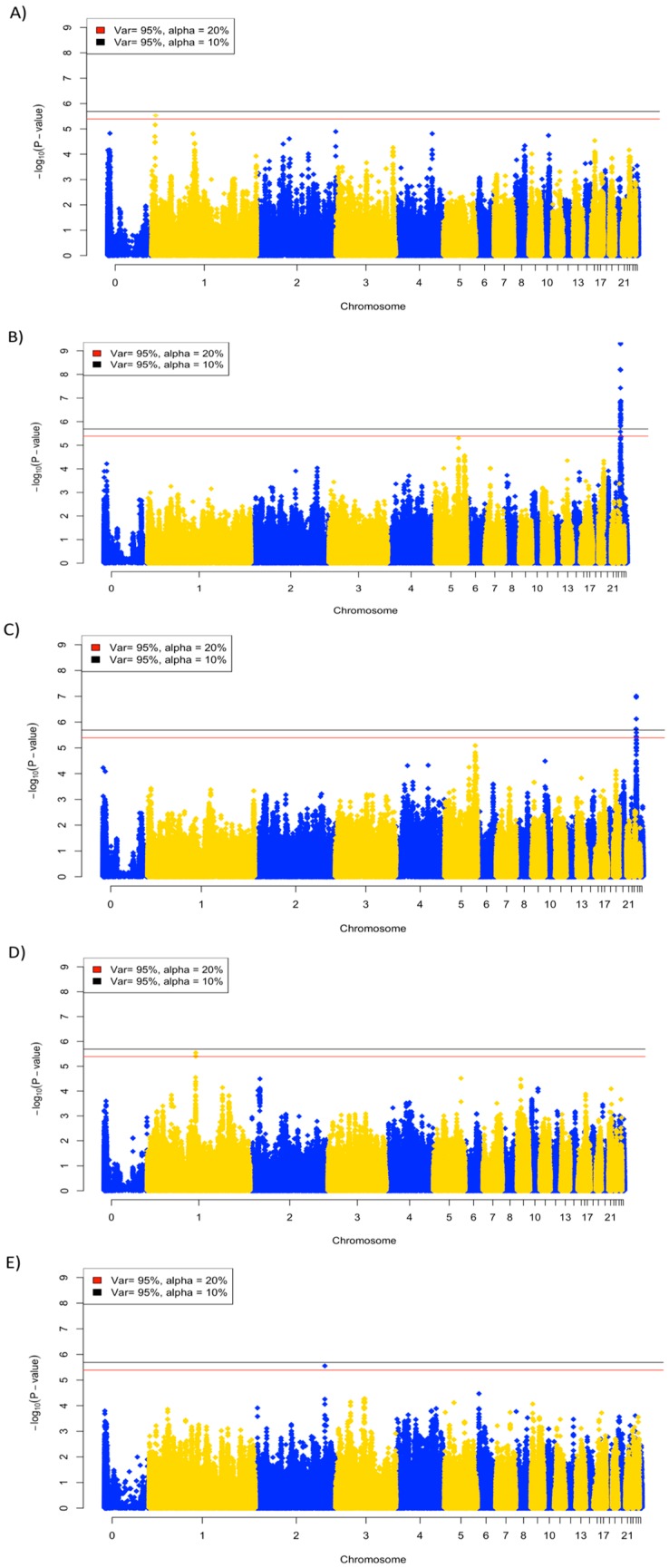
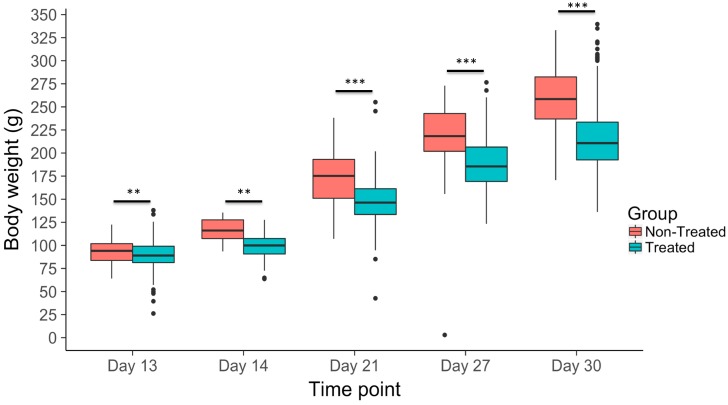
Newcastle disease virus (NDV) is a highly contagious avian pathogen that poses a tremendous threat to poultry producers in endemic zones due to its epidemic potential. To investigate host genetic resistance to NDV while under the effects of heat stress, a genome-wide association study (GWAS) was performed on Hy-Line Brown layer chickens that were challenged with NDV while under high ambient temperature to identify regions associated with host viral titer, circulating anti-NDV antibody titer, and body weight change. A single nucleotide polymorphism (SNP) on chromosome 1 was associated with viral titer at two days post-infection (dpi), while 30 SNPs spanning a quantitative trait loci (QTL) on chromosome 24 were associated with viral titer at 6 dpi. Immune related genes, such as CAMK1d and CCDC3 on chromosome 1, associated with viral titer at 2 dpi, and TIRAP, ETS1, and KIRREL3, associated with viral titer at 6 dpi, were located in two QTL regions for viral titer that were identified in this study. This study identified genomic regions and candidate genes that are associated with response to NDV during heat stress in Hy-Line Brown layer chickens. Regions identified for viral titer on chromosome 1 and 24, at 2 and 6 dpi, respectively, included several genes that have key roles in regulating the immune response.
新城疫病毒(NDV)是一种高传染性的禽病原体,由于其流行潜力,对流行地区的家禽养殖者构成了巨大威胁。为了研究宿主对 NDV 的遗传抗性在热应激下的情况,对海兰褐蛋鸡进行了全基因组关联研究(GWAS),这些鸡在高环境温度下受到 NDV 的挑战,以确定与宿主病毒滴度、循环抗 NDV 抗体滴度和体重变化相关的区域。在感染后两天(dpi),1 号染色体上的一个单核苷酸多态性(SNP)与病毒滴度相关,而 24 号染色体上跨越数量性状基因座(QTL)的 30 个 SNP 与 6 dpi 的病毒滴度相关。与病毒滴度相关的免疫相关基因,如 1 号染色体上的 CAMK1d 和 CCDC3,与 2 dpi 的病毒滴度相关,TIRAP、ETS1 和 KIRREL3,与 6 dpi 的病毒滴度相关,位于本研究中鉴定的两个与病毒滴度相关的 QTL 区域。本研究鉴定了与海兰褐蛋鸡在热应激下对 NDV 反应相关的基因组区域和候选基因。在 1 号和 24 号染色体上分别鉴定出与 2 和 6 dpi 的病毒滴度相关的区域,包括几个在调节免疫反应中起关键作用的基因。