
有丝分裂退出网络通过在多个组件之间分配调节来整合时间和空间信号。
The Mitotic Exit Network integrates temporal and spatial signals by distributing regulation across multiple components.
机构信息
David H. Koch Institute for Integrative Cancer Research, Howard Hughes Medical Institute, Massachusetts Institute of Technology, Cambridge, United States.
出版信息
Elife. 2019 Jan 23;8:e41139. doi: 10.7554/eLife.41139.
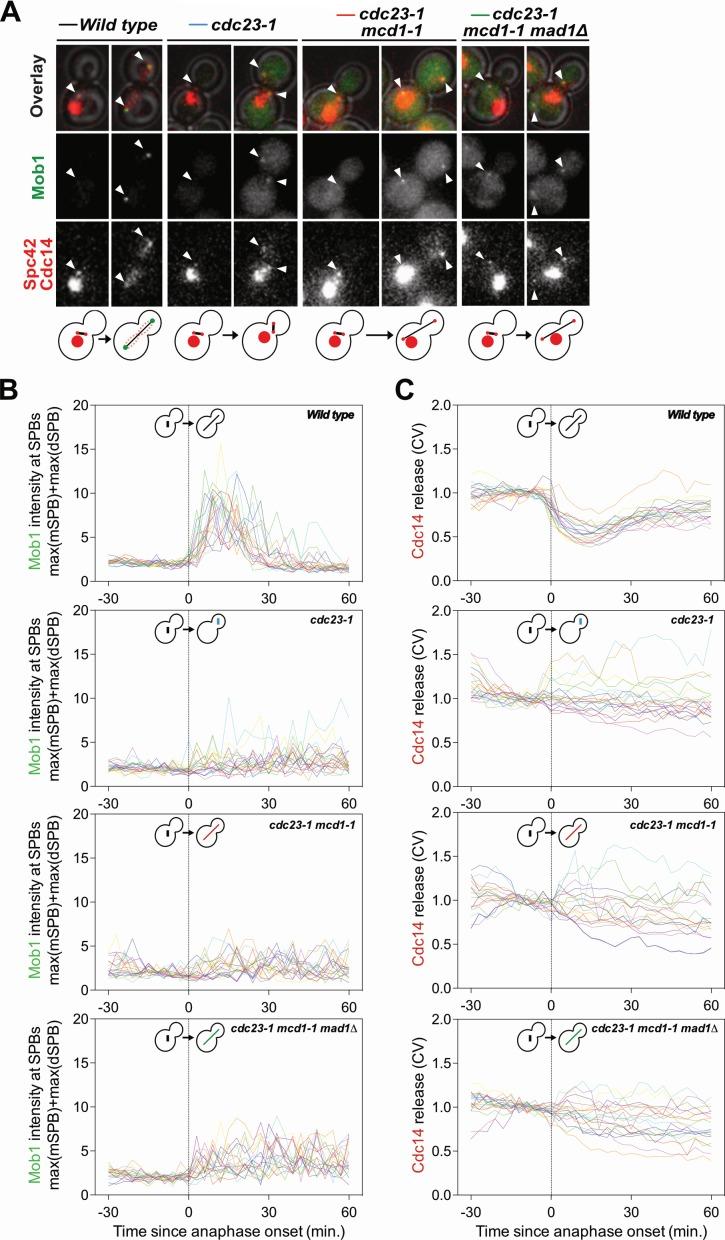
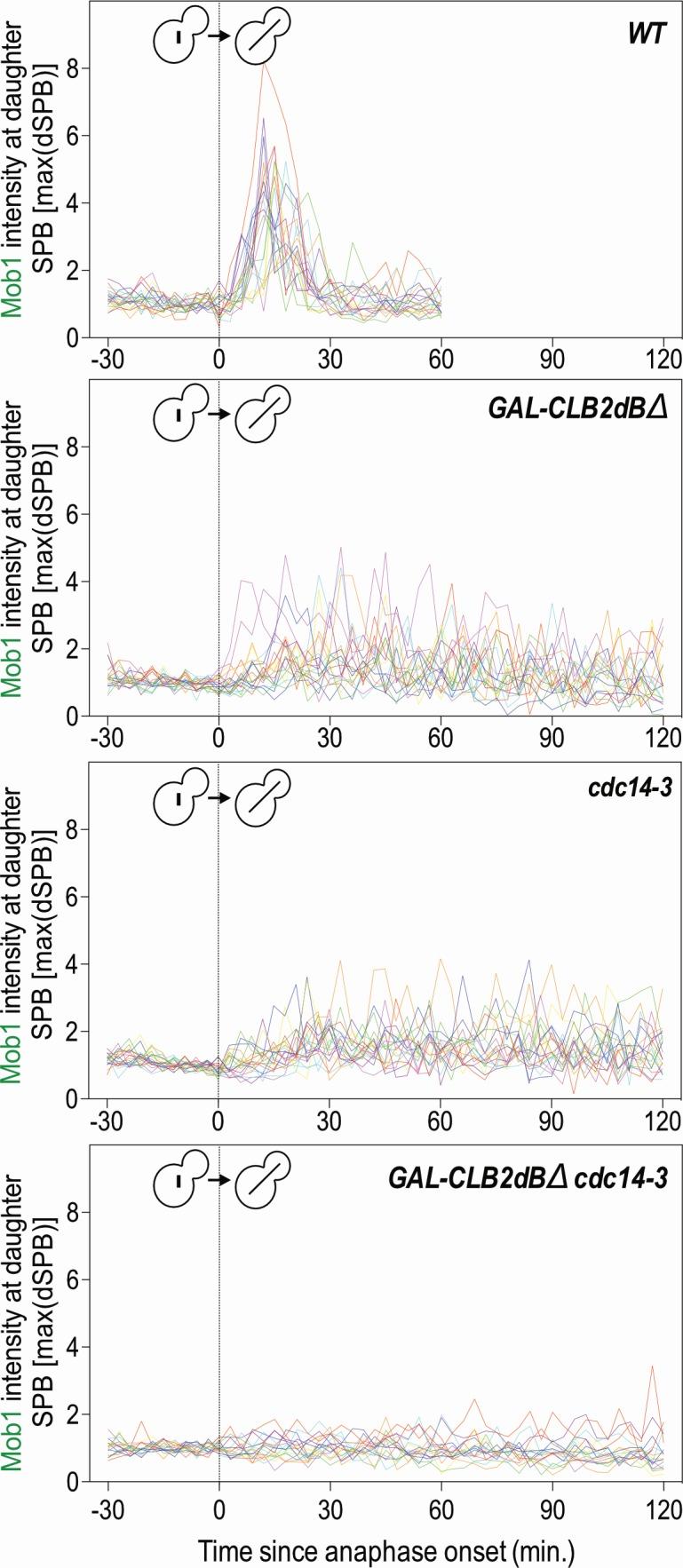
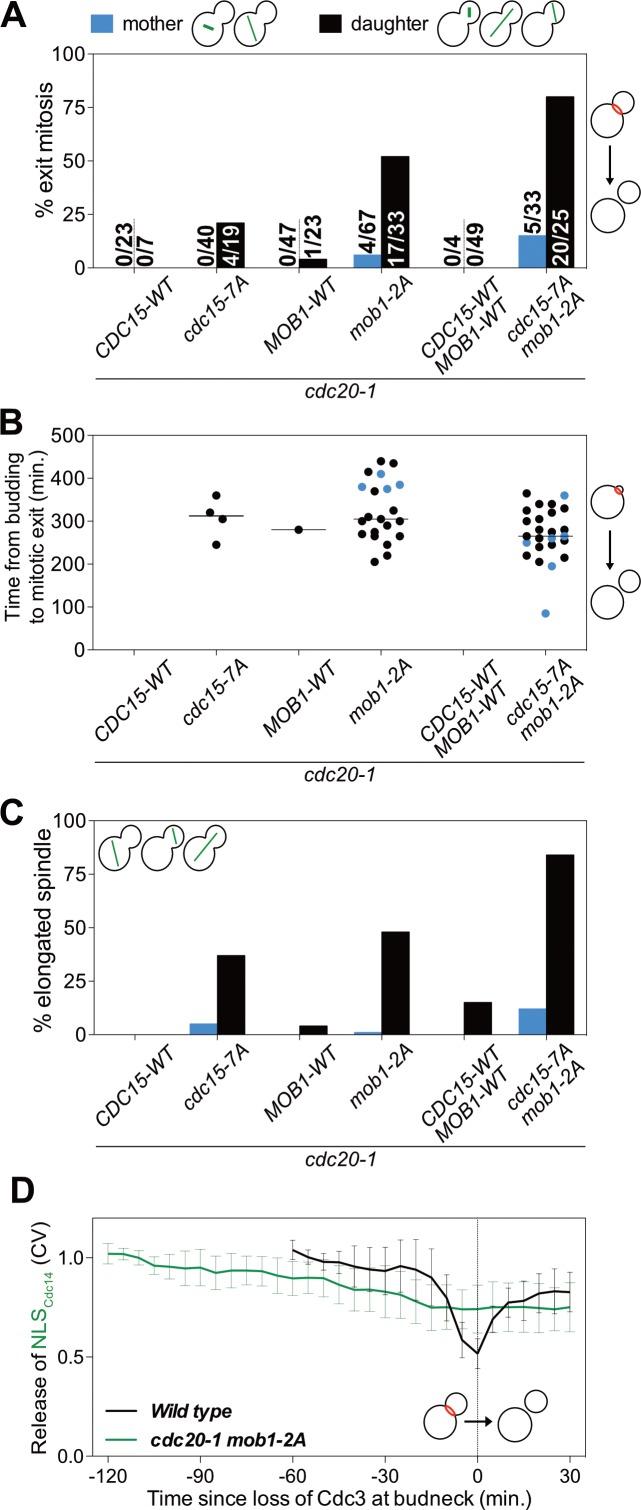
GTPase signal transduction pathways control cellular decision making by integrating multiple cellular events into a single signal. The Mitotic Exit Network (MEN), a Ras-like GTPase signaling pathway, integrates spatial and temporal cues to ensure that cytokinesis only occurs after the genome has partitioned between mother and daughter cells during anaphase. Here we show that signal integration does not occur at a single step of the pathway. Rather, sequential components of the pathway are controlled in series by different signals. The spatial signal, nuclear position, regulates the MEN GTPase Tem1. The temporal signal, commencement of anaphase, is mediated by mitotic cyclin-dependent kinase (CDK) phosphorylation of the GTPase's downstream kinases. We propose that integrating multiple signals through sequential steps in the GTPase pathway represents a generalizable principle in GTPase signaling and explains why intracellular signal transmission is a multi-step process. Serial signal integration rather than signal amplification makes multi-step signal transduction necessary.
GTPase 信号转导途径通过将多个细胞事件整合到一个信号中,控制细胞决策。有丝分裂退出网络 (MEN) 是一种 Ras 样 GTPase 信号通路,它整合了空间和时间线索,以确保细胞分裂仅在有丝分裂后期母细胞和子细胞之间的基因组分离后发生。在这里,我们表明信号整合不是在途径的单个步骤中发生的。相反,途径的顺序组分通过不同的信号依次控制。空间信号,核位置,调节 MEN GTPase Tem1。时间信号,有丝分裂的开始,是由有丝分裂周期蛋白依赖性激酶 (CDK) 对 GTPase 的下游激酶的磷酸化介导的。我们提出,通过 GTPase 途径中的顺序步骤整合多个信号代表了 GTPase 信号中的一个普遍原则,并解释了为什么细胞内信号转导是一个多步骤的过程。通过顺序步骤进行的串行信号整合而不是信号放大使得多步骤信号转导成为必要。






 Zotero 插件