Strandman Satu, Zhu X X
Département de Chimie, Université de Montréal, C.P. 6128, Succursale Centre-ville, Montreal, QC H3C 3J7, Canada.
Gels. 2016 Apr 8;2(2):16. doi: 10.3390/gels2020016.
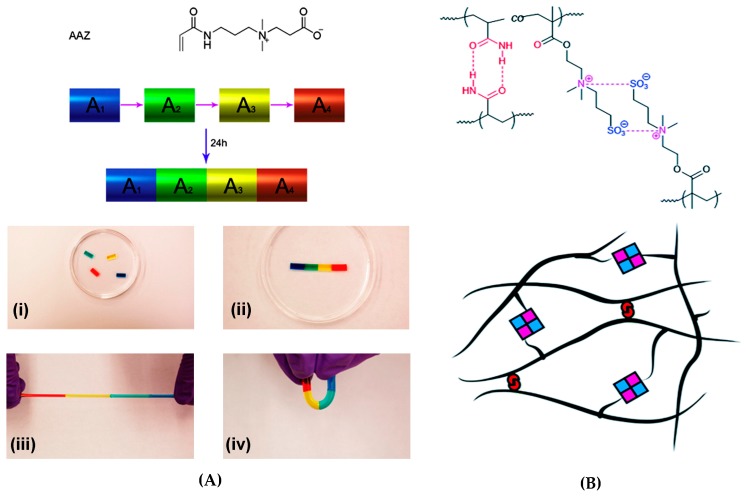
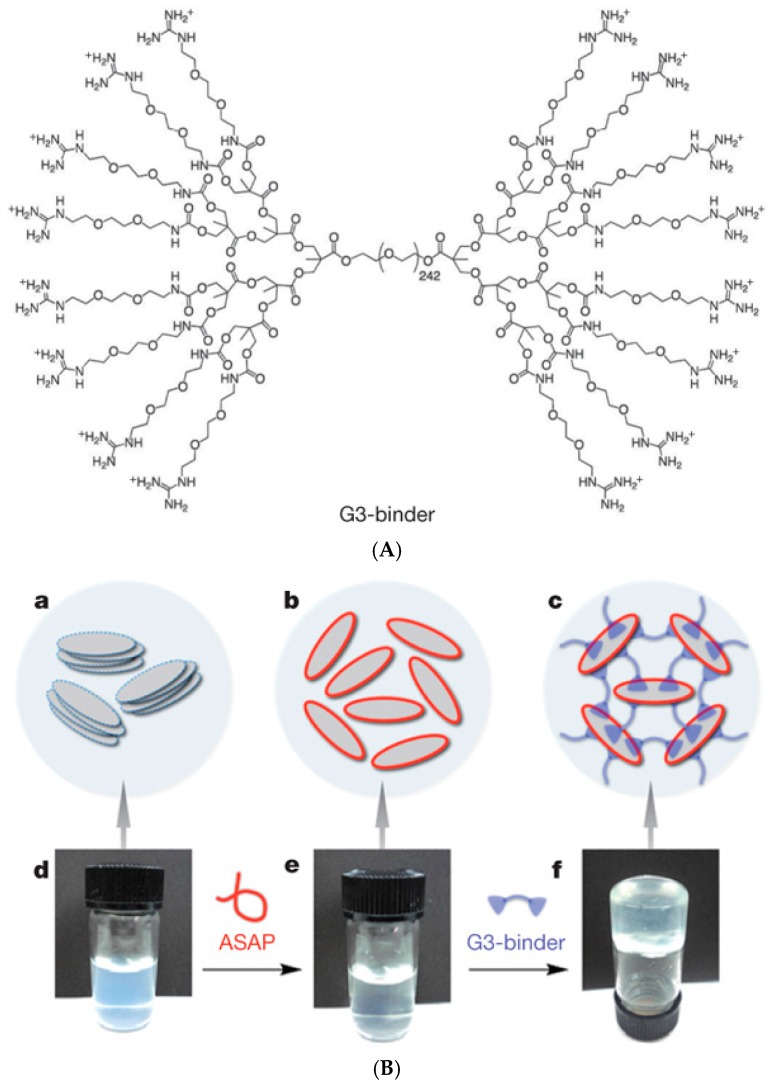
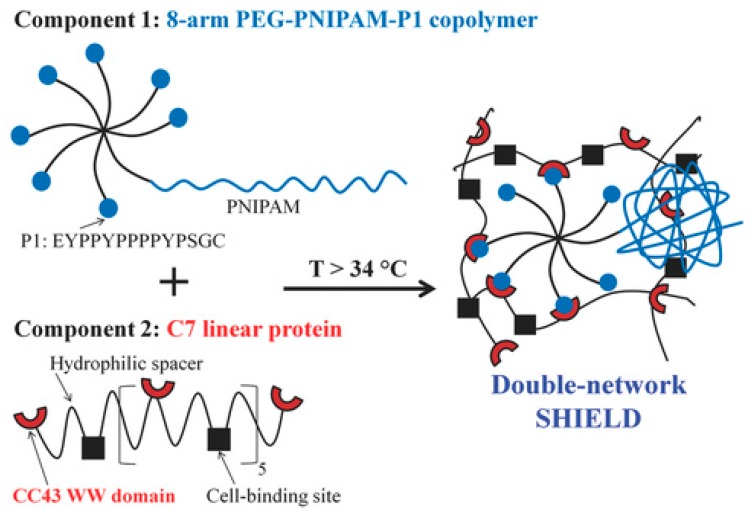
Dynamic and reversible polymer networks capable of self-healing, , restoring their mechanical properties after deformation and failure, are gaining increasing research interest, as there is a continuous need towards extending the lifetime and improving the safety and performance of materials particularly in biomedical applications. Hydrogels are versatile materials that may allow self-healing through a variety of covalent and non-covalent bonding strategies. The structural recovery of physical gels has long been a topic of interest in soft materials physics and various supramolecular interactions can induce this kind of recovery. This review highlights the non-covalent strategies of building self-repairing hydrogels and the characterization of their mechanical properties. Potential applications and future prospects of these materials are also discussed.
能够自我修复,即在变形和破坏后恢复其机械性能的动态可逆聚合物网络,正越来越受到研究关注,因为人们一直有需求来延长材料的使用寿命并提高其安全性和性能,特别是在生物医学应用中。水凝胶是多功能材料,可通过多种共价和非共价键合策略实现自我修复。物理凝胶的结构恢复长期以来一直是软材料物理学中感兴趣的话题,各种超分子相互作用可引发这种恢复。本文综述强调了构建自修复水凝胶的非共价策略及其机械性能的表征。还讨论了这些材料的潜在应用和未来前景。