Department of Anatomy & Neuroscience, University of Melbourne, Melbourne, VIC, Australia.
Murdoch Children's Research Institute, Melbourne, VIC, Australia.
Genome Med. 2019 Jan 23;11(1):3. doi: 10.1186/s13073-019-0615-0.
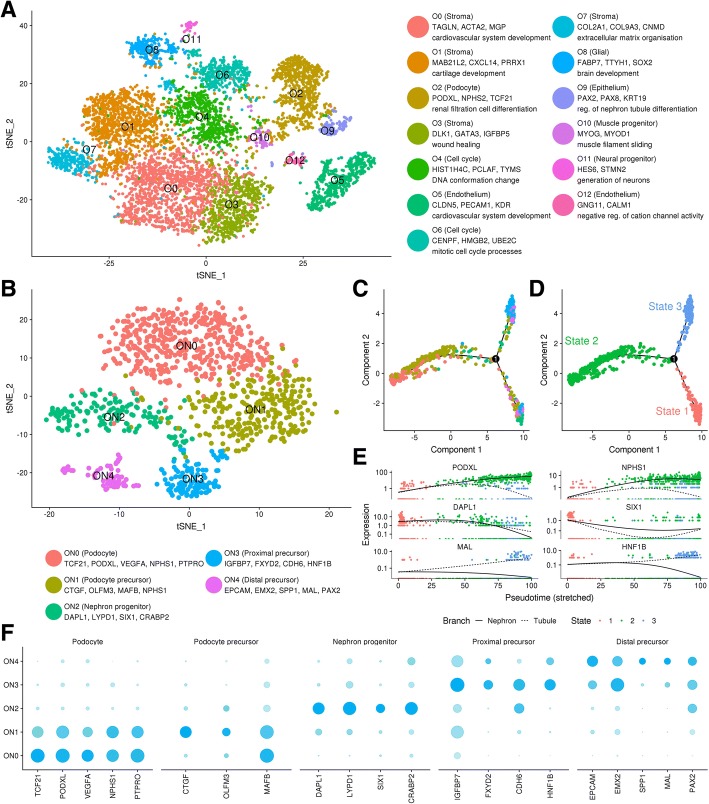
Human kidney organoids hold promise for studying development, disease modelling and drug screening. However, the utility of stem cell-derived kidney tissues will depend on how faithfully these replicate normal fetal development at the level of cellular identity and complexity.
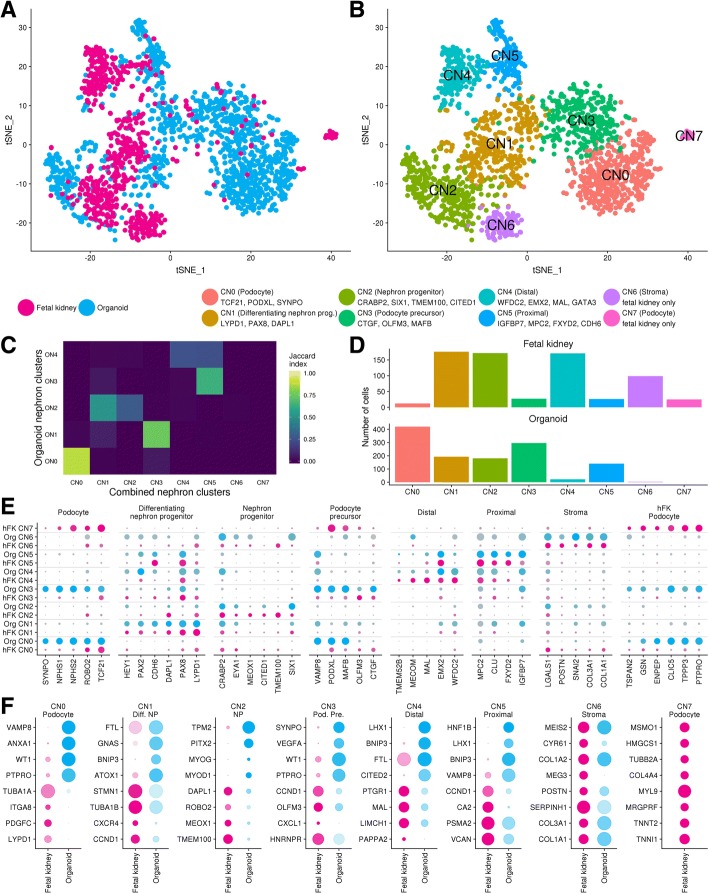
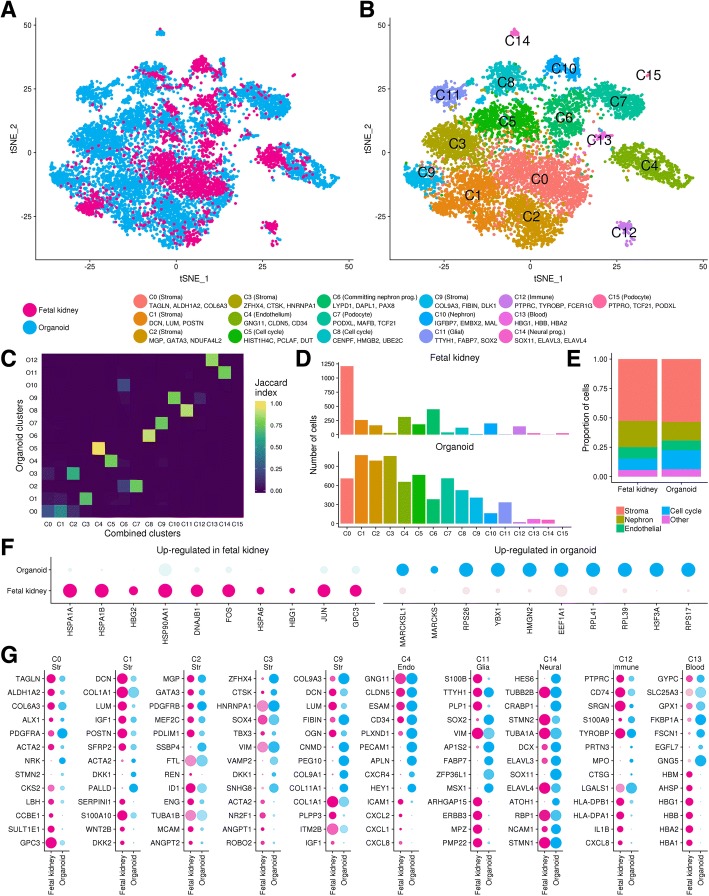
Here, we present an integrated analysis of single cell datasets from human kidney organoids and human fetal kidney to assess similarities and differences between the component cell types.
Clusters in the combined dataset contained cells from both organoid and fetal kidney with transcriptional congruence for key stromal, endothelial and nephron cell type-specific markers. Organoid enriched neural, glial and muscle progenitor populations were also evident. Major transcriptional differences between organoid and human tissue were likely related to technical artefacts. Cell type-specific comparisons revealed differences in stromal, endothelial and nephron progenitor cell types including expression of WNT2B in the human fetal kidney stroma.
This study supports the fidelity of kidney organoids as models of the developing kidney and affirms their potential in disease modelling and drug screening.
人类肾类器官有望用于研究发育、疾病建模和药物筛选。然而,干细胞衍生的肾组织的效用将取决于它们在细胞身份和复杂性方面多么忠实地复制正常的胎儿发育。
在这里,我们对来自人类肾类器官和人类胎儿肾的单细胞数据集进行了综合分析,以评估组成细胞类型之间的相似性和差异性。
组合数据集的聚类包含了来自类器官和胎儿肾的细胞,其关键基质、内皮和肾单位细胞类型特异性标志物的转录具有一致性。类器官富集的神经、胶质和肌肉祖细胞群也很明显。类器官和人体组织之间的主要转录差异可能与技术伪影有关。细胞类型特异性比较显示了基质、内皮和肾祖细胞类型的差异,包括人类胎儿肾基质中 WNT2B 的表达。
这项研究支持了肾类器官作为发育中肾脏模型的保真度,并肯定了它们在疾病建模和药物筛选中的潜力。