Murdoch Children's Research Institute, Flemington Rd, Parkville, Victoria 3052, Australia.
Department of Paediatrics, The University of Melbourne, Parkville, Victoria 3010, Australia.
Development. 2019 Mar 7;146(5):dev172361. doi: 10.1242/dev.172361.
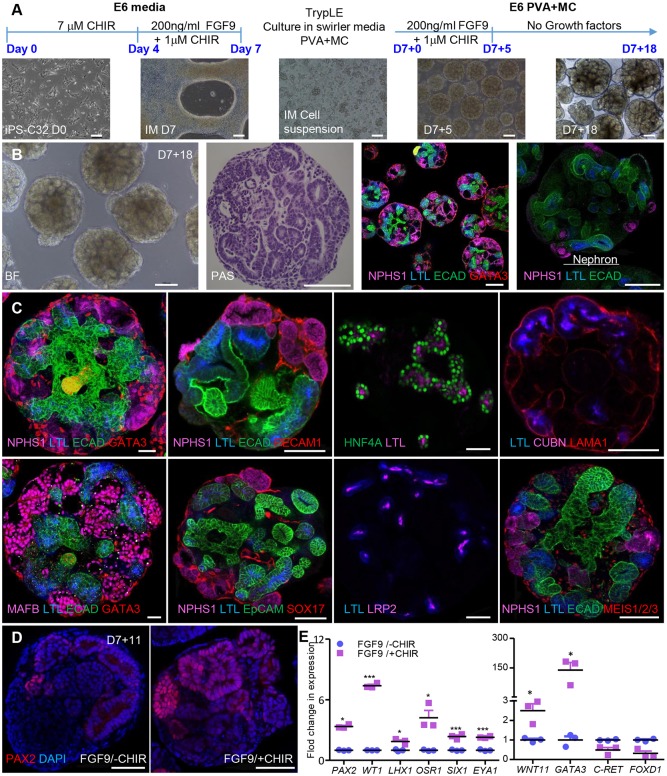
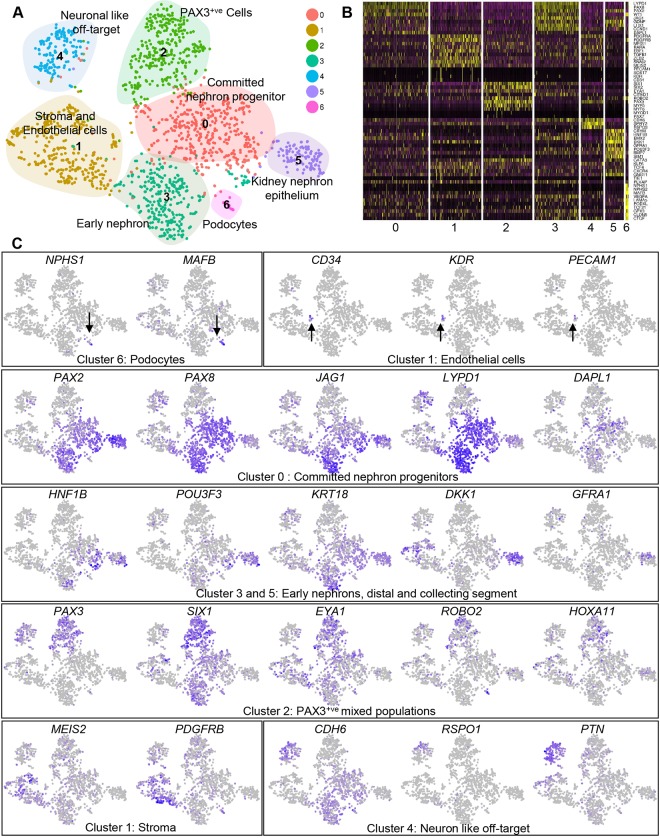
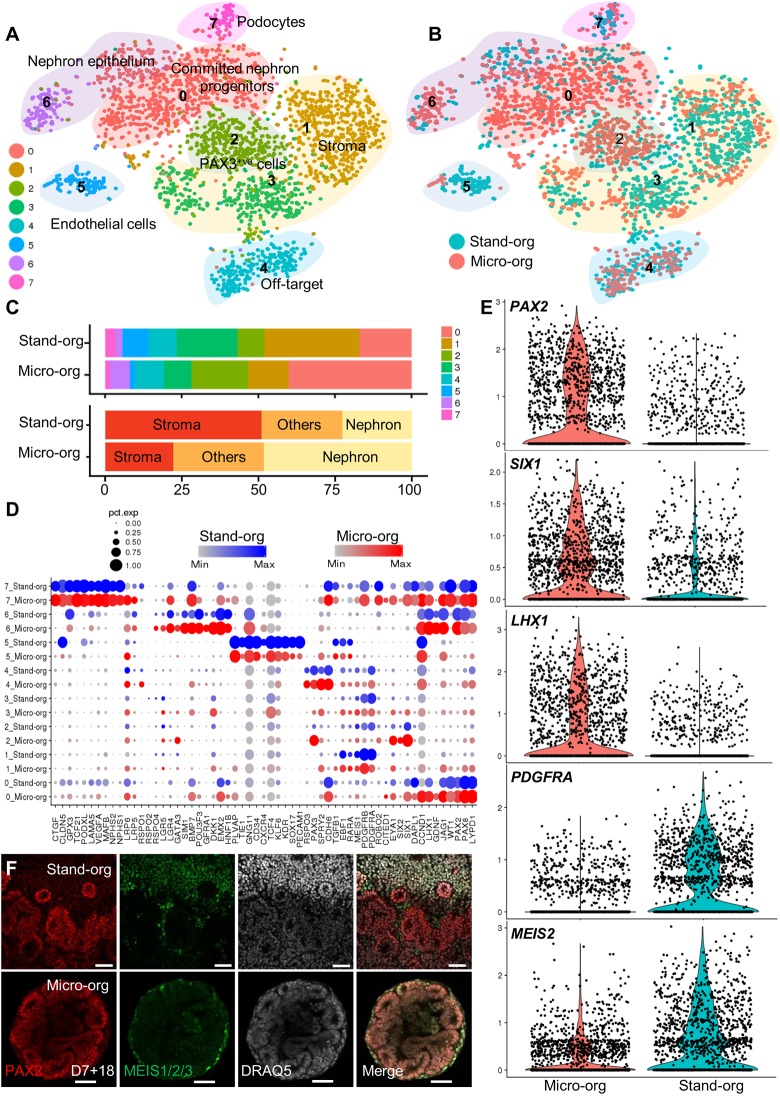
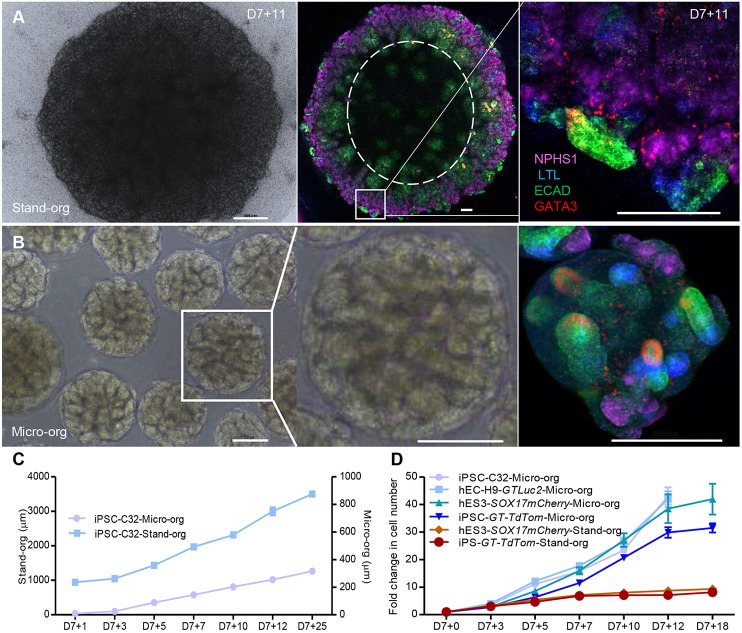
Kidney organoids have potential uses in disease modelling, drug screening and regenerative medicine. However, novel cost-effective techniques are needed to enable scaled-up production of kidney cell types We describe here a modified suspension culture method for the generation of kidney micro-organoids from human pluripotent stem cells. Optimisation of differentiation conditions allowed the formation of micro-organoids, each containing six to ten nephrons that were surrounded by endothelial and stromal populations. Single cell transcriptional profiling confirmed the presence and transcriptional equivalence of all anticipated renal cell types consistent with a previous organoid culture method. This suspension culture micro-organoid methodology resulted in a three- to fourfold increase in final cell yield compared with static culture, thereby representing an economical approach to the production of kidney cells for various biological applications.
肾类器官在疾病建模、药物筛选和再生医学中有潜在的应用。然而,需要新的具有成本效益的技术来实现肾细胞类型的规模化生产。在这里,我们描述了一种改良的悬浮培养方法,用于从人多能干细胞中生成肾微类器官。分化条件的优化允许形成微类器官,每个微类器官包含六到十个肾单位,周围是内皮细胞和基质细胞群体。单细胞转录组分析证实了所有预期的肾细胞类型的存在和转录等效性,与以前的类器官培养方法一致。与静态培养相比,这种悬浮培养微类器官方法使最终细胞产量增加了三到四倍,因此代表了一种经济有效的方法来生产用于各种生物学应用的肾细胞。