Renal Division, Brigham and Women's Hospital, Department of Medicine, Harvard Medical School, Boston, MA 02115, USA.
INSERM U1151, Institut Necker-Enfants Malades, Université Paris Descartes, Paris 75743, France.
Sci Transl Med. 2019 Jan 23;11(476). doi: 10.1126/scitranslmed.aav4754.
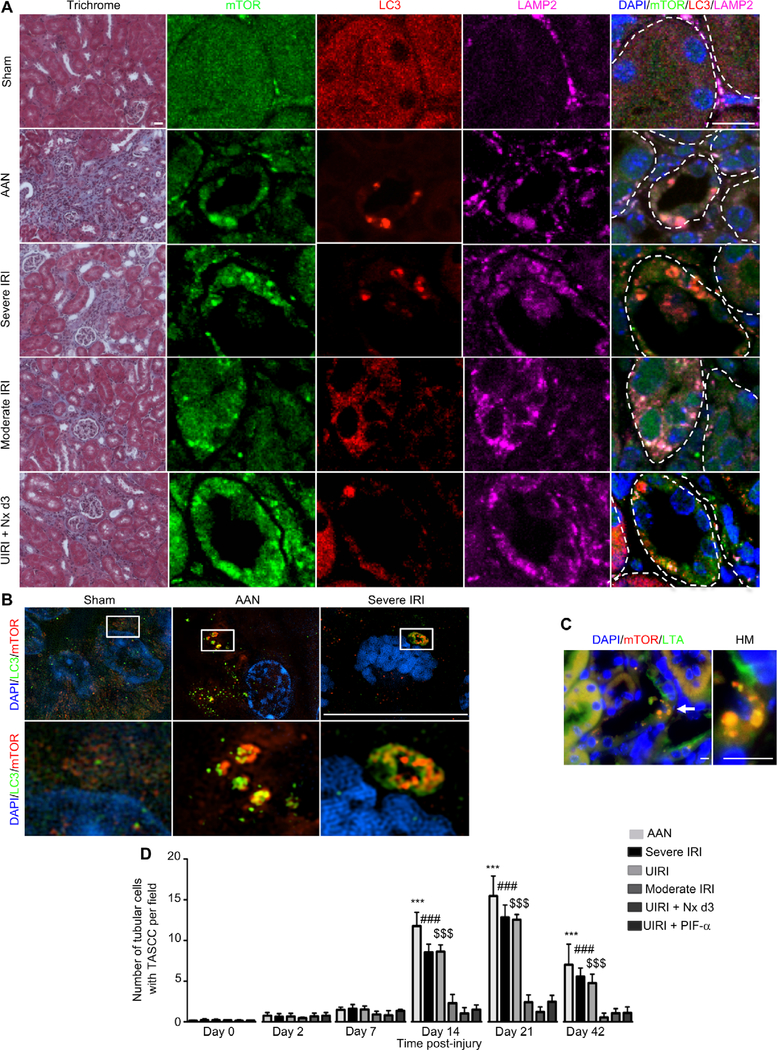
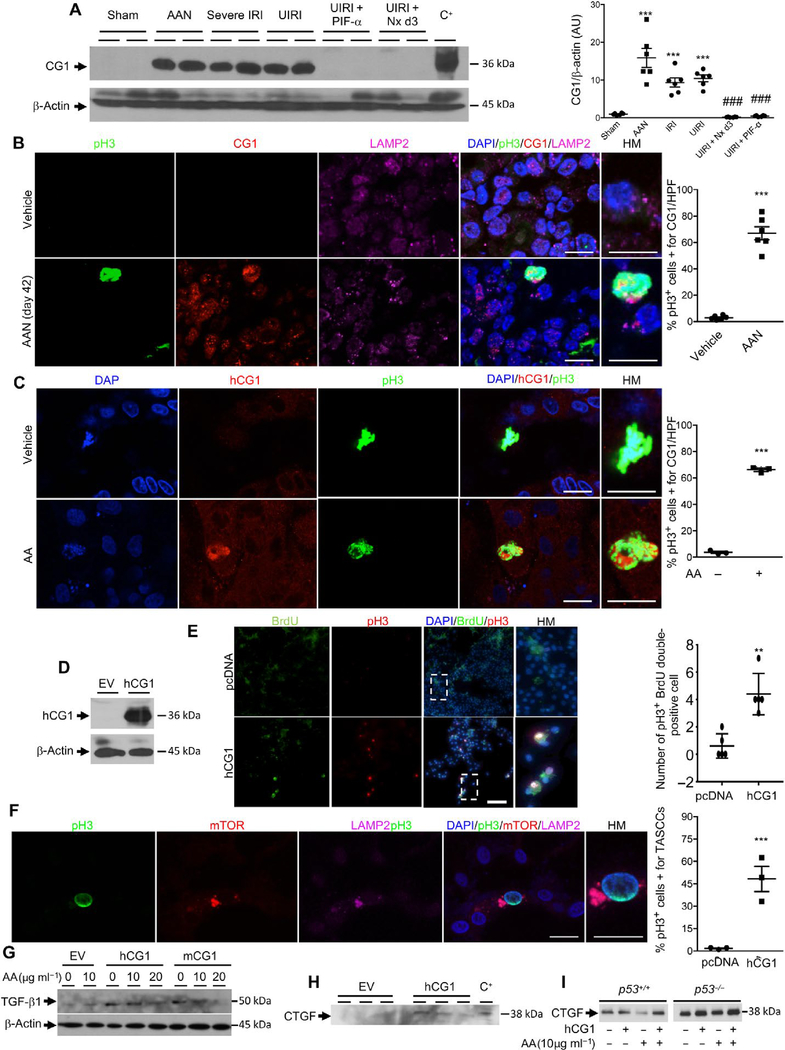
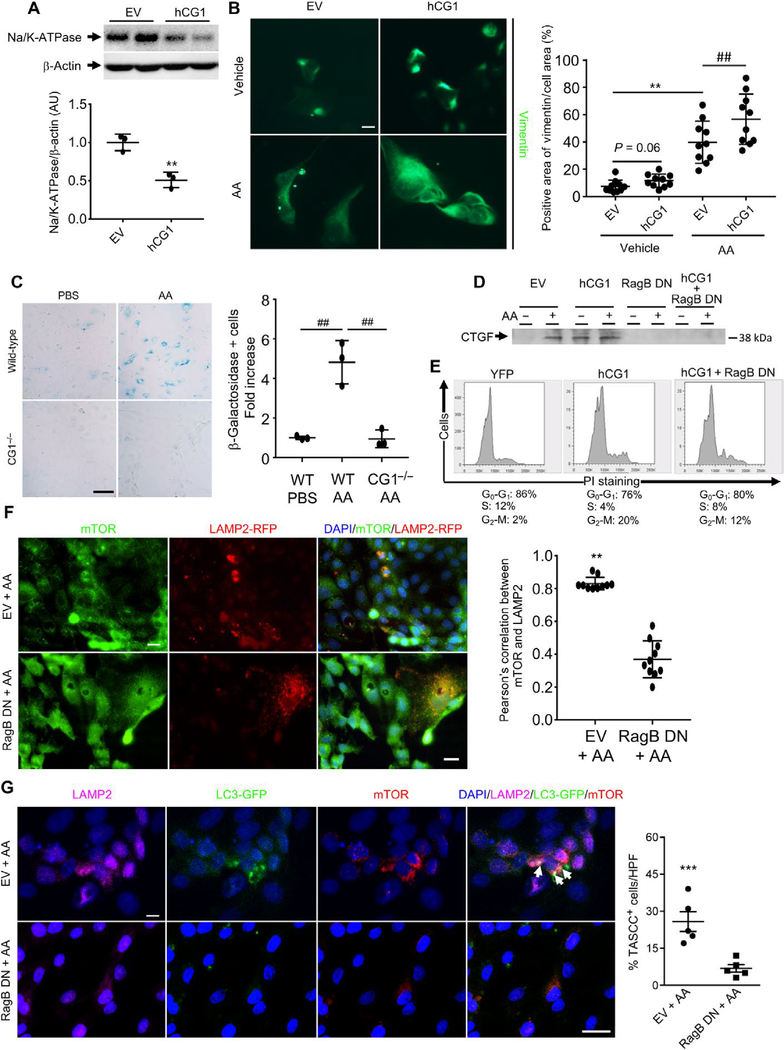
Fibrosis contributes to the progression of chronic kidney disease (CKD). Severe acute kidney injury can lead to CKD through proximal tubular cell (PTC) cycle arrest in the G-M phase, with secretion of profibrotic factors. Here, we show that epithelial cells in the G-M phase form target of rapamycin (TOR)-autophagy spatial coupling compartments (TASCCs), which promote profibrotic secretion similar to the senescence-associated secretory phenotype. Cyclin G1 (CG1), an atypical cyclin, promoted G-M arrest in PTCs and up-regulated TASCC formation. PTC TASCC formation was also present in humans with CKD. Prevention of TASCC formation in cultured PTCs blocked secretion of profibrotic factors. PTC-specific knockout of a key TASCC component reduced the rate of kidney fibrosis progression in mice with CKD. CG1 induction and TASCC formation also occur in liver fibrosis. Deletion of CG1 reduced G-M phase cells and TASCC formation in vivo. This study provides mechanistic evidence supporting how profibrotic G-M arrest is induced in kidney injury and how G-M-arrested PTCs promote fibrosis, identifying new therapeutic targets to mitigate kidney fibrosis.
纤维化是慢性肾脏病(CKD)进展的原因之一。严重的急性肾损伤可通过 G1 期到 M 期的近端肾小管细胞(PTC)周期阻滞,导致分泌促纤维化因子,进而导致 CKD。在这里,我们发现 G1 期的上皮细胞形成了雷帕霉素靶蛋白(TOR)-自噬空间偶联区(TASCC),其促进了类似于衰老相关分泌表型的促纤维化分泌。细胞周期蛋白 G1(CG1)是一种非典型细胞周期蛋白,可促进 PTC 的 G1 期到 M 期阻滞,并上调 TASCC 的形成。在患有 CKD 的患者中也存在 PTC 的 TASCC 形成。在培养的 PTC 中阻止 TASCC 形成可阻断促纤维化因子的分泌。在 CKD 小鼠中,特异性敲除 TASCC 的关键成分可降低肾脏纤维化进展的速度。CG1 的诱导和 TASCC 的形成也发生在肝纤维化中。CG1 的缺失减少了体内 G1 期细胞和 TASCC 的形成。这项研究提供了机制上的证据,支持了肾损伤中促纤维化 G1 期阻滞的诱导方式,以及 G1 期阻滞的 PTC 如何促进纤维化,为减轻肾纤维化提供了新的治疗靶点。