Liu Qisha, Li Fan, Zhuang Yaoyao, Xu Jian, Wang Jianwei, Mao Xuhua, Zhang Yewei, Liu Xingyin
1Department of Microbiology, Key Laboratory of Pathogen of Jiangsu Province, Nanjing Medical University, Nanjing, China.
2Key Laboratory of Human Functional Genomics of Jiangsu Province, Nanjing Medical University, Nanjing, China.
Gut Pathog. 2019 Jan 18;11:1. doi: 10.1186/s13099-018-0281-6. eCollection 2019.
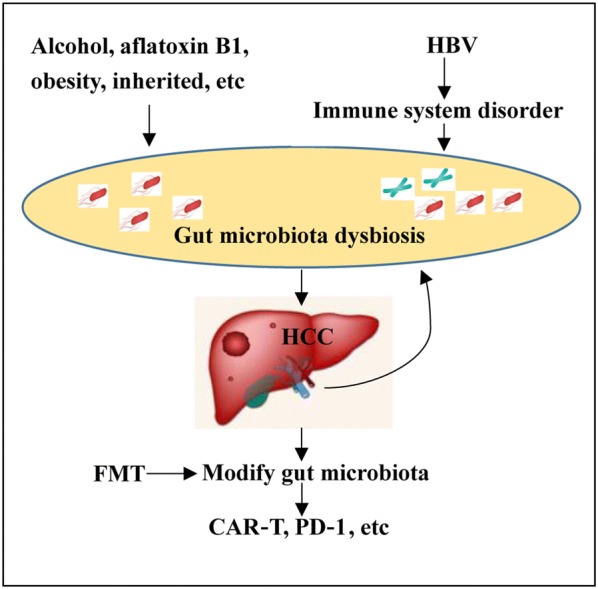
The onset of hepatocellular carcinoma (HCC) ranked fifth malignancies all over the world. Increasing evidences showed that the distribution of HCC was related to the incidence of chronic hepatitis B virus (HBV) infection and other factors, such as alcoholism, aflatoxin B1 ingestion and obesity. Recent studies demonstrated that gut dysbiosis plays an important role in liver diseases. However, the researches on gut microbiota of HBV and non-HBV non-HCV related HCC have not been reported. In this study, we investigated the differences between the gut microbiota of HBV related HCC (B-HCC) and non-HBV non-HCV related HCC (NBNC-HCC), finally found some potential bacteria, linking different pathological mechanism of both types of HCCs.
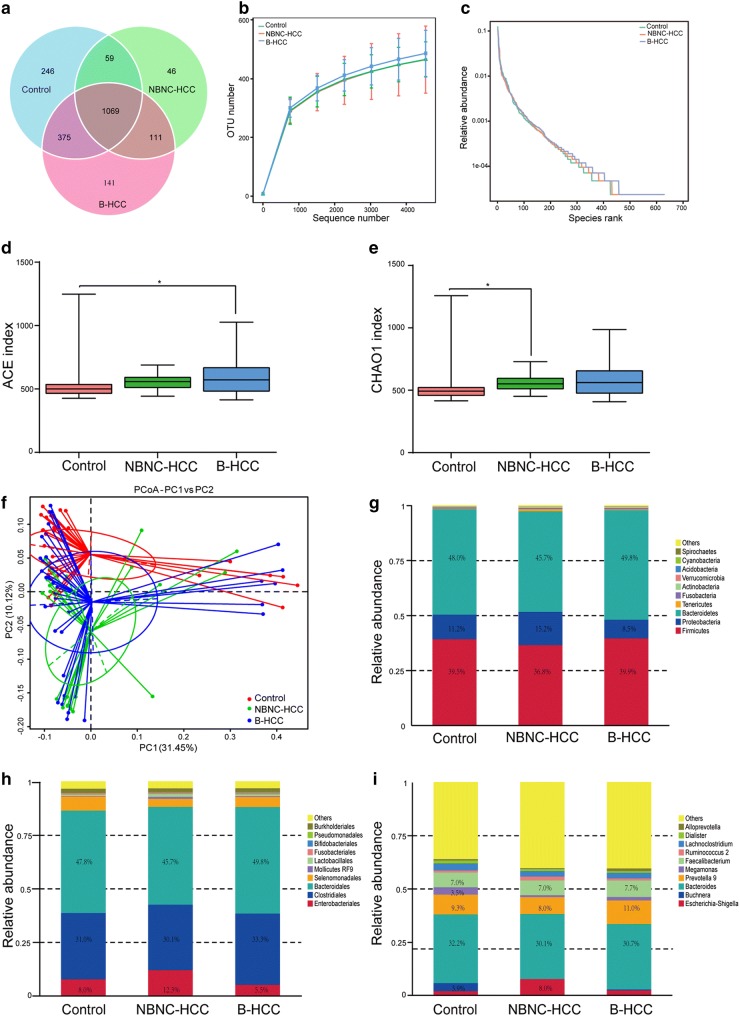
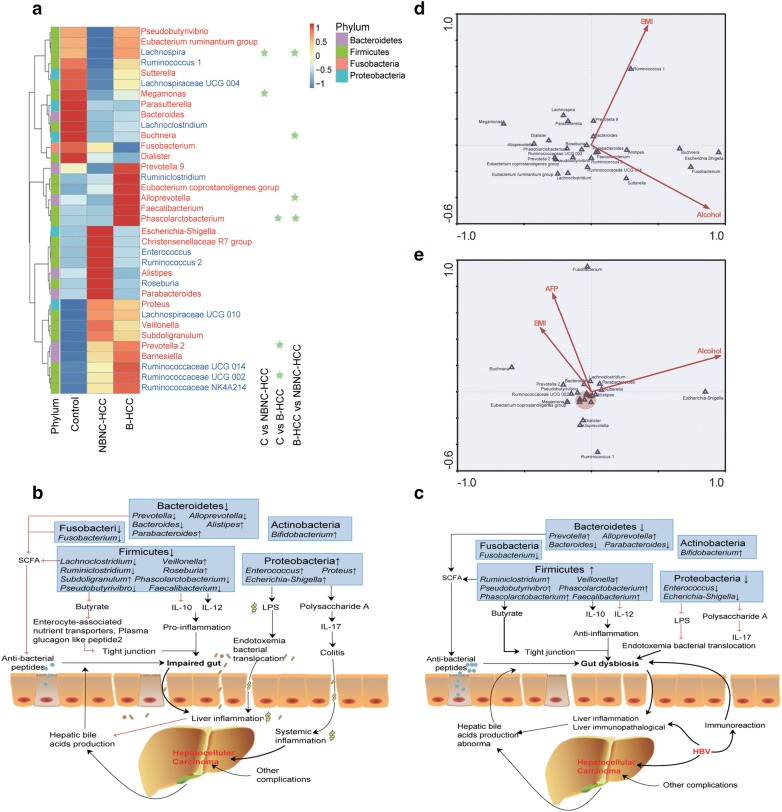
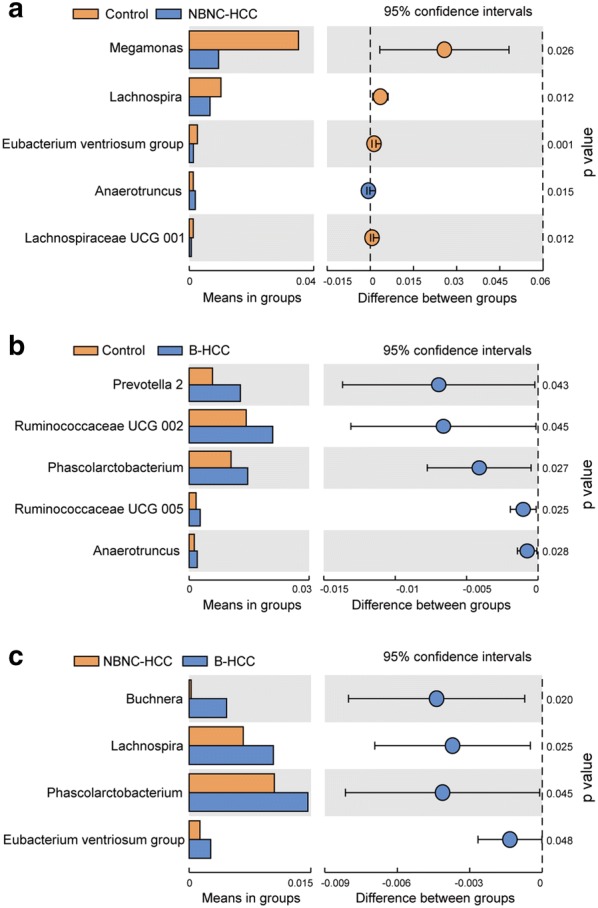
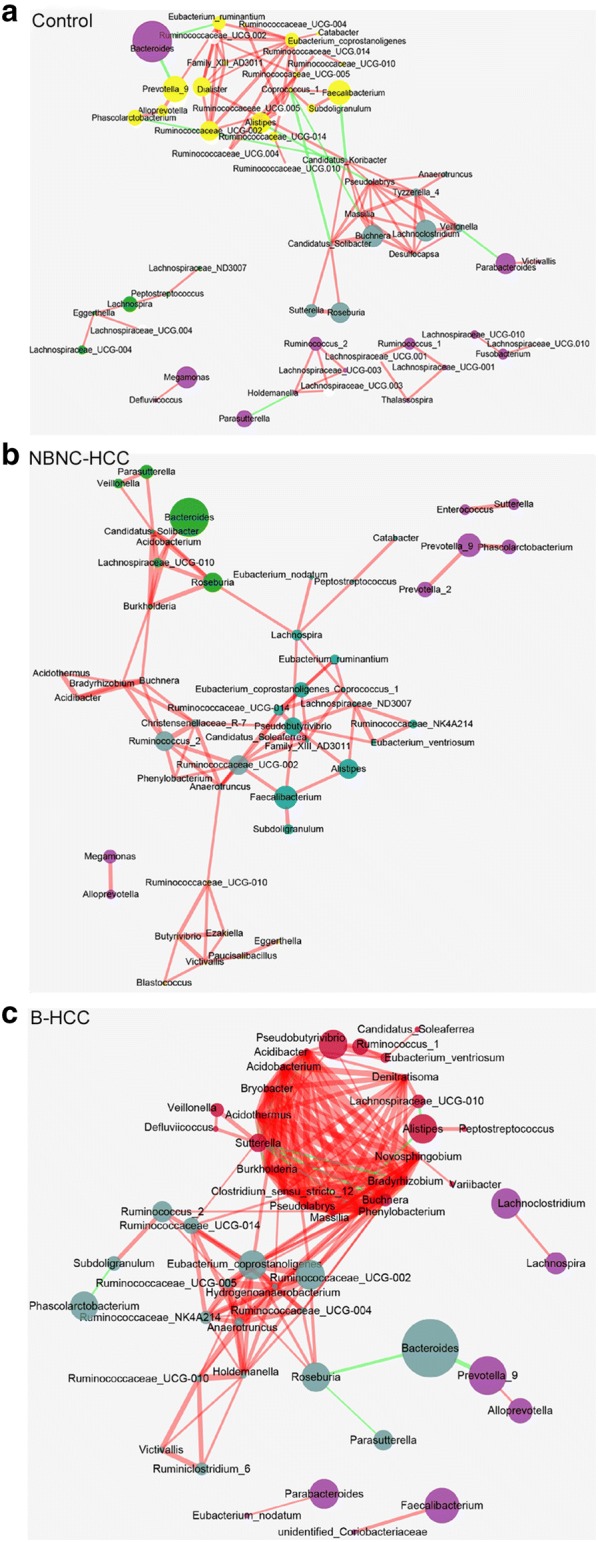
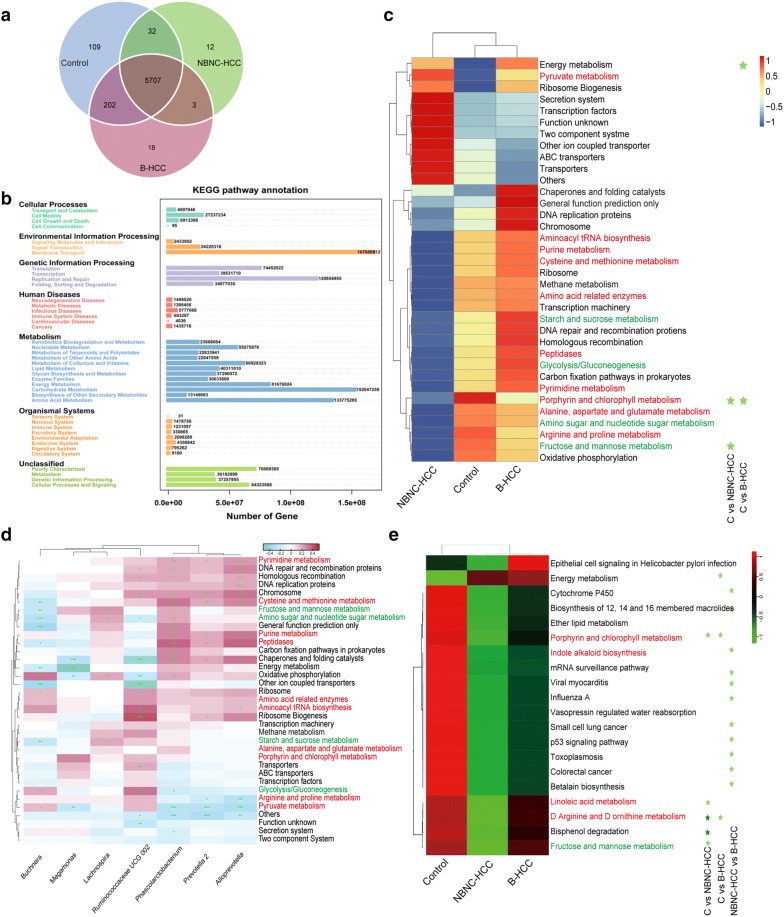
We carried out 16S rRNA analyses in a cohort of 33 healthy controls, 35 individuals with HBV related HCC (B-HCC) and 22 individuals with non-HBV non-HCV (NBNC) related HCC (NBNC-HCC). We found that the species richness of fecal microbiota of B-HCC patients was much higher than other two groups. Interestingly, the feces of NBNC-HCC patients harbored more potential pro-inflammatory bacteria (-, ) and reduced levels of , , which results in decrease potential of anti-inflammatory short-chain fatty acids. The feces of NBNC-HCC patients had relatively fewer abundance of multiple biological pathways related to amino acid and glucose metabolism, but high level of transport and secretion in some types. However, the B-HCC patients had opposite results of bacterial composition and associated multiple biological pathways versus NBNC-HCC patients. Meanwhile, we found that aberrant network of gut microbiota occurred differently in B-HCC and NBNC-HCC patients.
Our study indicated that B-HCC and NBNC-HCC patients showed differential abundance of bacteria involved in different functions or biological pathways. We suggested the modification of specific gut microbiota may provide the therapeutic benefit for B-HCC and NBNC-HCC.
肝细胞癌(HCC)的发病率在全球所有恶性肿瘤中排名第五。越来越多的证据表明,HCC的分布与慢性乙型肝炎病毒(HBV)感染的发生率以及其他因素有关,如酗酒、黄曲霉毒素B1摄入和肥胖。最近的研究表明,肠道菌群失调在肝脏疾病中起重要作用。然而,关于HBV和非HBV非HCV相关HCC的肠道微生物群的研究尚未见报道。在本研究中,我们调查了HBV相关HCC(B-HCC)和非HBV非HCV相关HCC(NBNC-HCC)的肠道微生物群之间的差异,最终发现了一些潜在细菌,它们与这两种类型HCC的不同病理机制有关。
我们对33名健康对照者、35名HBV相关HCC患者(B-HCC)和22名非HBV非HCV(NBNC)相关HCC患者(NBNC-HCC)进行了16S rRNA分析。我们发现,B-HCC患者粪便微生物群的物种丰富度远高于其他两组。有趣的是,NBNC-HCC患者的粪便中含有更多潜在的促炎细菌(-, ),而 、 、 的水平降低,这导致抗炎短链脂肪酸的潜力降低。NBNC-HCC患者的粪便中与氨基酸和葡萄糖代谢相关的多种生物学途径的丰度相对较低,但某些类型的转运和分泌水平较高。然而,B-HCC患者的细菌组成和相关多种生物学途径与NBNC-HCC患者相反。同时,我们发现B-HCC和NBNC-HCC患者的肠道微生物群异常网络存在差异。
我们的研究表明,B-HCC和NBNC-HCC患者在参与不同功能或生物学途径的细菌丰度上存在差异。我们建议,对特定肠道微生物群的调节可能为B-HCC和NBNC-HCC提供治疗益处。