University of Oxford.
University of Leeds.
Child Dev. 2019 Sep;90(5):e548-e564. doi: 10.1111/cdev.13216. Epub 2019 Jan 24.
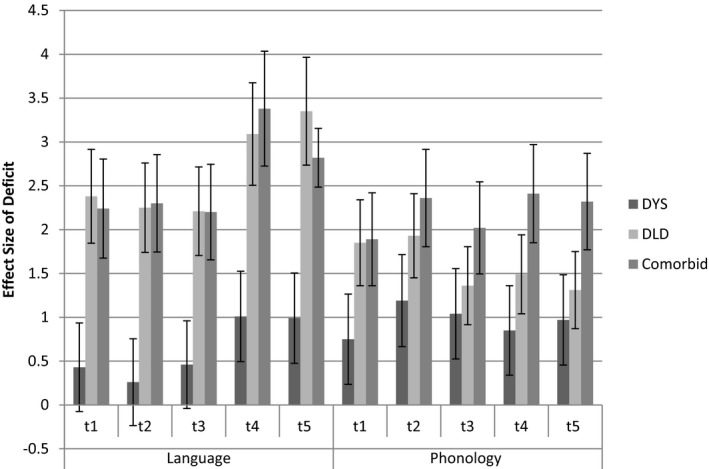
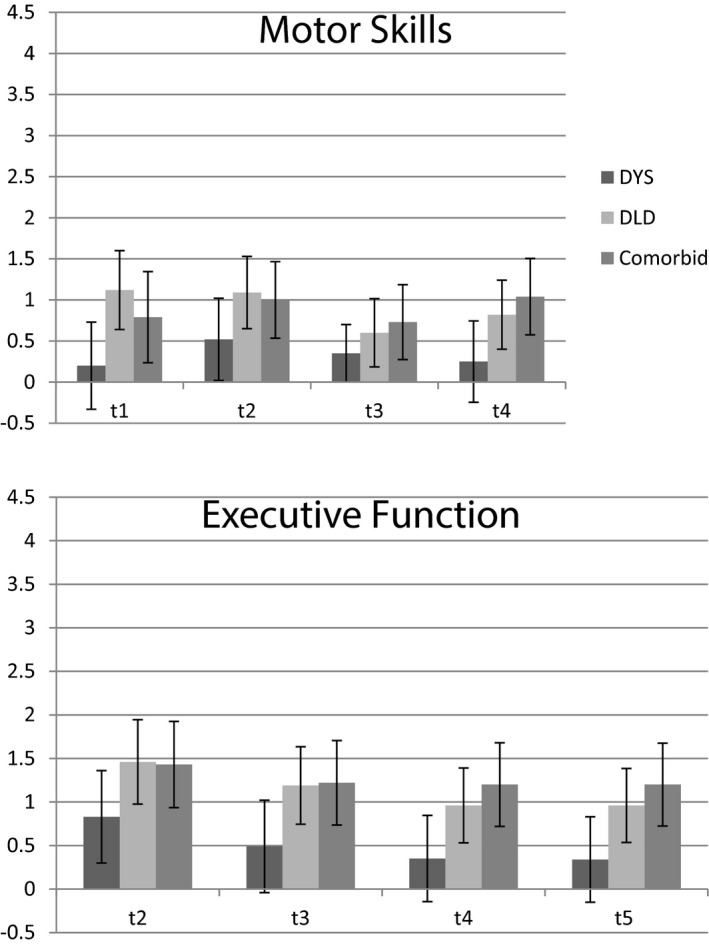
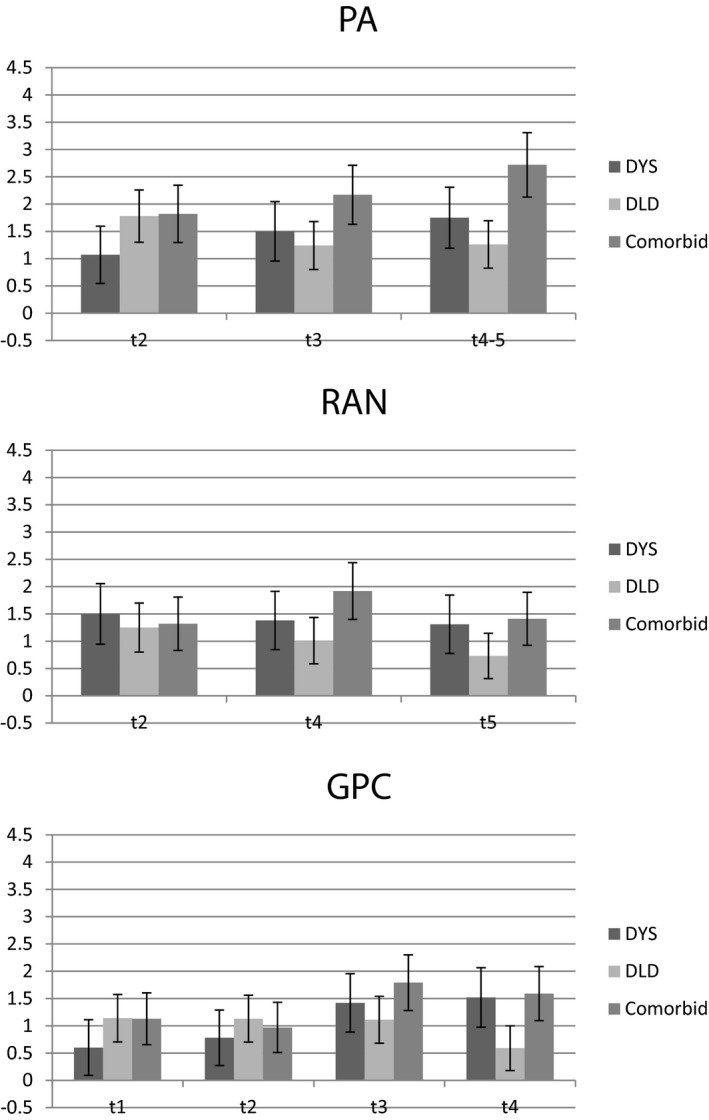
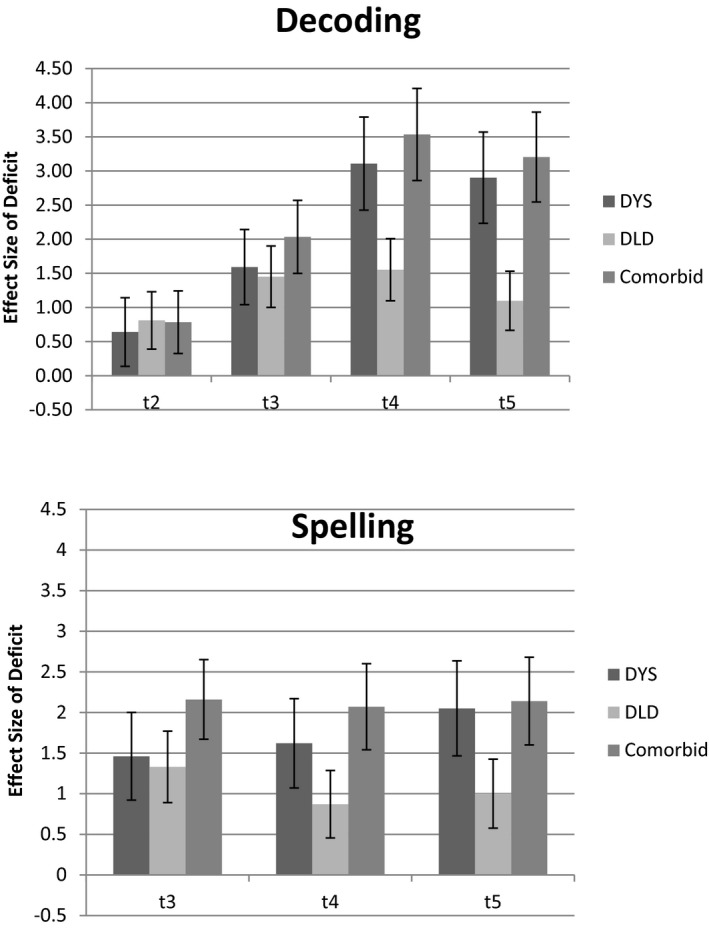
We followed children at family risk of dyslexia and children with preschool language difficulties from age 3½, comparing them with controls (N = 234). At age 8, children were classified as having dyslexia or Developmental Language Disorder (DLD) and compared at earlier time points with controls. Children with dyslexia have specific difficulties with phonology and emergent reading skills in the preschool period, whereas children with DLD, with or without dyslexia, show a wider range of impairments including significant problems with executive and motor tasks. For children with both dyslexia and DLD, difficulties with phonology are generally more severe than those observed in children with dyslexia or DLD alone. Findings confirm that poor phonology is the major cognitive risk factor for dyslexia.
我们从 3 岁半开始跟踪有阅读障碍家族风险的儿童和有学前语言困难的儿童,并将他们与对照组(N=234)进行比较。在 8 岁时,儿童被分类为患有阅读障碍或发育性语言障碍(DLD),并与对照组在早期进行比较。患有阅读障碍的儿童在学前时期有特定的语音和新兴阅读技能困难,而患有 DLD 的儿童(无论是否患有阅读障碍)表现出更广泛的障碍,包括执行和运动任务方面的重大问题。对于同时患有阅读障碍和 DLD 的儿童,语音困难通常比单独患有阅读障碍或 DLD 的儿童更为严重。研究结果证实,语音不佳是阅读障碍的主要认知风险因素。