Faculty of Pharmacy, Kindai University, 3-4-1 Kowakae, Higashi-Osaka, Osaka, 577-8502, Japan.
Faculty of Pharmaceutical Sciences, Tokushima Bunri University, 180 Yamashiro-Cho, Tokushima 770-8514, Japan.
Int J Mol Sci. 2019 Jan 22;20(3):476. doi: 10.3390/ijms20030476.
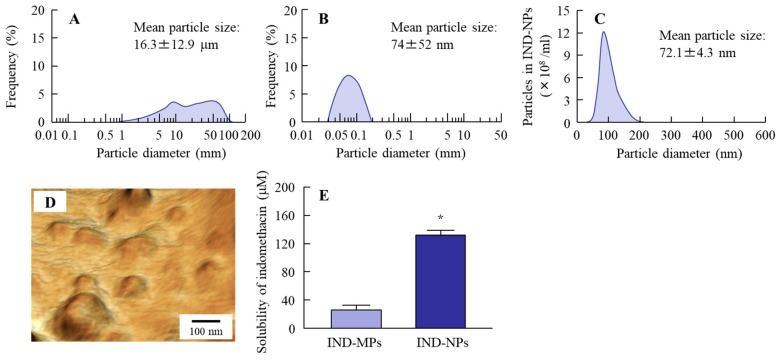
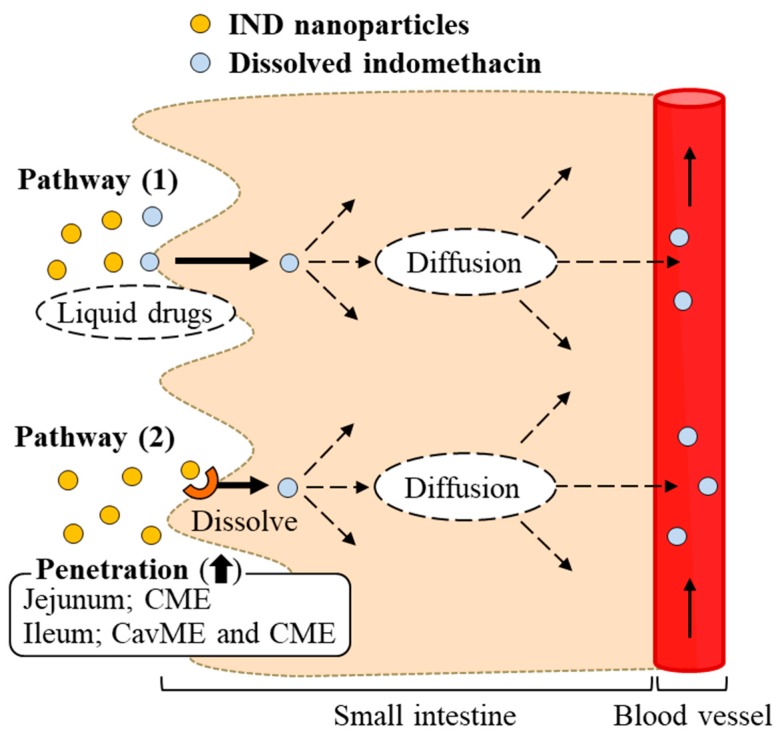
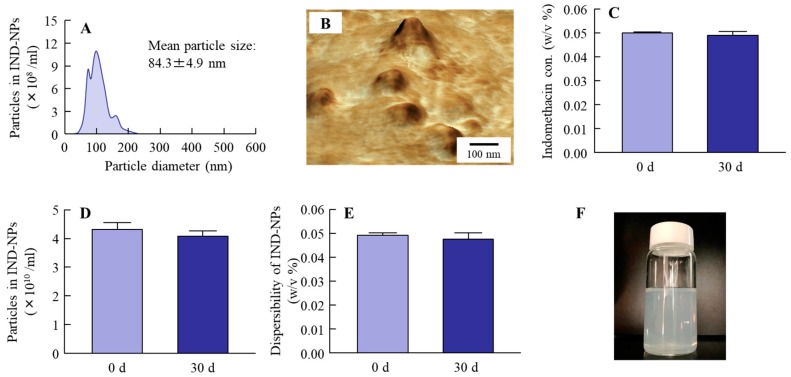
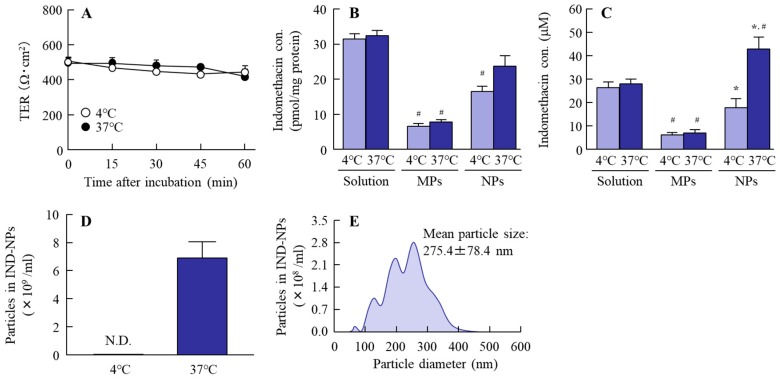
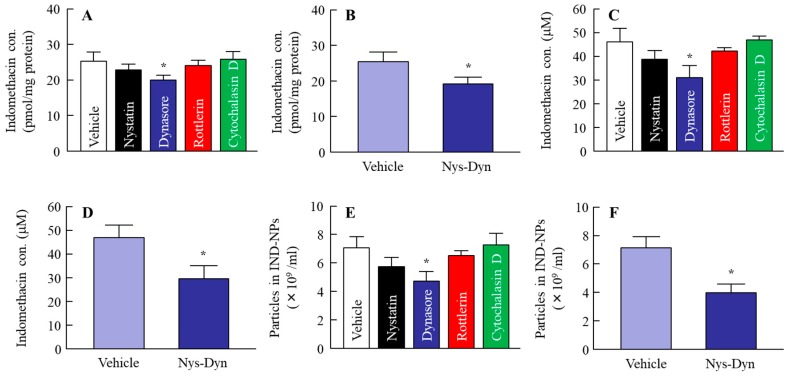
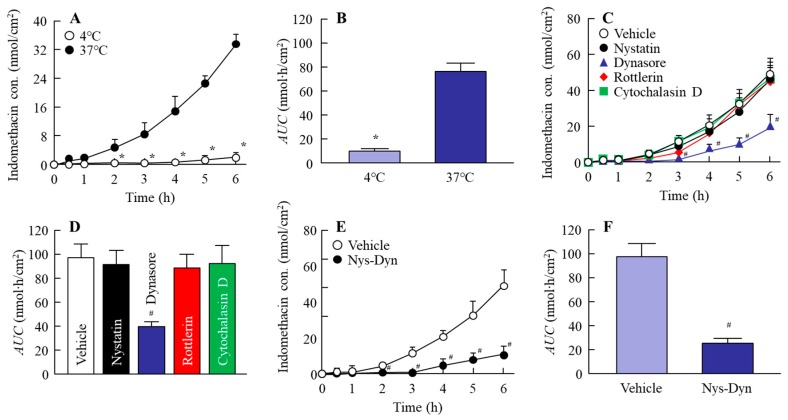
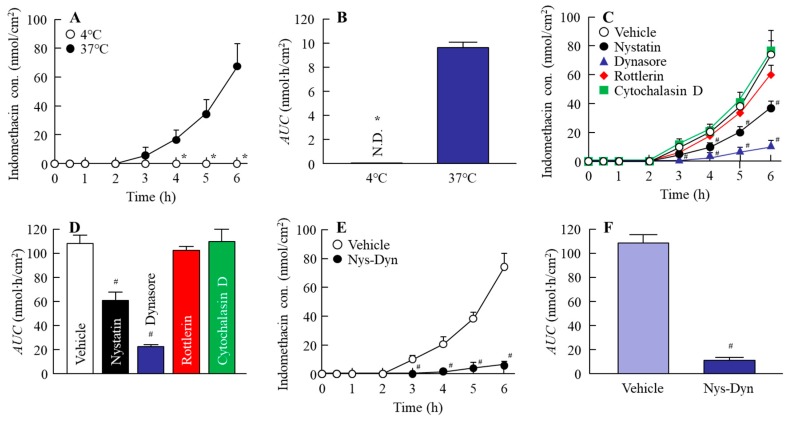
We previously reported that oral formulations containing indomethacin nanoparticles (IND-NPs) showed high bioavailability, and, consequently, improved therapeutic effects and reduced injury to the small intestine. However, the pathway for the transintestinal penetration of nanoparticles remained unclear. Thus, in this study, we investigated whether endocytosis was related to the penetration of IND-NPs (72.1 nm) using a transcell set with Caco-2 cells or rat intestine. Four inhibitors of various endocytosis pathways were used [nystatin, caveolae-dependent endocytosis (CavME); dynasore, clathrin-dependent endocytosis (CME); rottlerin, macropinocytosis; and cytochalasin D, phagocytosis inhibitor], and all energy-dependent endocytosis was inhibited at temperatures under 4 °C in this study. Although IND-NPs showed high transintestinal penetration, no particles were detected in the basolateral side. IND-NPs penetration was strongly prevented at temperatures under 4 °C. In experiments using pharmacological inhibitors, only CME inhibited penetration in the jejunum, while in the ileum, both CavME and CME significantly attenuated penetration. In conclusion, we found a novel pathway for the transintestinal penetration of drug nanoparticles. Our hypothesis was that nanoparticles would be taken up into the intestinal epithelium by endocytosis (CME in jejunum, CavME and CME in ileum), and dissolved and diffused in the intestine. Our findings are likely to be of significant use for the development of nanomedicines.
我们之前曾报道过,含有吲哚美辛纳米粒(IND-NPs)的口服制剂具有较高的生物利用度,因此可以提高治疗效果并减少对小肠的损伤。然而,纳米粒经肠道吸收的途径尚不清楚。因此,在这项研究中,我们使用 Caco-2 细胞或大鼠肠建立的跨细胞模型,研究了内吞作用是否与 IND-NPs(72.1nm)的穿透有关。我们使用了四种不同内吞途径的抑制剂 [制霉菌素、小窝依赖内吞作用(CavME);dynasore、网格蛋白依赖内吞作用(CME);rottlerin、巨胞饮作用;细胞松弛素 D、吞噬作用抑制剂],在本研究中,所有依赖能量的内吞作用都在 4°C 以下的温度下被抑制。尽管 IND-NPs 具有较高的跨肠穿透性,但在基底外侧侧却未检测到任何颗粒。在 4°C 以下的温度下,IND-NPs 的穿透性被强烈阻止。在使用药理学抑制剂的实验中,只有 CME 抑制了空肠中的穿透,而在回肠中,CavME 和 CME 均显著减弱了穿透。总之,我们发现了一种药物纳米粒经肠道吸收的新途径。我们的假设是,纳米粒通过内吞作用(空肠中的 CME、回肠中的 CavME 和 CME)被肠上皮细胞摄取,然后在肠道中溶解和扩散。我们的研究结果可能对纳米药物的开发具有重要意义。