Sun Suguang, Gong Cheng, Yuan Kun
Department of Otolaryngology-Head and Neck Surgery, The Central Hospital of Wuhan, Tongji Medical College, Huazhong University of Science and Technology, Wuhan, Hubei 430014, P.R. China.
Exp Ther Med. 2019 Feb;17(2):1182-1189. doi: 10.3892/etm.2018.7097. Epub 2018 Dec 13.
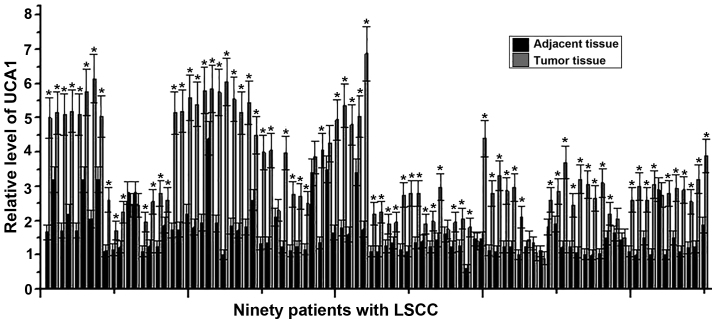
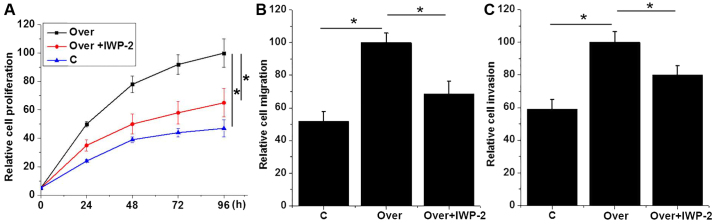
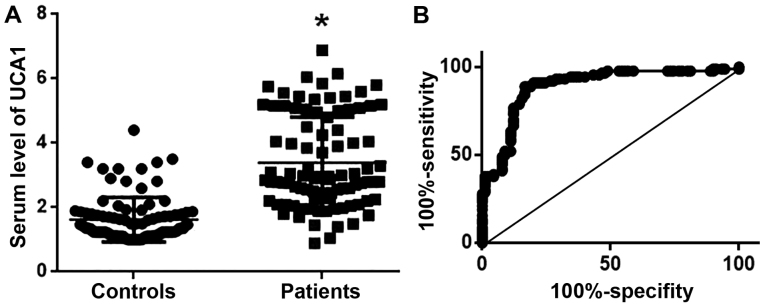
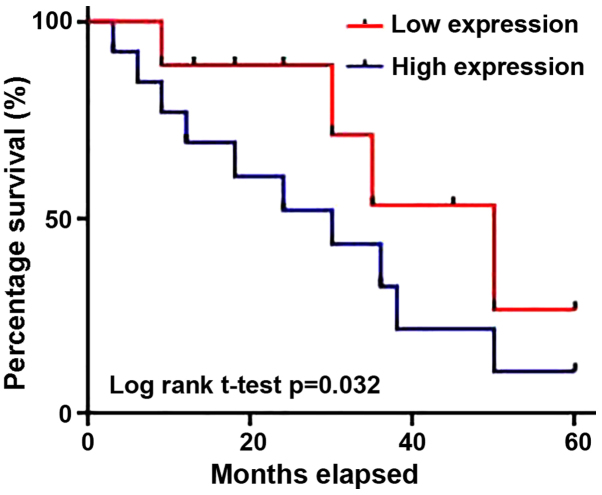
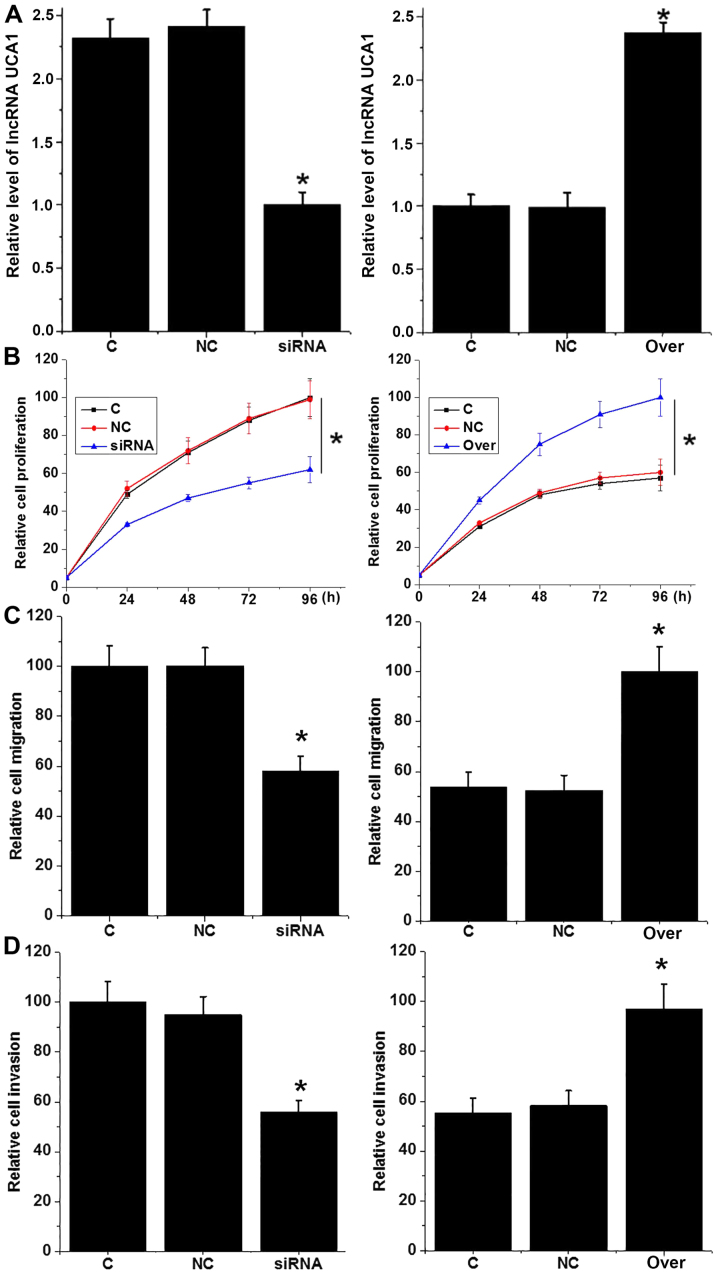
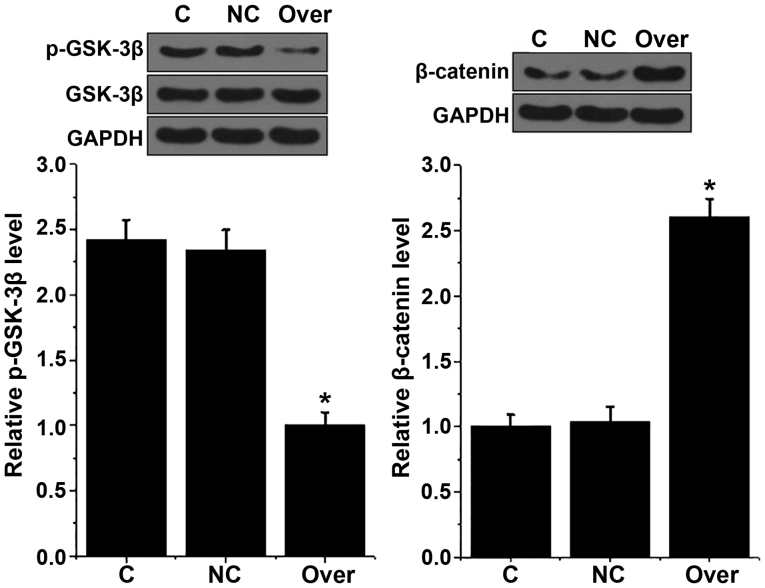
In view of the poor prognosis of laryngeal squamous cell carcinoma (LSCC) and the functionality of long non-coding (lnc)RNA UCA1 in different types of cancer, the present study aimed to investigate the role of UCA1 in the development and progression of LSCC. A total of 90 patients with LSCC and 90 healthy subjects were enrolled in the present study. Expression levels of UCA1 in tumor tissues and adjacent healthy tissues, as well as serum of patients with LSCC and normal controls were detected by reverse transcription-quantitative polymerase chain reaction. Receiver operating characteristic curve analysis was performed to evaluate the diagnostic value of serum UCA1 for LSCC. Survival curves were plotted using the Kaplan-Meier method and employed to evaluate the prognosic values of serum UCA1 for LSCC. Cell proliferation, migration and invasion were detected using the cell proliferation assay, and Transwell migration and invasion assays, respectively. Expression levels of Wnt/β-catenin-associated proteins were detected by western blot analysis. Results indicated that the expression levels of UCA1 were significantly higher in tumor tissues compared with adjacent healthy tissues in the majority of patients with LSCC. In addition, serum levels of UCA1 were significantly higher in patients with LSCC coapred with healthy controls. UCA1 overexpression promoted, whereas UCA1 knockdown inhibited the proliferation, migration and invasion of LSCC cells. UCA1 overexpression activated the Wnt/β-catenin signaling pathway in LSCC cells, whereas treatment with Wnt inhibitor reduced the enhancing effects of UCA1 overexpression on the proliferation, migration and invasion of LSCC cells. The present findings suggest that UCA1 can promote cell proliferation, invasion and migration of LSCC cells by activating the Wnt/β-catenin signaling pathway.
鉴于喉鳞状细胞癌(LSCC)预后较差以及长链非编码(lnc)RNA UCA1在不同类型癌症中的功能,本研究旨在探讨UCA1在LSCC发生发展中的作用。本研究共纳入90例LSCC患者和90名健康受试者。采用逆转录-定量聚合酶链反应检测肿瘤组织及癌旁健康组织中UCA1的表达水平,以及LSCC患者血清和正常对照血清中UCA1的表达水平。绘制受试者工作特征曲线分析血清UCA1对LSCC的诊断价值。采用Kaplan-Meier法绘制生存曲线,评估血清UCA1对LSCC的预后价值。分别采用细胞增殖实验、Transwell迁移和侵袭实验检测细胞增殖、迁移和侵袭能力。采用蛋白质印迹分析检测Wnt/β-连环蛋白相关蛋白的表达水平。结果表明,在大多数LSCC患者中,肿瘤组织中UCA1的表达水平显著高于癌旁健康组织。此外,与健康对照相比,LSCC患者血清中UCA1水平显著升高。UCA1过表达促进LSCC细胞的增殖、迁移和侵袭,而UCA1敲低则抑制其增殖、迁移和侵袭。UCA1过表达激活LSCC细胞中的Wnt/β-连环蛋白信号通路,而用Wnt抑制剂处理可降低UCA1过表达对LSCC细胞增殖、迁移和侵袭的增强作用。本研究结果表明,UCA1可通过激活Wnt/β-连环蛋白信号通路促进LSCC细胞的增殖、侵袭和迁移。