Department of Immunobiology, University of Cincinnati, Cincinnati, Ohio, United States of America.
James Graham Brown Cancer Center, Department of Medicine, University of Louisville, Louisville, Kentucky, United States of America.
PLoS One. 2019 Jan 25;14(1):e0211046. doi: 10.1371/journal.pone.0211046. eCollection 2019.
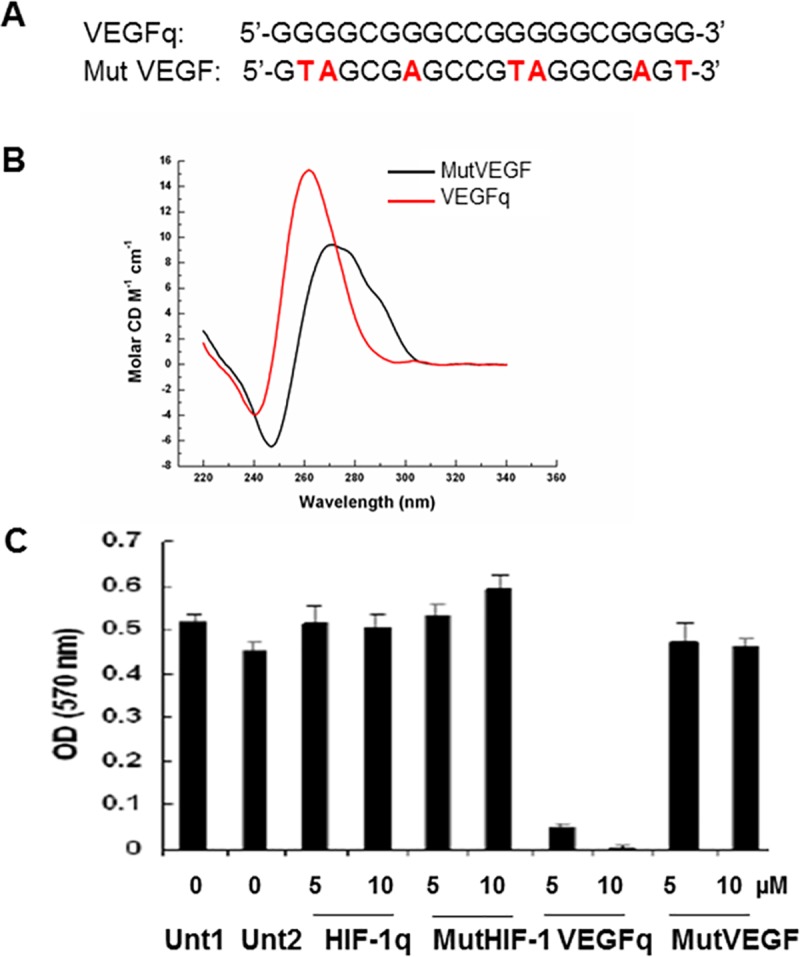
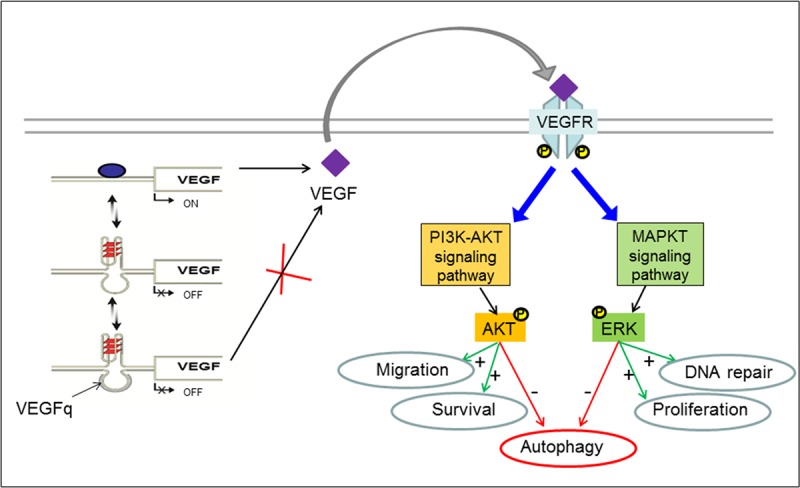
Vascular endothelial growth factor (VEGF) is commonly overexpressed in a variety of tumor types including lung cancer. As a key regulator of angiogenesis, it promotes tumor survival, growth, and metastasis through the activation of the downstream protein kinase B (AKT) and extracellular signal-regulated kinase (ERK 1/2) activation. The VEGF promoter contains a 36 bp guanine-rich sequence (VEGFq) which is capable of forming quadruplex (four-stranded) DNA. This sequence has been implicated in the down-regulation of both basal and inducible VEGF expression and represents an ideal target for inhibition of VEGF expression.
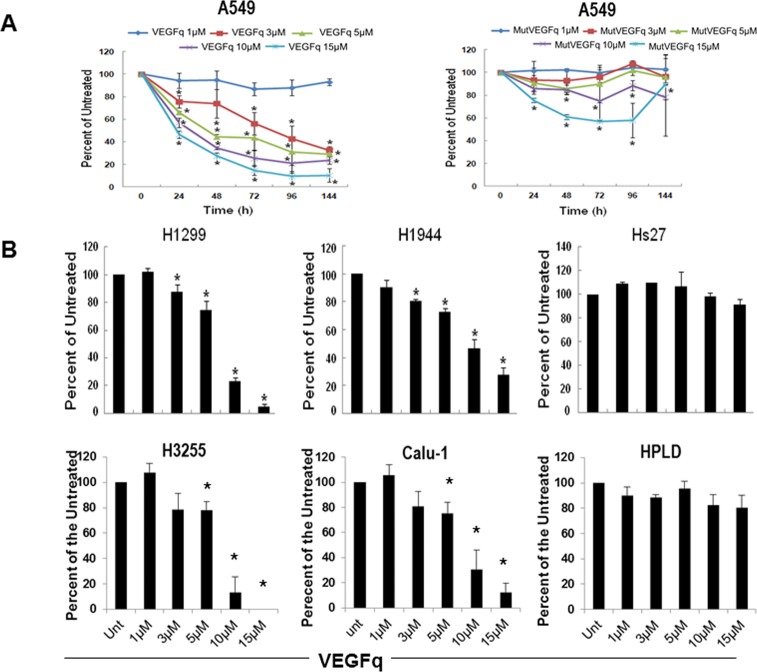
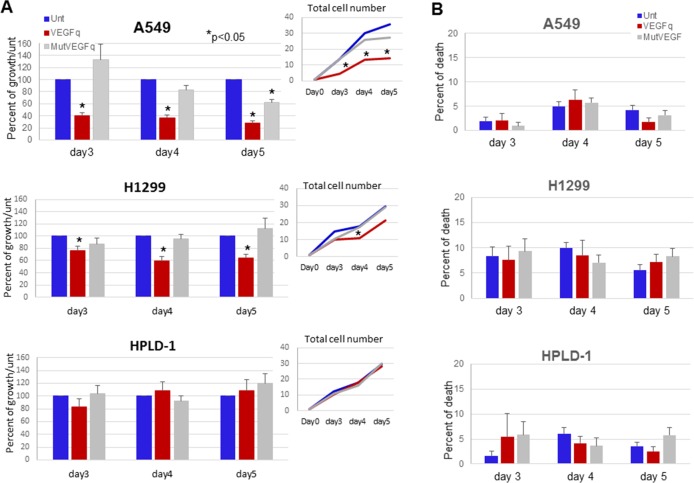
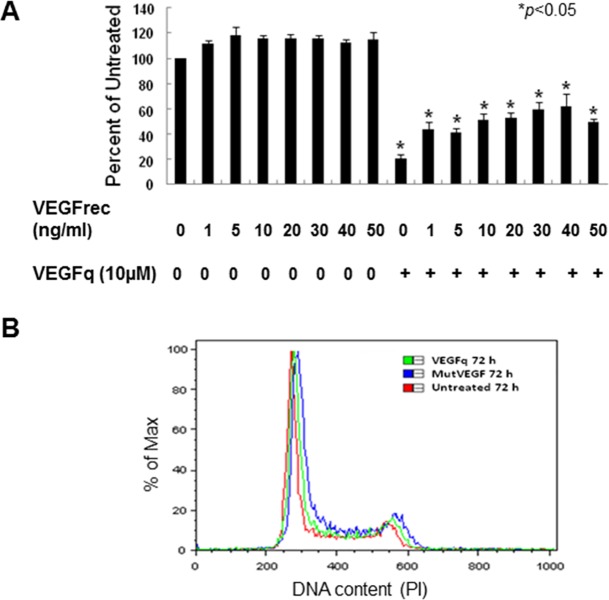
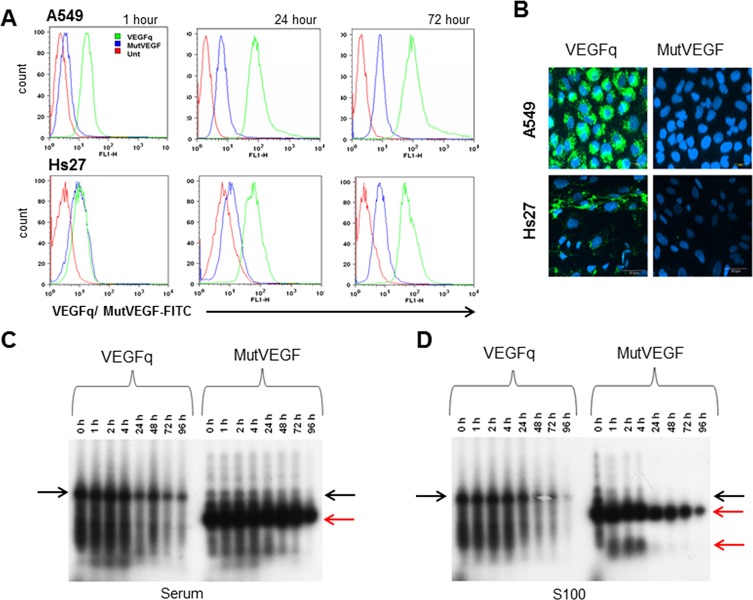
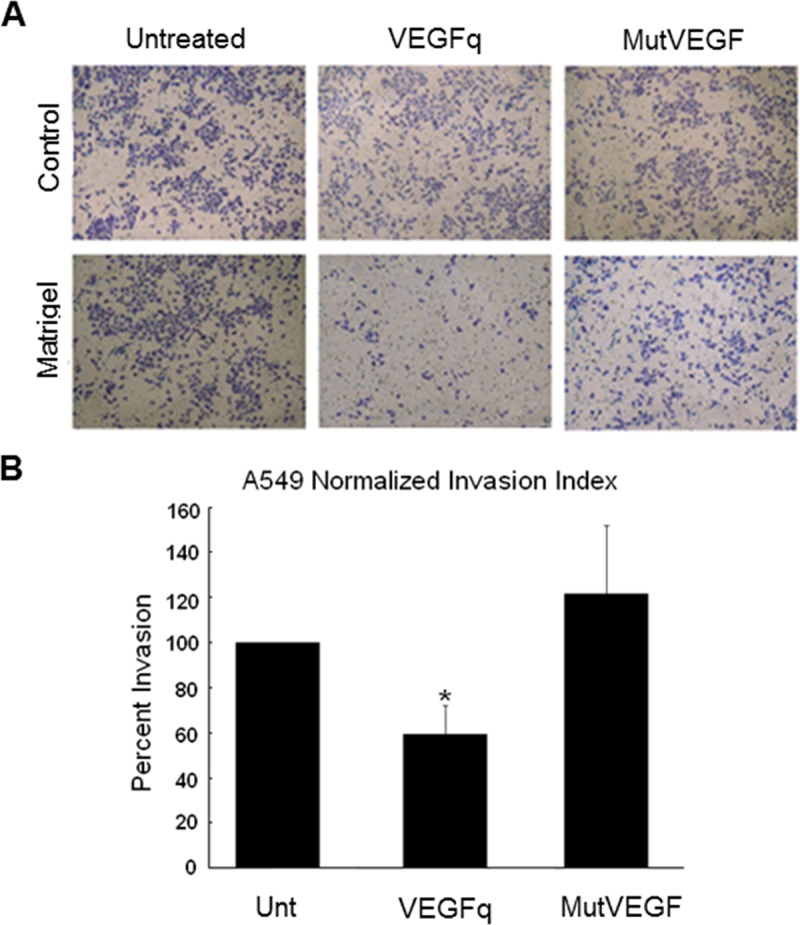
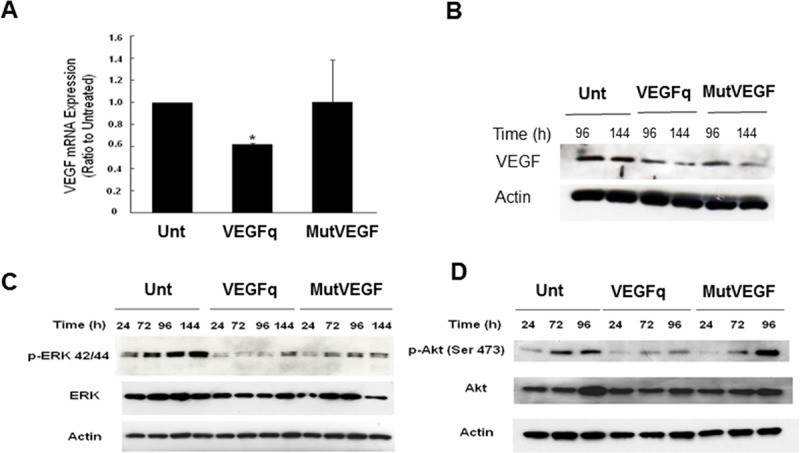
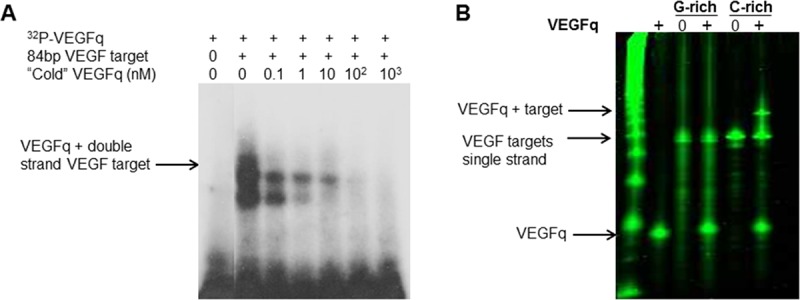
Our experiments demonstrate sequence-specific interaction between a G-rich quadruplex-forming oligonucleotide encoding a portion of the VEGFq sequence and its double stranded target sequence, suggesting that this G-rich oligonucleotide binds specifically to its complementary C-rich sequence in the genomic VEGF promoter by strand invasion. We show that treatment of A549 non-small lung cancer cells (NSCLC) with this oligonucleotide results in decreased VEGF expression and growth inhibition. The VEGFq oligonucleotide inhibits proliferation and invasion by decreasing VEGF mRNA/protein expression and subsequent ERK 1/2 and AKT activation. Furthermore, the VEGFq oligonucleotide is abundantly taken into cells, localized in the cytoplasm/nucleus, inherently stable in serum and intracellularly, and has no effect on non-transformed cells. Suppression of VEGF expression induces cytoplasmic accumulation of autophagic vacuoles and increased expression of LC3B, suggesting that VEGFq may induce autophagic cell death.
Our data strongly suggest that the G-rich VEGFq oligonucleotide binds specifically to the C-rich strand of the genomic VEGF promoter, via strand invasion, stabilizing the quadruplex structure formed by the genomic G-rich sequence, resulting in transcriptional inhibition. Strand invading oligonucleotides represent a new approach to specifically inhibit VEGF expression that avoids many of the problems which have plagued the therapeutic use of oligonucleotides. This is a novel approach to specific inhibition of gene expression.
血管内皮生长因子(VEGF)在包括肺癌在内的多种肿瘤类型中普遍过表达。作为血管生成的关键调节剂,它通过激活下游蛋白激酶 B(AKT)和细胞外信号调节激酶(ERK1/2)的激活来促进肿瘤的存活、生长和转移。VEGF 启动子包含一个 36 个碱基对的富含鸟嘌呤序列(VEGFq),能够形成四链体(四条链)DNA。该序列与基础和诱导的 VEGF 表达下调有关,是抑制 VEGF 表达的理想靶点。
我们的实验证明了富含鸟嘌呤的四链体形成寡核苷酸与部分 VEGFq 序列的双链靶序列之间的序列特异性相互作用,表明该富含鸟嘌呤的寡核苷酸通过链入侵特异性结合到基因组 VEGF 启动子的互补 C 富含序列。我们表明,用该寡核苷酸处理 A549 非小细胞肺癌(NSCLC)细胞会导致 VEGF 表达降低和生长抑制。VEGFq 寡核苷酸通过降低 VEGF mRNA/蛋白表达以及随后的 ERK1/2 和 AKT 激活来抑制增殖和侵袭。此外,VEGFq 寡核苷酸大量进入细胞,定位于细胞质/核内,在血清和细胞内固有稳定,对非转化细胞没有影响。VEGF 表达的抑制诱导细胞质中自噬空泡的积累和 LC3B 的表达增加,表明 VEGFq 可能诱导自噬性细胞死亡。
我们的数据强烈表明,富含鸟嘌呤的 VEGFq 寡核苷酸通过链入侵特异性结合到基因组 VEGF 启动子的 C 富含链上,通过链入侵稳定基因组 G 富含序列形成的四链体结构,导致转录抑制。链入侵寡核苷酸代表了一种特异性抑制 VEGF 表达的新方法,可以避免寡核苷酸治疗应用中存在的许多问题。这是一种特异性抑制基因表达的新方法。