MARETEC, Instituto Superior Técnico, Universidade Técnica de Lisboa, Av. Rovisco Pais, 1049-001, Lisbon, Portugal.
Departamento de Ecologia, Instituto de Biologia Roberto Alcântara Gomes, Universidade do Estado do Rio de Janeiro, Rua São Francisco Xavier 524, Rio de Janeiro, RJ, 20559-900, Brazil.
BMC Ecol. 2019 Jan 25;19(1):4. doi: 10.1186/s12898-019-0221-4.
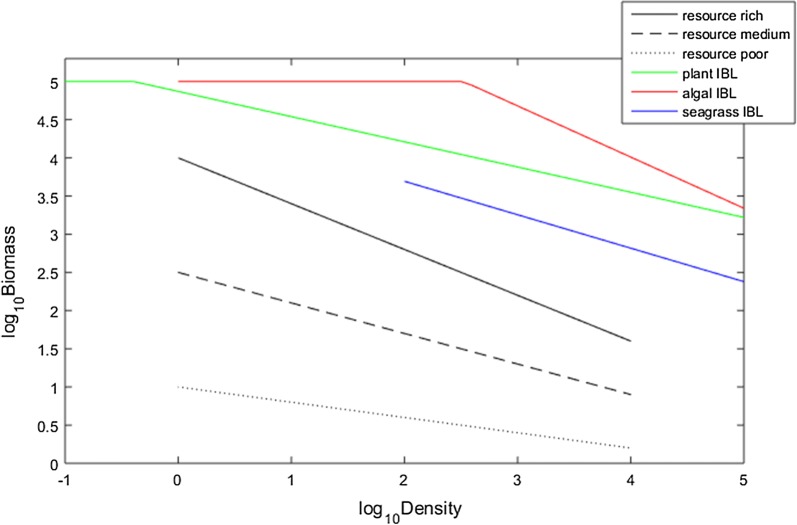
Seagrasses are foundation species in estuarine and lagoon systems, providing a wide array of services for the ecosystem and the human population. Understanding the dynamics of their stands is essential in order to better assess natural and anthropogenic impacts. It is usually considered that healthy seagrasses aim to maximize their stand biomass (g DW m) which may be constrained by resource availability i.e., the local environment sets a carrying capacity. Recently, this paradigm has been tested and reassessed, and it is believed that seagrasses actually maximize their efficiency of space occupation-i.e., aim to reach an interspecific boundary line (IBL)-as quick as possible. This requires that they simultaneously grow in biomass and iterate new shoots to increase density. However, this strategy depresses their biomass potential.
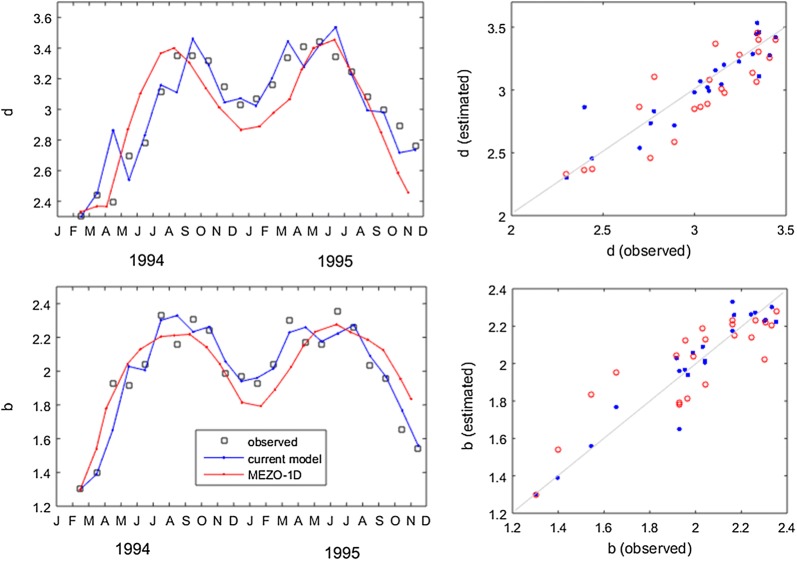
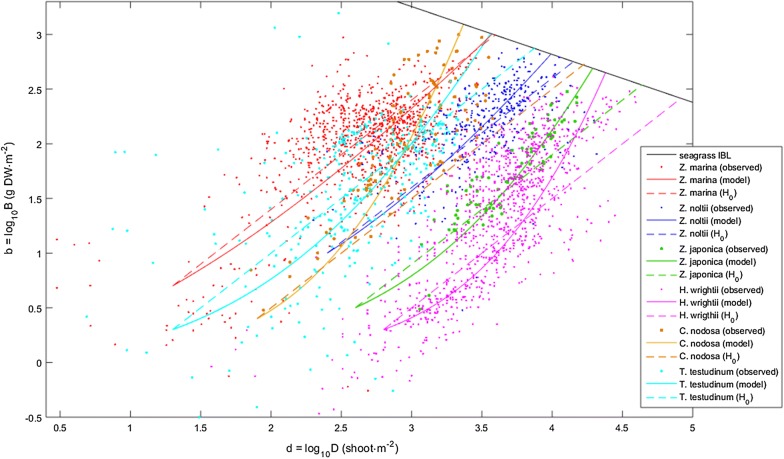
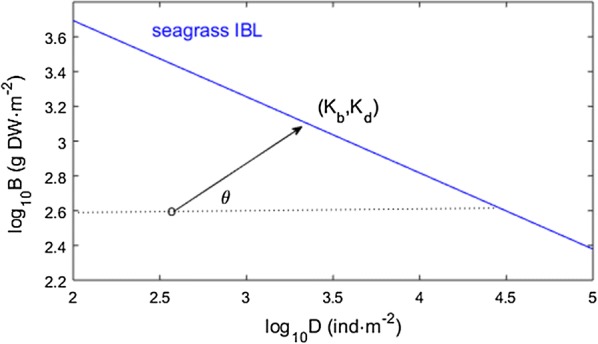
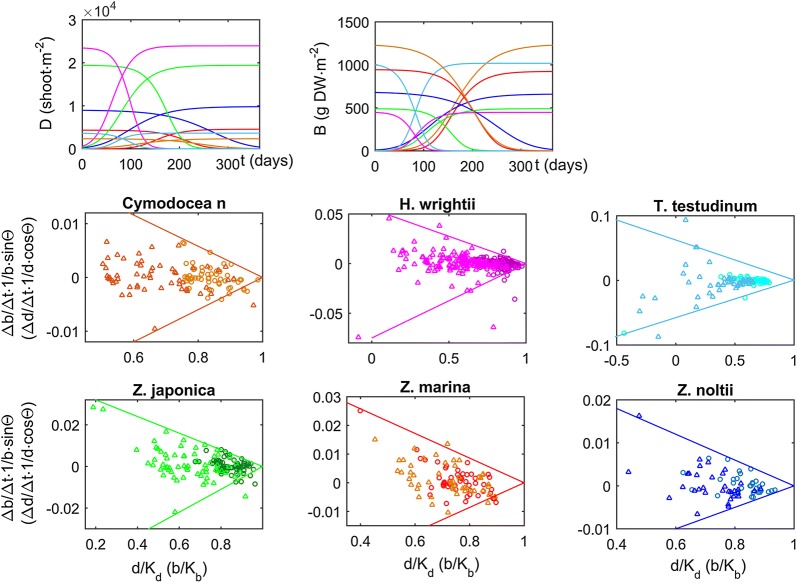
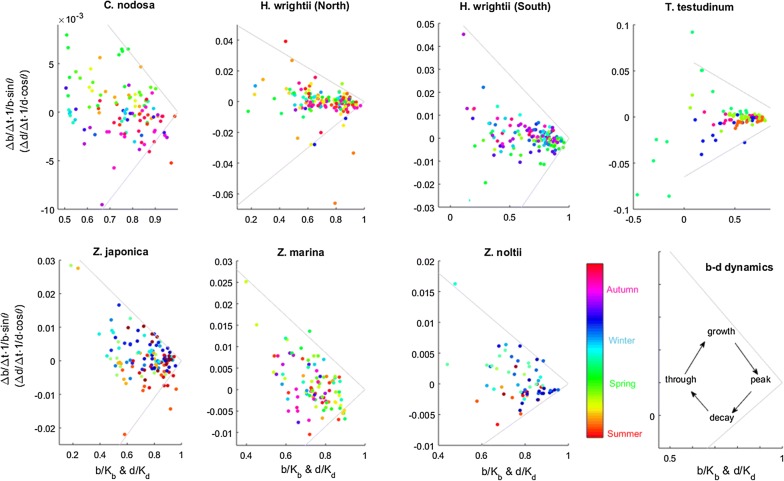
to comply with this new paradigm, we developed a seagrass growth model that updates the carrying capacities for biomass and shoot density from the seagrass IBL at each time step. The use of a joint biomass and density growth rates enabled parameter estimation with twice the sample sizes and made the model less sensitive to episodic error in either of the variables. The use of instantaneous growth rates enabled the model to be calibrated with data sampled at widely different time intervals. We used data from 24 studies of six seagrass species scattered worldwide. The forecasted allometric biomass-density growth trajectories fit these observations well. Maximum growth and decay rates were found consistently for each species. The growth rates varied seasonally, matching previous observations.
State-of-art models predicting both biomass and shoot density in seagrass have not previously incorporated our observation across many seagrass species that dynamics depend on current state relative to IBL. Our model better simulates the biomass-density dynamics of seagrass stands while shedding light on its intricacies. However, it is only valid for established patches where dynamics involve space-filling, not for colonization of new areas.
海草是河口和泻湖系统中的基础物种,为生态系统和人类提供了广泛的服务。了解其种群的动态对于更好地评估自然和人为影响至关重要。通常认为,健康的海草旨在最大限度地增加其种群生物量(g DW m),而生物量可能受到资源可用性的限制,即当地环境设定了承载能力。最近,这一范式已经过测试和重新评估,人们认为海草实际上最大限度地提高了其空间占用效率,即尽快达到种间边界线(IBL)。这要求它们同时在生物量和新枝生长方面进行增长,以增加密度。然而,这种策略会抑制其生物量潜力。
为了符合这一新范式,我们开发了一种海草生长模型,该模型在每个时间步更新生物量和分枝密度的承载能力,从海草 IBL 开始。使用联合生物量和密度生长率可以使参数估计的样本量增加一倍,并使模型对生物量或密度变量的偶然误差不那么敏感。使用即时生长率使模型能够使用在广泛不同时间间隔采样的数据进行校准。我们使用了来自全球六个海草物种的 24 项研究的数据。预测的生物量-密度生长轨迹与这些观察结果非常吻合。为每个物种确定了一致的最大生长和衰减率。生长率随季节变化,与之前的观察结果相匹配。
以前预测海草生物量和分枝密度的最先进模型没有纳入我们对许多海草物种的观察结果,即动态取决于相对于 IBL 的当前状态。我们的模型更好地模拟了海草种群的生物量-密度动态,同时揭示了其复杂性。然而,它仅适用于涉及空间填充的已建立斑块,而不适用于新区域的殖民化。