Niezgoda Anna, Winnicki Andrzej, Kosmalski Tomasz, Kowaliszyn Bogna, Krysiński Jerzy, Czajkowski Rafał
The Department of Dermatology, Sexually Transmitted Diseased and Immunodermatology, Nicolaus Copernicus University, Collegium Medicum in Bydgoszcz, Bydgoszcz, Poland.
The Department of Pharmaceutical Technology, Nicolaus Copernicus University, Collegium Medicum in Bydgoszcz, Bydgoszcz, Poland.
Trials. 2019 Jan 25;20(1):78. doi: 10.1186/s13063-018-3168-4.
Vitiligo is a chronic skin disorder presenting with depigmentation, the pathogenesis of which is complex but the autoimmune theory is now preferred. Multiple immunologic processes, including stimulation of the T-helper (Th)1 response, formation of autoreactive melanocyte-specific CD8 T lymphocytes, a decrease in the blood concentration of T regulatory (Treg) cells, and an increase in interleukin (IL)-17 and interferon (IFN) concentration, have been shown to contribute to vitiligo progression and maintenance. The aim of this study is to evaluate the influence of simvastatin and atorvastatin on vitiligous lesions in patients with nonsegmental vitiligo (NSV). According to available data, statins act through several immunological pathways, potentially reversing undesirable phenomena underlying autoimmune vitiligo pathogenesis.
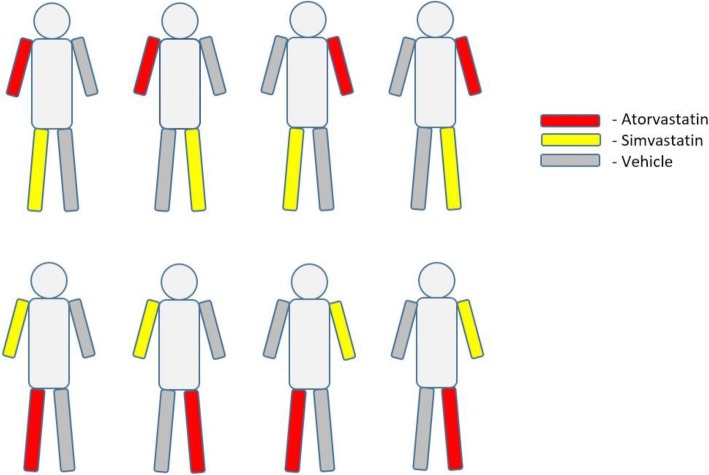
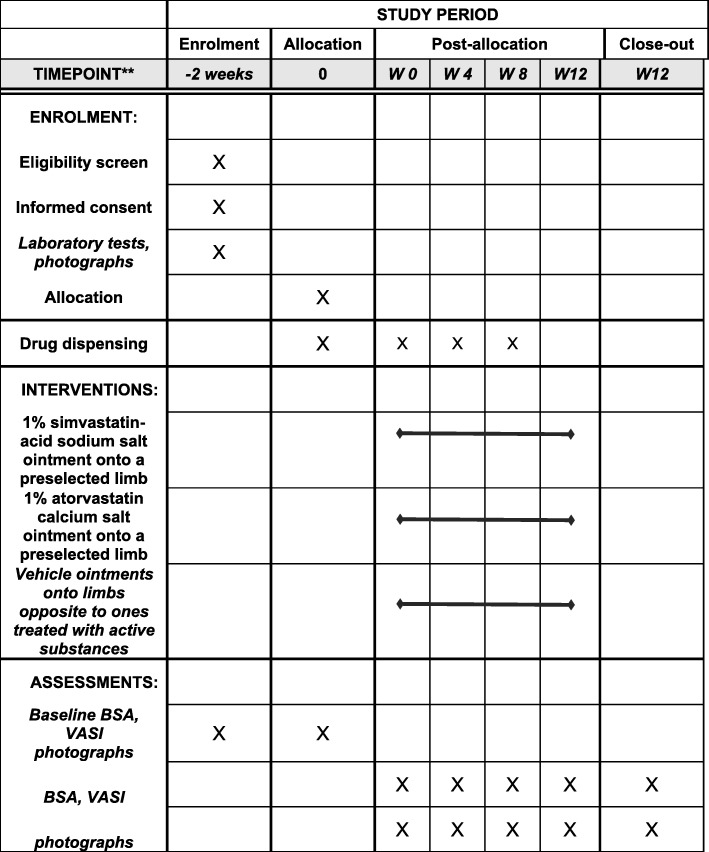
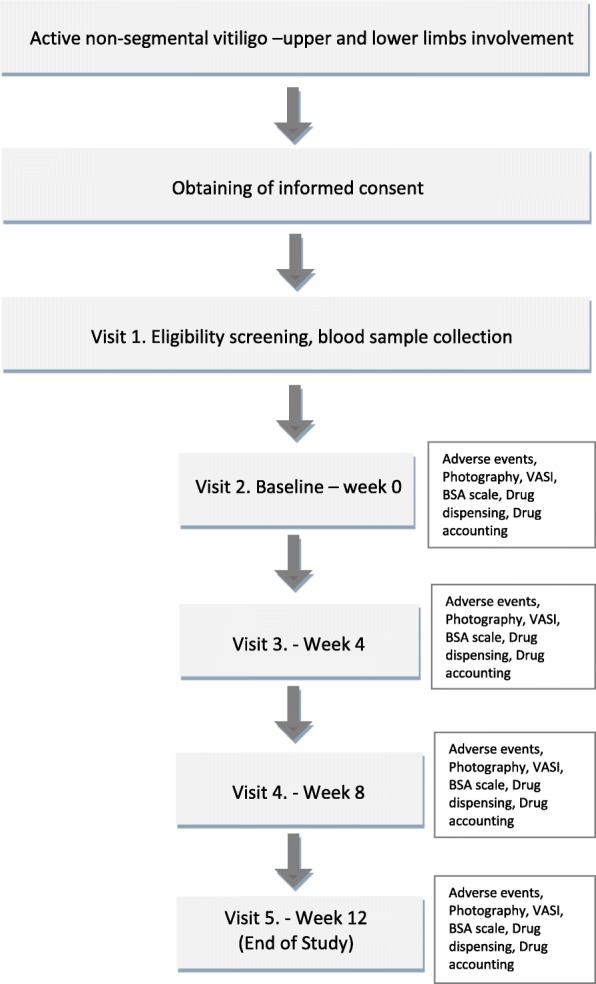
METHODS/DESIGN: A study has been designed as a single-center, randomized, double-blind, placebo-controlled pilot study with the enrollment of at least 24 active NSV patients presenting with vitiligous lesions on both upper and lower limbs. The clinical effects of ointments containing 1% simvastatin-acid sodium salt or 1% atorvastatin calcium salt applied on a preselected limb will be assessed in comparison with vehicle ointment applied on the opposite limb. All study participants will undergo clinical evaluation using body surface area (BSA) and Vitiligo Area Scoring Index (VASI) scales at baseline and at weeks 4, 8, and 12 time points. A precise assessment of skin lesions will be performed using photographic documentation obtained during each study visit and processed with NIS-Elements software.
Currently available vitiligo topical therapeutic approaches including calcineurin inhibitors and corticosteroids remain poorly effective and are associated with either relatively high cost or potentially dangerous adverse effects. The clinical application of orally administrated statins, widely used as systemic cholesterol-lowering agents, in vitiligous patients has only been tested in two clinical trials; however, data on their potential usefulness is scarce. Moreover, due to a high risk of clinically significant toxicity, topical administration was recommended by researchers. This study is the first to evaluate safety and efficacy of the topical use of statins in patients presenting with NSV.
Clinicaltrials.gov, NCT03247400 . Registered on 05 August 2017.
白癜风是一种表现为色素脱失的慢性皮肤疾病,其发病机制复杂,但自身免疫理论目前更受青睐。多种免疫过程,包括辅助性T细胞(Th)1反应的刺激、自身反应性黑素细胞特异性CD8 T淋巴细胞的形成、调节性T(Treg)细胞血液浓度的降低以及白细胞介素(IL)-17和干扰素(IFN)浓度的升高,已被证明与白癜风的进展和维持有关。本研究的目的是评估辛伐他汀和阿托伐他汀对非节段性白癜风(NSV)患者白癜风皮损的影响。根据现有数据,他汀类药物通过多种免疫途径发挥作用,可能逆转自身免疫性白癜风发病机制中不良现象。
方法/设计:本研究设计为一项单中心、随机、双盲、安慰剂对照的试点研究,至少招募24例上下肢均有白癜风皮损的活动性NSV患者。将含有1%辛伐他汀酸钠盐或1%阿托伐他汀钙盐的软膏涂抹于预选肢体上的临床效果,与涂抹于对侧肢体的赋形剂软膏进行比较评估。所有研究参与者将在基线以及第4、8和12周时间点使用体表面积(BSA)和白癜风面积评分指数(VASI)量表进行临床评估。将使用每次研究访视期间获得并经NIS-Elements软件处理的照片记录对皮肤病变进行精确评估。
目前可用的白癜风局部治疗方法,包括钙调神经磷酸酶抑制剂和皮质类固醇,仍然效果不佳,并且与相对较高的成本或潜在的危险不良反应相关。口服他汀类药物作为广泛使用的全身性降胆固醇药物,在白癜风患者中的临床应用仅在两项临床试验中进行了测试;然而,关于其潜在效用的数据很少。此外,由于具有临床显著毒性的高风险,研究人员建议局部给药。本研究是首次评估他汀类药物局部应用于NSV患者的安全性和有效性。
Clinicaltrials.gov,NCT03247400。于2017年8月5日注册。