Institute of Neuroscience, Faculty of Medical Sciences, Newcastle University, Newcastle upon Tyne, UK; Interdisciplinary Computing and Complex BioSystems Group, School of Computing, Newcastle University, Newcastle upon Tyne, UK.
Institute of Neuroscience, Faculty of Medical Sciences, Newcastle University, Newcastle upon Tyne, UK; Interdisciplinary Computing and Complex BioSystems Group, School of Computing, Newcastle University, Newcastle upon Tyne, UK; Institute of Neurology, University College London, UK.
Neuroimage Clin. 2019;21:101655. doi: 10.1016/j.nicl.2019.101655. Epub 2019 Jan 11.
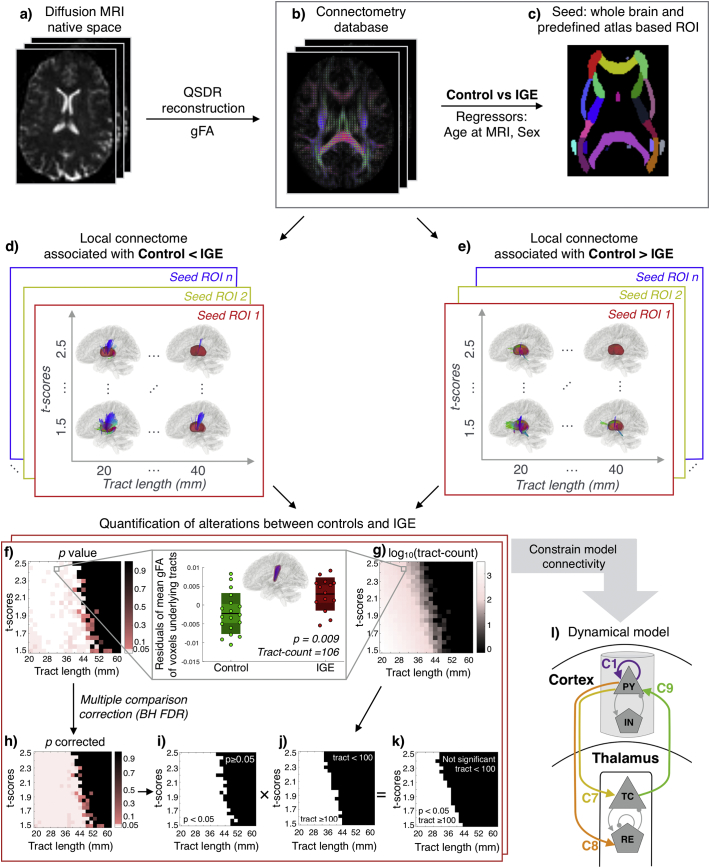
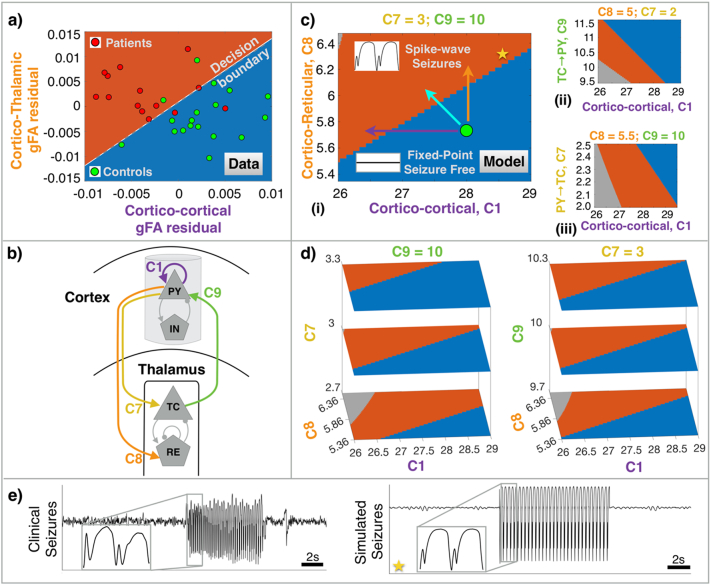
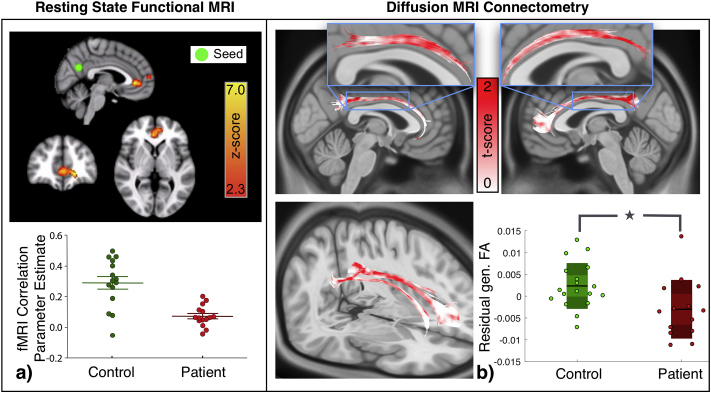
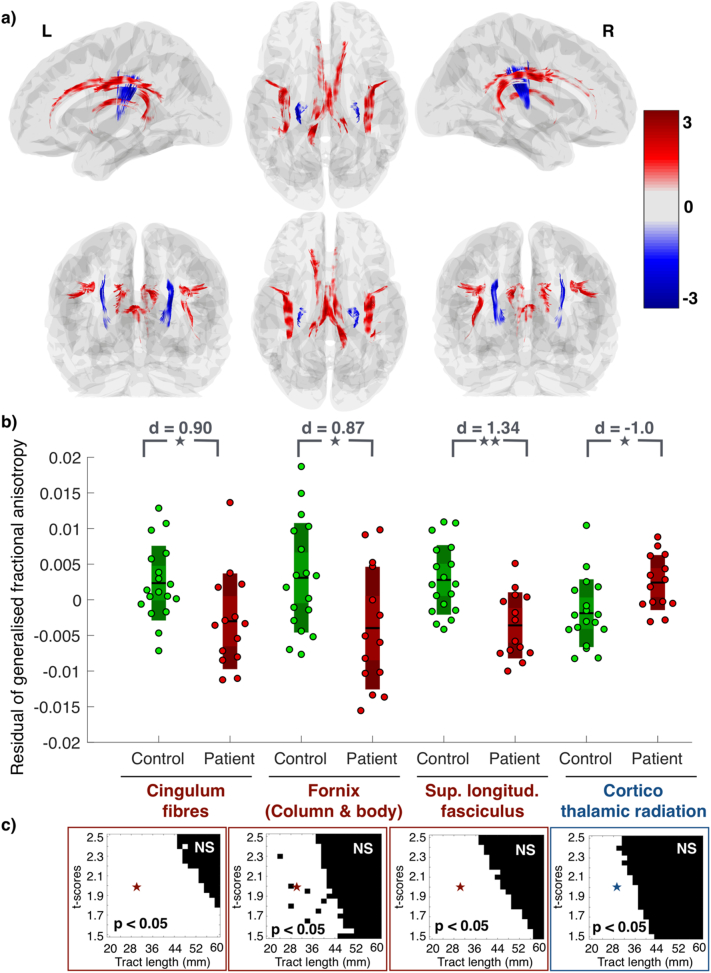
Patients with idiopathic generalised epilepsy (IGE) typically have normal conventional magnetic resonance imaging (MRI), hence diagnosis based on MRI is challenging. Anatomical abnormalities underlying brain dysfunctions in IGE are unclear and their relation to the pathomechanisms of epileptogenesis is poorly understood. In this study, we applied connectometry, an advanced quantitative neuroimaging technique for investigating localised changes in white-matter tissues in vivo. Analysing white matter structures of 32 subjects we incorporated our in vivo findings in a computational model of seizure dynamics to suggest a plausible mechanism of epileptogenesis. Patients with IGE have significant bilateral alterations in major white-matter fascicles. In the cingulum, fornix, and superior longitudinal fasciculus, tract integrity is compromised, whereas in specific parts of tracts between thalamus and the precentral gyrus, tract integrity is enhanced in patients. Combining these alterations in a logistic regression model, we computed the decision boundary that discriminated patients and controls. The computational model, informed with the findings on the tract abnormalities, specifically highlighted the importance of enhanced cortico-reticular connections along with impaired cortico-cortical connections in inducing pathological seizure-like dynamics. We emphasise taking directionality of brain connectivity into consideration towards understanding the pathological mechanisms; this is possible by combining neuroimaging and computational modelling. Our imaging evidence of structural alterations suggest the loss of cortico-cortical and enhancement of cortico-thalamic fibre integrity in IGE. We further suggest that impaired connectivity from cortical regions to the thalamic reticular nucleus offers a therapeutic target for selectively modifying the brain circuit for reversing the mechanisms leading to epileptogenesis.
特发性全面性癫痫(IGE)患者的常规磁共振成像(MRI)通常正常,因此基于 MRI 的诊断具有挑战性。IGE 中大脑功能障碍的解剖学异常尚不清楚,其与癫痫发生的病理机制的关系也知之甚少。在这项研究中,我们应用连接计量学,这是一种用于研究体内白质组织局部变化的先进定量神经影像学技术。通过分析 32 名受试者的白质结构,我们将我们的体内发现纳入癫痫动态的计算模型中,以提出一种可能的癫痫发生机制。IGE 患者存在主要白质束的双侧显著改变。在内囊、穹窿和上纵束中,束的完整性受损,而在丘脑和中央前回之间的束的特定部位,患者的束完整性增强。将这些改变结合到逻辑回归模型中,我们计算了区分患者和对照组的决策边界。该计算模型根据束异常的发现,特别强调了增强的皮质网状连接以及皮质-皮质连接受损在诱导病理性癫痫样动力学中的重要性。我们强调考虑脑连接的方向性对于理解病理机制至关重要;这可以通过结合神经影像学和计算建模来实现。我们的结构改变影像学证据表明 IGE 中存在皮质-皮质和皮质-丘脑纤维完整性的丧失和增强。我们进一步表明,从皮质区域到丘脑网状核的连接受损为选择性修饰大脑回路以逆转导致癫痫发生的机制提供了一个治疗靶点。