Seker Ilknur Suidiye, Özlü Onur, Özkan Aybars, Uzun Hakan, Esbah Ali Ümit, Çetin Pelin
Department of Anesthesiology and Reanimation, Faculty of Medicine, Duzce University, Duzce, Turkey.
Department of Pediatric Surgery, Faculty of Medicine, Duzce University, Duzce, Turkey.
Afr J Paediatr Surg. 2017 Oct-Dec;14(4):74-78. doi: 10.4103/ajps.AJPS_117_16.
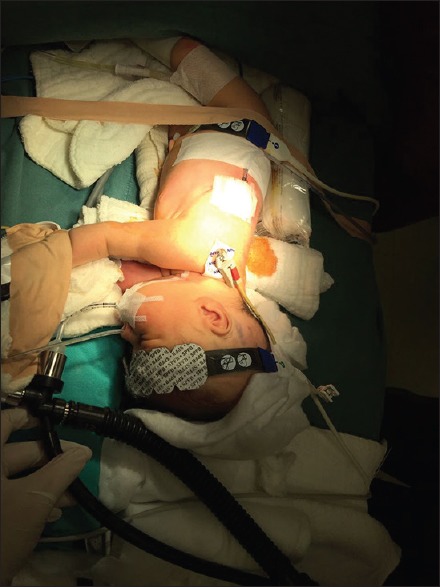
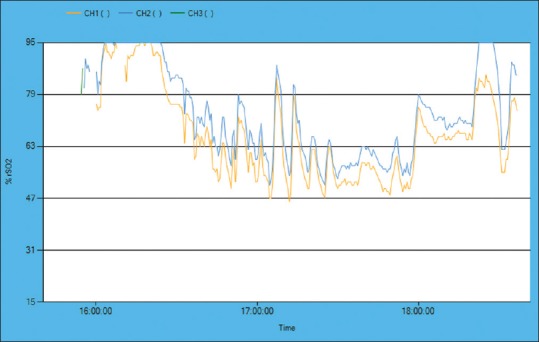
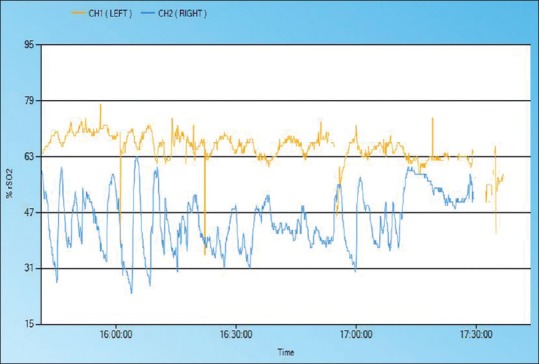
In the neonates, tracheal atresia and tracheoesophageal fistula (TEF) surgery may result in hemodynamic instabilization, leading to cerebral perfusion insufficiency due to the retraction of the pulmonary vessels and truncus brachiocephalicus. We represented one male and one female neonates which were performed thoracoscopic primary repair of TEF through right thoracotomy at the 3 and 4 postpartum day. Anesthesia was induced using sodium thiopental (5 mg/kg), fentanyl 4 mcg, and rocuronium (0.5 mg/kg) given through intravenous route. Sevoflurane 2% and 50% Oin air were used for the maintenance therapy. During the right lung compression to expose posterior esophagus, no value was observed on the pulse oximeter (PO) probe placed on the right hand, and radial artery was not palpated. At the same time, oxygen saturation was observed as 96%-97% on the left foot probe. As the right cerebral oximeter values (rSO) were rapidly decreased to 31%, the lung compression was ceased. Right pulse oximeter and right rSOmeasurements return to the baseline levels. For the second case - different from the first case -both left and right rSOwas rapidly decreased to 40% levels and return to the baseline levels after was removed the retractors. Right PO and right and left cerebral rSOvalues returned to baseline immediately when the retractor compression was ended During the operations involving the great vessels in neonates, cerebral perfusion could be preserved using cerebral oximeter. Cerebral oximeter is more efficient than pulse oximeter for detecting cerebral tissue oxygenation and could be helpful to minimize neuronal damage in the neonates.
在新生儿中,气管闭锁和气管食管瘘(TEF)手术可能导致血流动力学不稳定,由于肺血管和头臂干的回缩而导致脑灌注不足。我们报告了1例男婴和1例女婴,分别在出生后第3天和第4天通过右胸切口进行了TEF的胸腔镜一期修复术。采用硫喷妥钠(5mg/kg)、芬太尼4μg和罗库溴铵(0.5mg/kg)经静脉诱导麻醉。使用2%七氟醚和50%氧气与空气混合进行维持麻醉。在压迫右肺以暴露食管后壁时,置于右手的脉搏血氧饱和度(PO)探头无读数,桡动脉未触及。同时,左足探头显示氧饱和度为96%-97%。当右脑血氧饱和度值(rSO)迅速降至31%时,停止肺压迫。右脉搏血氧饱和度和右rSO测量值恢复至基线水平。第二例与第一例不同,在移除牵开器后,左右rSO均迅速降至40%,然后恢复至基线水平。当牵开器压迫结束时,右PO以及左右脑rSO值立即恢复至基线水平。在涉及新生儿大血管的手术中,使用脑血氧饱和度仪可维持脑灌注。脑血氧饱和度仪在检测脑组织氧合方面比脉搏血氧饱和度仪更有效,有助于将新生儿的神经元损伤降至最低。