Shabdin Muhammad Kashfi, Abdul Rahman Mohd Azizi, Mazlan Saiful Amri, Hapipi Norhiwani Mohd, Adiputra Dimas, Abdul Aziz Siti Aishah, Bahiuddin Irfan, Choi Seung-Bok
Advanced Vehicle System Research Laboratory, Malaysia Japan International Institute of Technology, Universiti Teknologi Malaysia, Jalan Sultan Yahya Petra, Kuala Lumpur 54100, Malaysia.
Mechanical Engineering, Faculty of Engineering, Universitas Sebelas Maret, Surakarta, Central Java 57126, Indonesia.
Materials (Basel). 2019 Jan 27;12(3):391. doi: 10.3390/ma12030391.
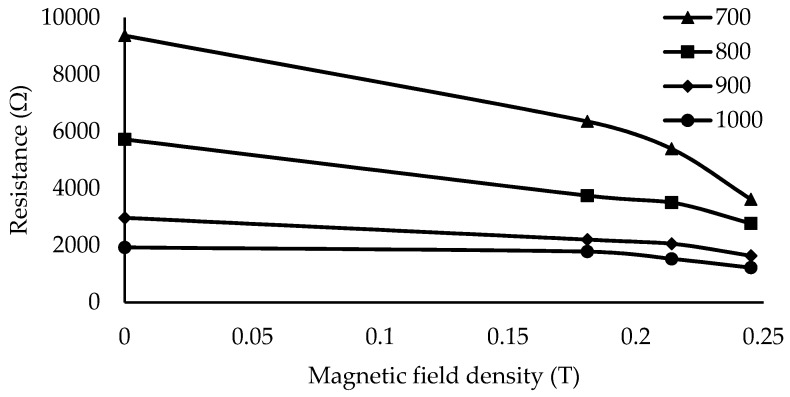
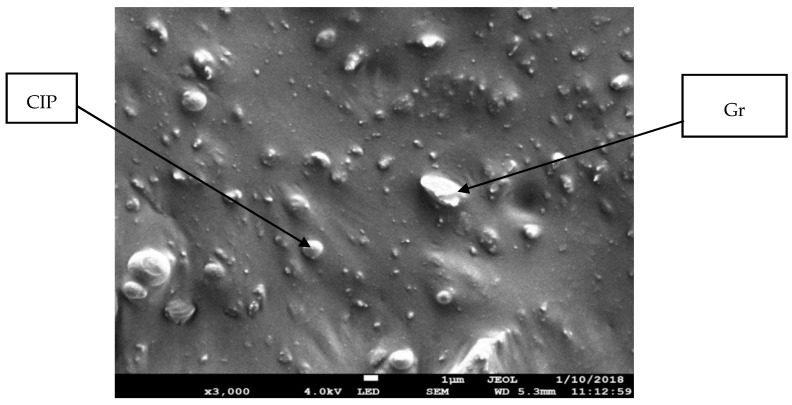
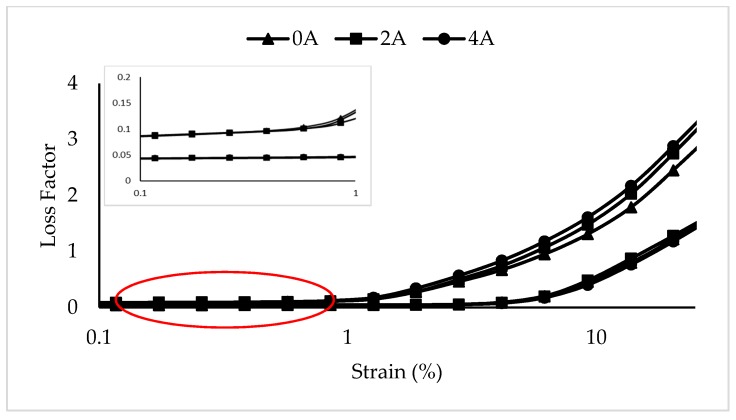
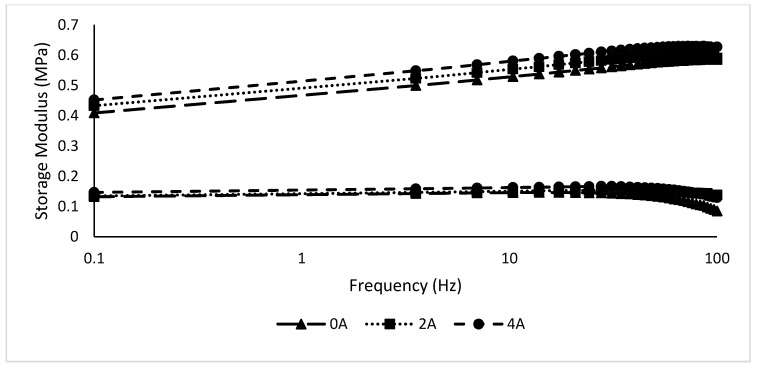
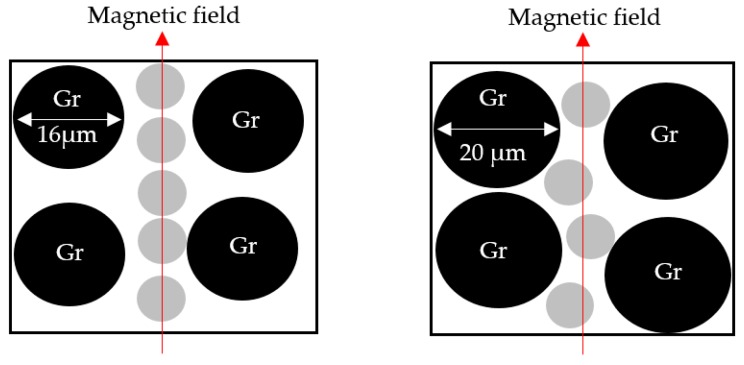
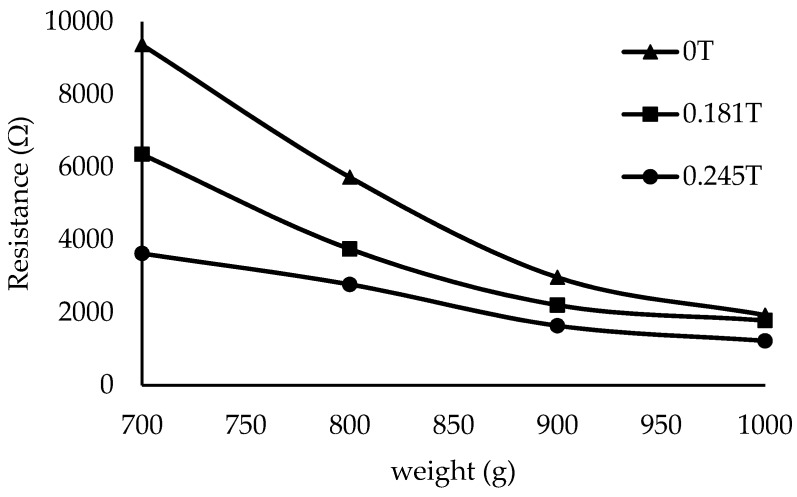
Considering persistent years, many researchers continuously seek an optimum way to utilize the idea of magnetorheology (MR) materials to be practically used for everyday life, particularly concerning resistivity sensing application. The rheology and resistivity of a graphite (Gr)-based magnetorheological elastomer (Gr-MRE) were experimentally evaluated in the present research. Magnetorheological elastomer (MRE) samples were prepared by adding Gr as a new additive during MRE fabrication. The effect of additional Gr on the rheological and resistivity properties were investigated and compared with those of typical MREs without a Gr additive. Morphological aspects of Gr-MRE were characterized using field emission scanning electron microscopy (FESEM) and energy dispersive X-ray spectroscopy (EDX). Rheological properties under different magnetic fields were evaluated using a parallel-plate rheometer. Subsequently, the resistivity of all samples was measured under different applied forces and magnetic fields. From the resistivity evaluation, two relationship curves resistance (R) under different applied forces (F) and different magnetic fields (B) were established and plotted by using an empirical model. It was observed from the FESEM images that the presence of Gr fractions arrangement contributes to the conductivity of MRE. It was also observed that, with the addition of Gr, rheological properties such as the field-dependent modulus can be improved, particularly at low strain amplitudes. It is also demonstrated that the addition of Gr in MRE can contribute to the likely use of force detection in tactile sensing devices.
考虑到多年来的持续性,许多研究人员不断寻求一种最佳方法,以利用磁流变(MR)材料的理念,使其实际应用于日常生活,特别是在电阻率传感应用方面。在本研究中,对基于石墨(Gr)的磁流变弹性体(Gr-MRE)的流变学和电阻率进行了实验评估。磁流变弹性体(MRE)样品是在MRE制造过程中添加Gr作为新添加剂制备的。研究了添加Gr对流变学和电阻率性能的影响,并与不含Gr添加剂的典型MRE进行了比较。使用场发射扫描电子显微镜(FESEM)和能量色散X射线光谱(EDX)对Gr-MRE的形态学方面进行了表征。使用平行板流变仪评估了不同磁场下的流变性能。随后,在不同的外力和磁场下测量了所有样品的电阻率。通过电阻率评估,利用经验模型建立并绘制了不同外力(F)和不同磁场(B)下的两条电阻(R)关系曲线。从FESEM图像中观察到,Gr颗粒排列的存在有助于MRE的导电性。还观察到,添加Gr后,可以改善诸如场依赖模量等流变性能,特别是在低应变幅度下。还证明了在MRE中添加Gr有助于触觉传感设备中力检测的可能应用。