Vaccine Research Center, National Institute of Infectious Diseases, National Institutes of Health, Bethesda, Maryland 20850, USA; email:
Department of Molecular Biosciences, The University of Texas at Austin, Austin, Texas 78712, USA; email:
Annu Rev Med. 2019 Jan 27;70:91-104. doi: 10.1146/annurev-med-121217-094234.
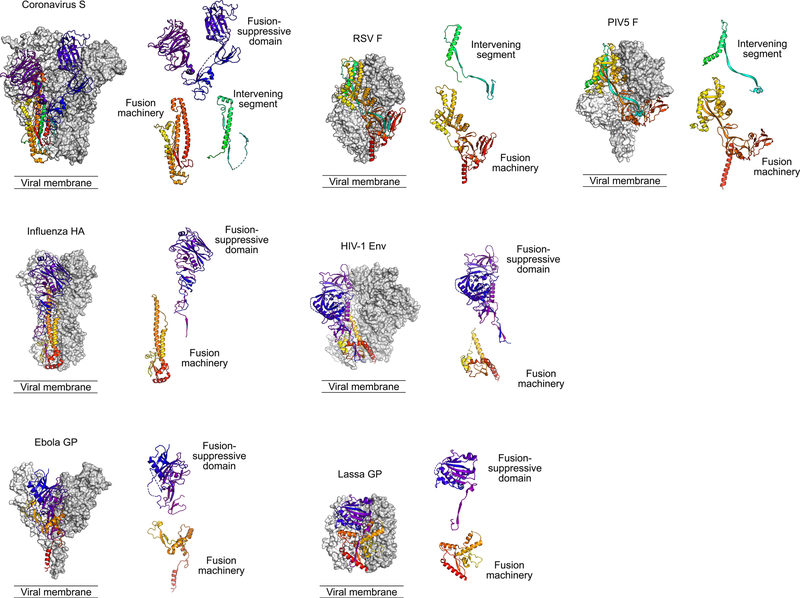
Enabled by new approaches for rapid identification and selection of human monoclonal antibodies, atomic-level structural information for viral surface proteins, and capacity for precision engineering of protein immunogens and self-assembling nanoparticles, a new era of antigen design and display options has evolved. While HIV-1 vaccine development has been a driving force behind these technologies and concepts, clinical proof-of-concept for structure-based vaccine design may first be achieved for respiratory syncytial virus (RSV), where conformation-dependent access to neutralization-sensitive epitopes on the fusion glycoprotein determines the capacity to induce potent neutralizing activity. Success with RSV has motivated structure-based stabilization of other class I viral fusion proteins for use as immunogens and demonstrated the importance of structural information for developing vaccines against other viral pathogens, particularly difficult targets that have resisted prior vaccine development efforts. Solving viral surface protein structures also supports rapid vaccine antigen design and application of platform manufacturing approaches for emerging pathogens.
新方法的出现使得快速鉴定和选择人类单克隆抗体、病毒表面蛋白的原子水平结构信息以及蛋白质免疫原和自组装纳米颗粒的精确工程成为可能,从而开创了抗原设计和展示选择的新时代。虽然 HIV-1 疫苗的开发一直是这些技术和概念的推动力量,但基于结构的疫苗设计的临床概念验证可能首先在呼吸道合胞病毒 (RSV) 中实现,其融合糖蛋白上的中和敏感表位的构象依赖性决定了诱导有效中和活性的能力。在 RSV 方面取得的成功促使人们对其他 I 类病毒融合蛋白进行基于结构的稳定化,将其用作免疫原,并证明了结构信息对于开发针对其他病毒病原体的疫苗的重要性,特别是那些难以作为疫苗靶点的病原体,这些病原体此前的疫苗开发工作都未能成功。解决病毒表面蛋白结构问题也支持了针对新兴病原体的快速疫苗抗原设计和平台制造方法的应用。