Li Da-Yong, Bing Yan-Hua, Chu Chun-Ping, Cui Xun, Cui Song-Biao, Qiu De-Lai, Su Li-Da
Key Laboratory of Cellular Function and Pharmacology of Jilin Province, Yanbian University, Yanji, China.
Department of Physiology and Pathophysiology, College of Medicine, Yanbian University, Yanji, China.
Front Cell Neurosci. 2019 Jan 14;12:521. doi: 10.3389/fncel.2018.00521. eCollection 2018.
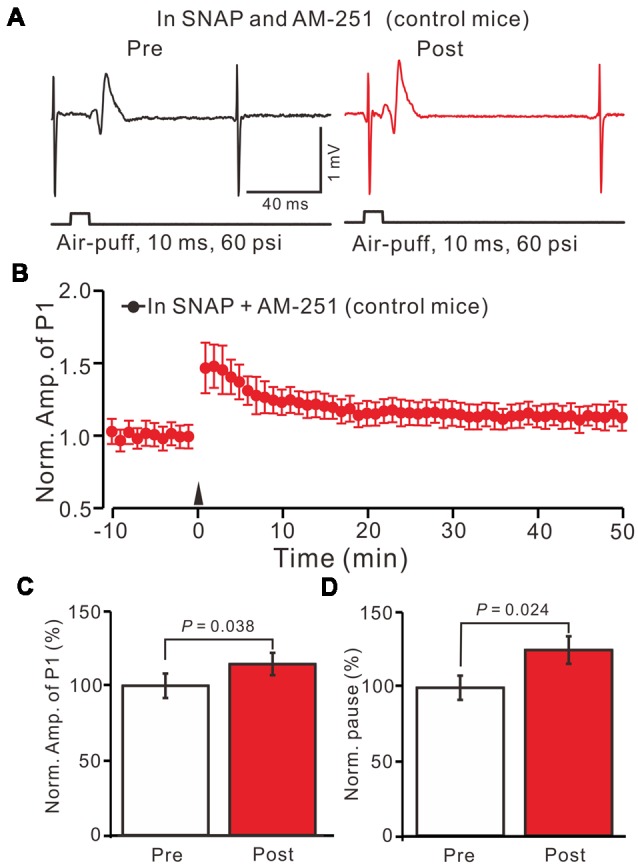
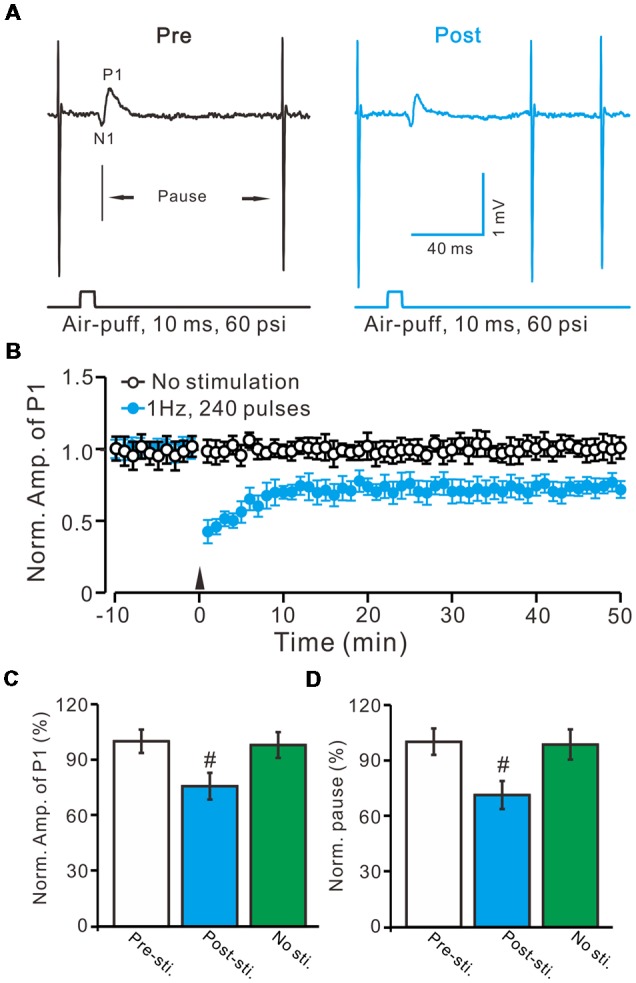
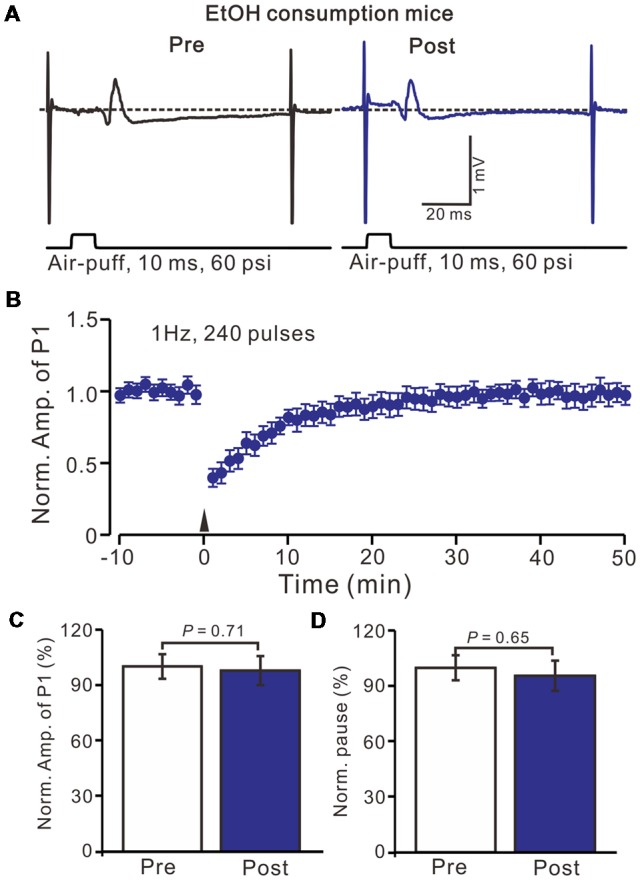
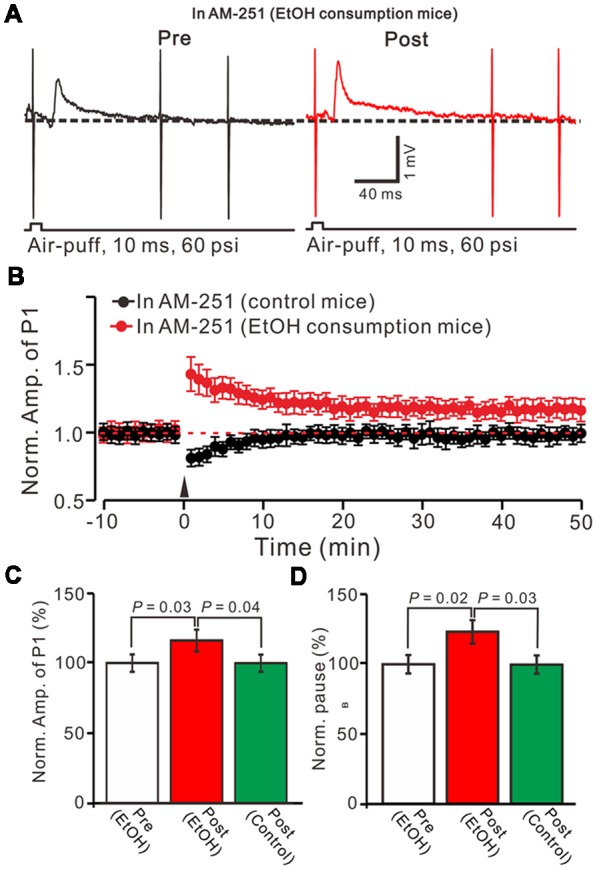
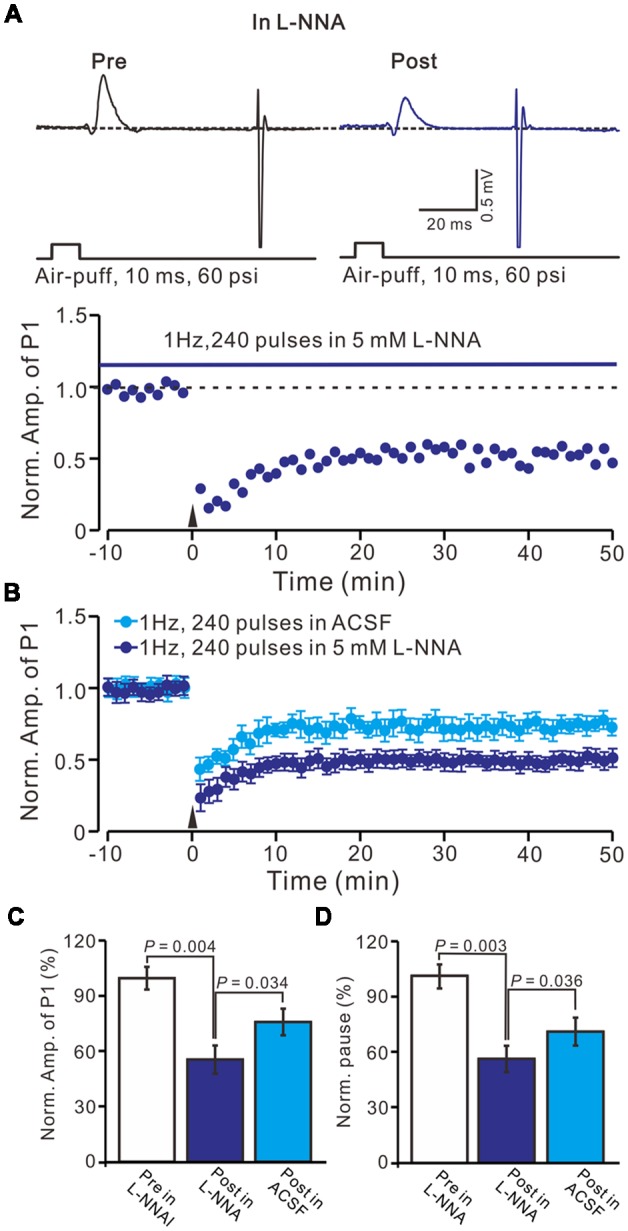
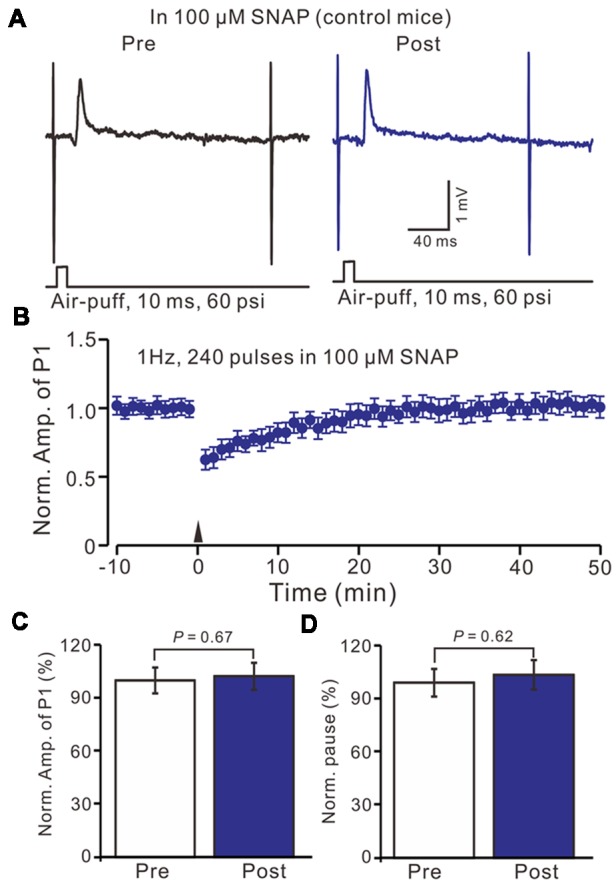
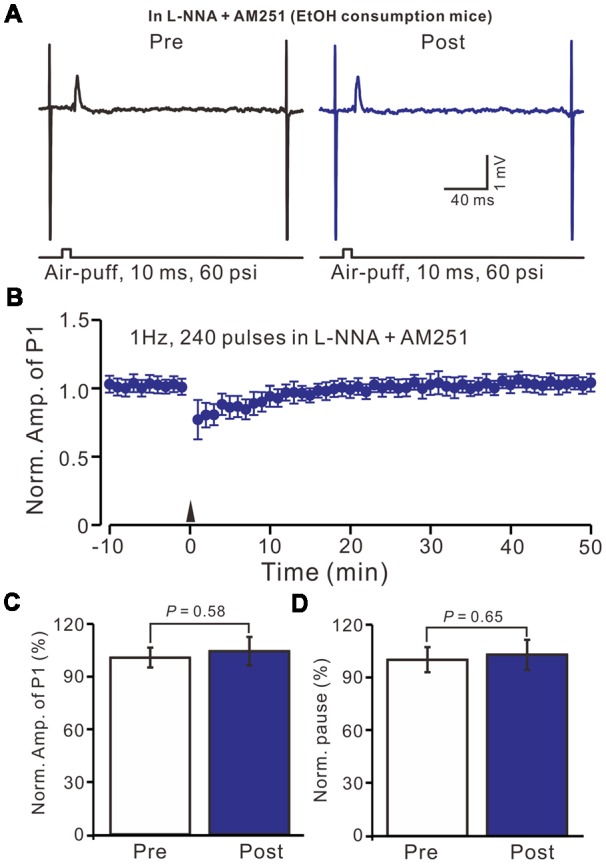
The cerebellum is sensitive to ethanol (EtOH) consumption. Chronic EtOH consumption impairs motor learning by modulating the cerebellar circuitry synaptic transmission and long-term plasticity. Under conditions, acute EtOH inhibits both parallel fiber (PF) and climbing fiber (CF) long-term depression (LTD). However, thus far it has not been investigated how chronic EtOH consumption affects sensory stimulation-evoked LTD at the molecular layer interneurons (MLIs) to the Purkinje cell (PC) synapses (MLI-PC LTD) in the cerebellar cortex of living animals. In this study, we investigated the effect of chronic EtOH consumption on facial stimulation-evoked MLI-PC LTD, using an electrophysiological technique as well as pharmacological methods, in urethane-anesthetized mice. Our results showed that facial stimulation induced MLI-PC LTD in the control mice, but it could not be induced in mice with chronic EtOH consumption (0.8 g/kg; 28 days). Blocking the cannabinoid type 1 (CB1) receptor activity with AM-251, prevented MLI-PC LTD in the control mice, but revealed a nitric oxide (NO)-dependent long-term potentiation (LTP) of MLI-PC synaptic transmission (MLI-PC LTP) in the EtOH consumption mice. Notably, with the application of a NO donor, S-nitroso-N-Acetyl-D, L-penicillamine (SNAP) alone prevented the induction of MLI-PC LTD, but a mixture of SNAP and AM-251 revealed an MLI-PC LTP in control mice. In contrast, inhibiting NO synthase (NOS) revealed the facial stimulation-induced MLI-PC LTD in EtOH consumption mice. These results indicate that long-term EtOH consumption can impair the sensory stimulation-induced MLI-PC LTD the activation of a NO signaling pathway in the cerebellar cortex in mice. Our results suggest that the chronic EtOH exposure causes a deficit in the cerebellar motor learning function and may be involved in the impaired MLI-PC GABAergic synaptic plasticity.
小脑对乙醇(EtOH)摄入敏感。长期摄入EtOH会通过调节小脑回路的突触传递和长期可塑性来损害运动学习。在某些情况下,急性EtOH会抑制平行纤维(PF)和攀爬纤维(CF)的长期抑制(LTD)。然而,迄今为止,尚未研究长期摄入EtOH如何影响活体动物小脑皮质中感觉刺激诱发的分子层中间神经元(MLIs)与浦肯野细胞(PC)突触处的LTD(MLI-PC LTD)。在本研究中,我们使用电生理技术和药理学方法,在氨基甲酸乙酯麻醉的小鼠中研究了长期摄入EtOH对面部刺激诱发的MLI-PC LTD的影响。我们的结果表明,面部刺激在对照小鼠中诱导了MLI-PC LTD,但在长期摄入EtOH(0.8 g/kg;28天)的小鼠中无法诱导。用AM-251阻断1型大麻素(CB1)受体活性可防止对照小鼠中的MLI-PC LTD,但在摄入EtOH的小鼠中揭示了MLI-PC突触传递的一氧化氮(NO)依赖性长期增强(LTP)(MLI-PC LTP)。值得注意的是,单独应用NO供体S-亚硝基-N-乙酰-D,L-青霉胺(SNAP)可防止MLI-PC LTD的诱导,但SNAP和AM-251的混合物在对照小鼠中揭示了MLI-PC LTP。相反,抑制一氧化氮合酶(NOS)在摄入EtOH的小鼠中揭示了面部刺激诱导的MLI-PC LTD。这些结果表明,长期摄入EtOH会损害感觉刺激诱导的MLI-PC LTD,即小鼠小脑皮质中NO信号通路的激活。我们的结果表明,慢性EtOH暴露会导致小脑运动学习功能缺陷,并可能参与受损的MLI-PC GABA能突触可塑性。