Li Bing-Xue, Dong Guang-Hui, Li Hao-Long, Zhang Jia-Song, Bing Yan-Hua, Chu Chun-Ping, Cui Song-Biao, Qiu De-Lai
Brain Science Research Center, Yanbian University, Yanji, China.
Department of Physiology and Pathophysiology, College of Medicine, Yanbian University, Yanji, China.
Front Syst Neurosci. 2021 Aug 2;15:657884. doi: 10.3389/fnsys.2021.657884. eCollection 2021.
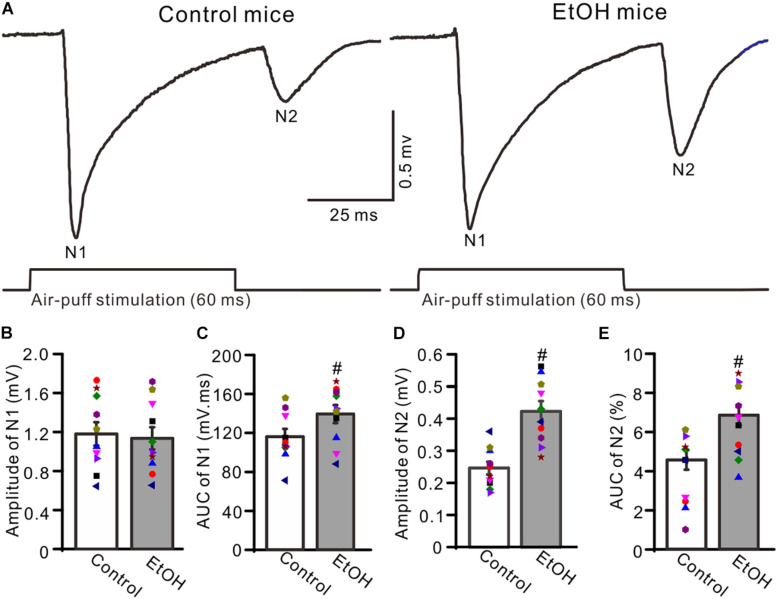
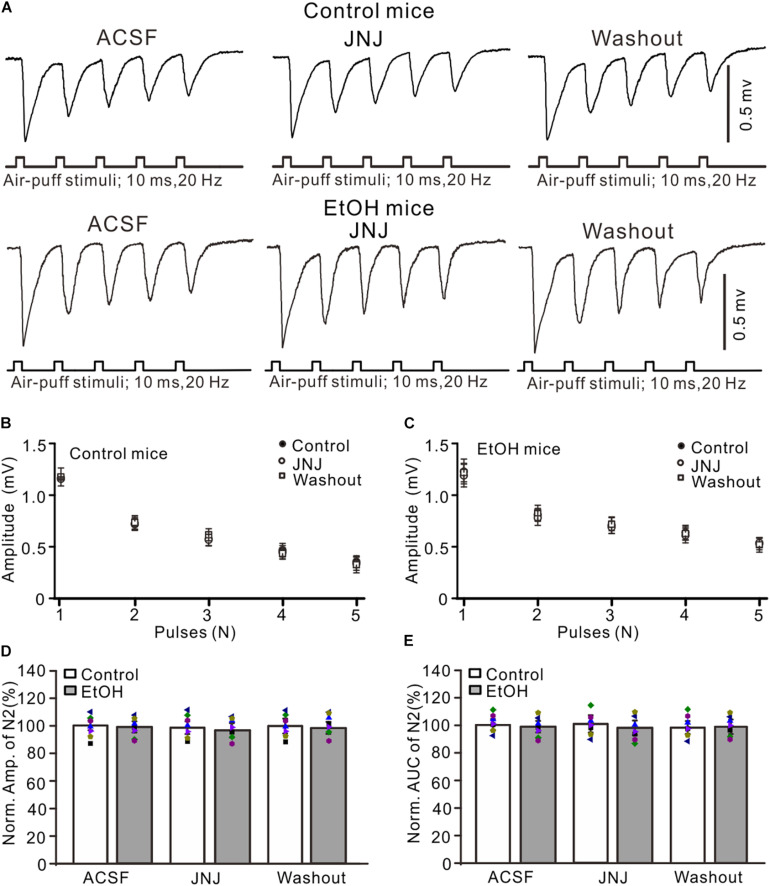
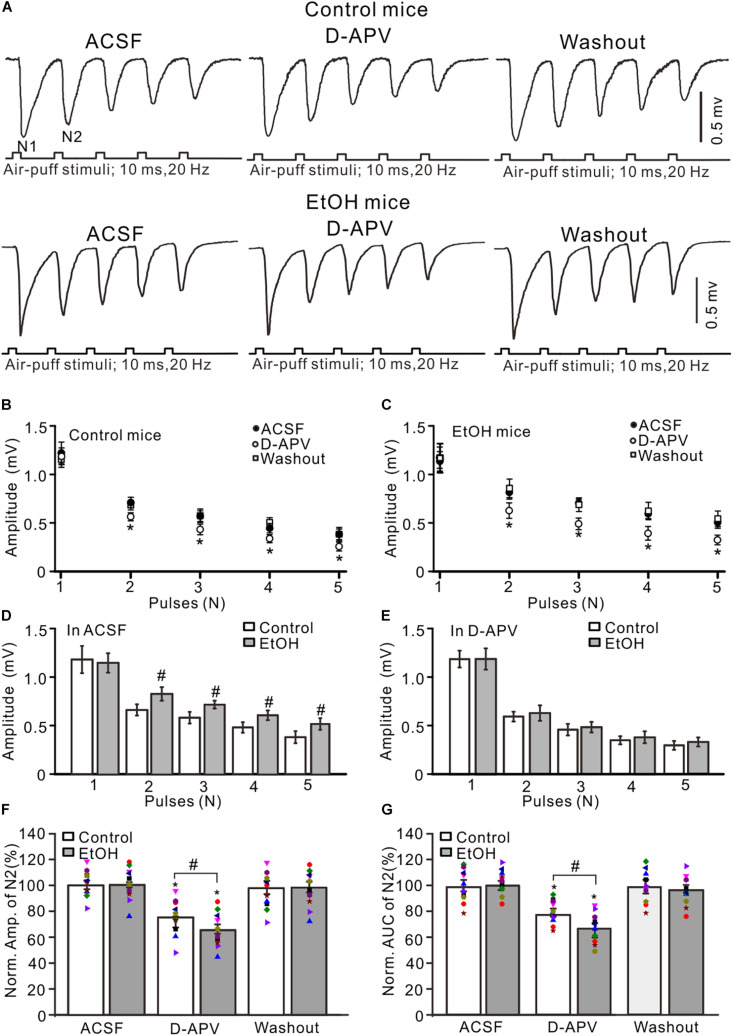
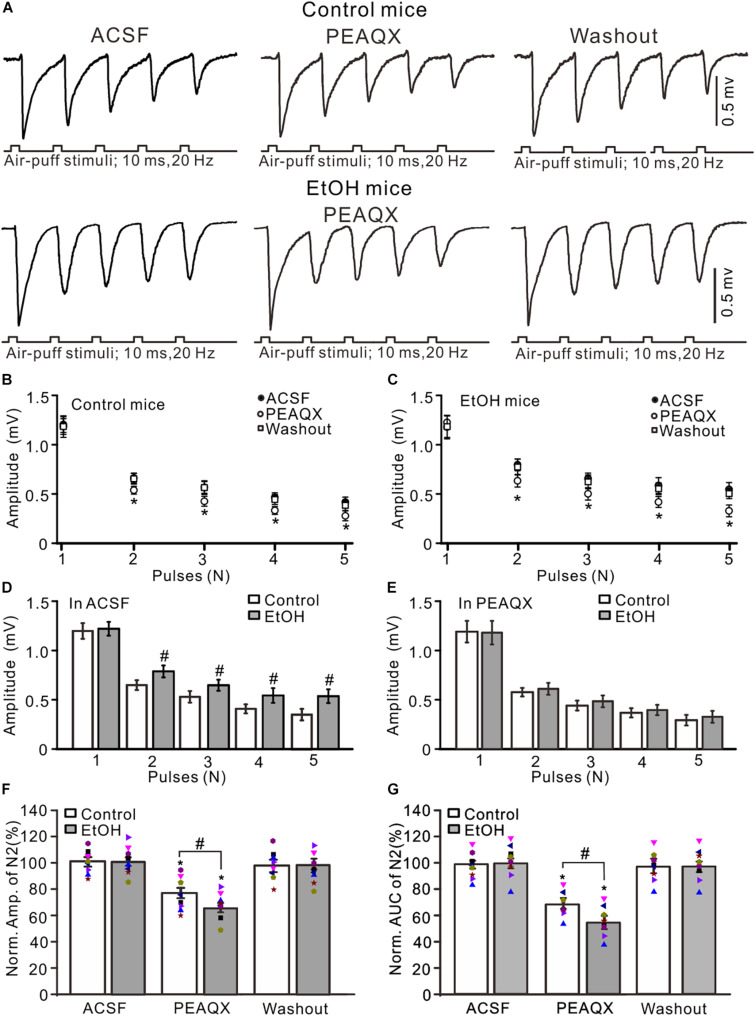
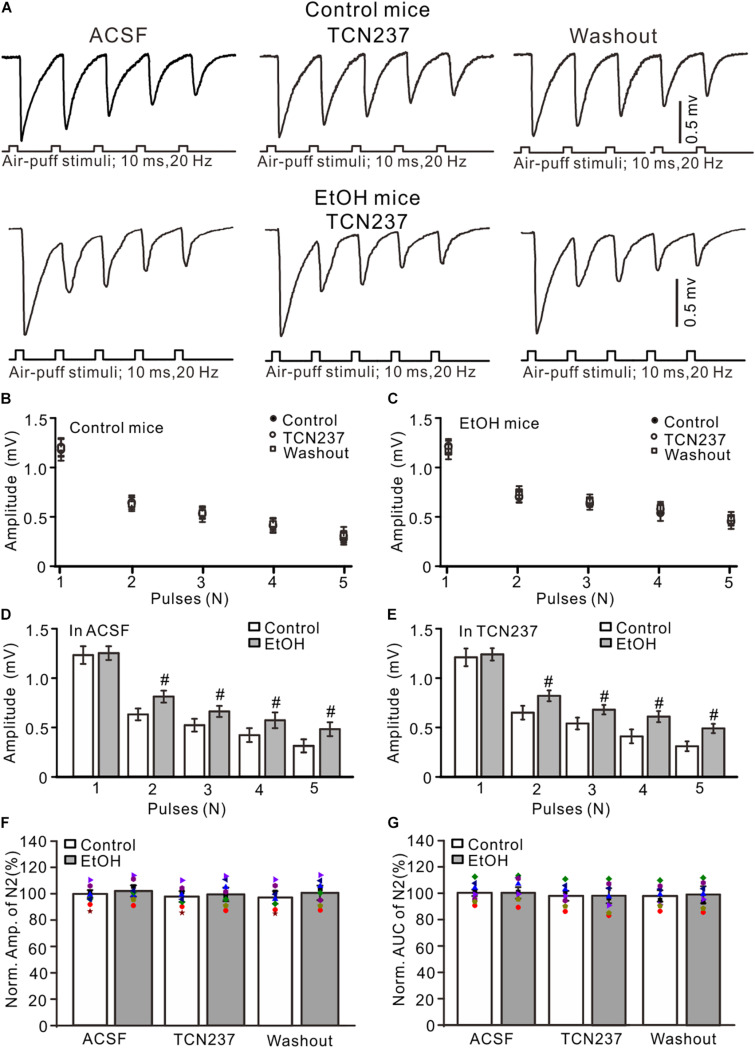
Sensory information is transferred to the cerebellar cortex the mossy fiber-granule cell (MF-GC) pathway, which participates in motor coordination and motor learning. We previously reported that chronic ethanol exposure from adolescence facilitated the sensory-evoked molecular layer interneuron-Purkinje cell synaptic transmission in adult mice . Herein, we investigated the effect of chronic ethanol exposure from adolescence on facial stimulation-evoked MF-GC synaptic transmission in the adult mouse cerebellar cortex using electrophysiological recording techniques and pharmacological methods. Chronic ethanol exposure from adolescence induced an enhancement of facial stimulation-evoked MF-GC synaptic transmission in the cerebellar cortex of adult mice. The application of an N-methyl-D-aspartate receptor (NMDAR) antagonist, D-APV (250 μM), induced stronger depression of facial stimulation-evoked MF-GC synaptic transmission in chronic ethanol-exposed mice compared with that in control mice. Chronic ethanol exposure-induced facilitation of facial stimulation evoked by MF-GC synaptic transmission was abolished by a selective GluN2A antagonist, PEAQX (10 μM), but was unaffected by the application of a selective GluN2B antagonist, TCN-237 (10 μM), or a type 1 metabotropic glutamate receptor blocker, JNJ16259685 (10 μM). These results indicate that chronic ethanol exposure from adolescence enhances facial stimulation-evoked MF-GC synaptic transmission GluN2A, which suggests that chronic ethanol exposure from adolescence impairs the high-fidelity transmission capability of sensory information in the cerebellar cortex by enhancing the NMDAR-mediated components of MF-GC synaptic transmission in adult mice .
感觉信息通过苔藓纤维 - 颗粒细胞(MF - GC)通路传递至小脑皮质,该通路参与运动协调和运动学习。我们之前报道过,青春期开始的慢性乙醇暴露促进了成年小鼠中感觉诱发的分子层中间神经元 - 浦肯野细胞突触传递。在此,我们使用电生理记录技术和药理学方法,研究了青春期开始的慢性乙醇暴露对成年小鼠小脑皮质中面部刺激诱发的MF - GC突触传递的影响。青春期开始的慢性乙醇暴露诱导成年小鼠小脑皮质中面部刺激诱发的MF - GC突触传递增强。与对照小鼠相比,应用N - 甲基 - D - 天冬氨酸受体(NMDAR)拮抗剂D - APV(250 μM)可使慢性乙醇暴露小鼠中面部刺激诱发的MF - GC突触传递受到更强的抑制。选择性GluN2A拮抗剂PEAQX(10 μM)可消除慢性乙醇暴露诱导的MF - GC突触传递所诱发的面部刺激增强作用,但应用选择性GluN2B拮抗剂TCN - 237(10 μM)或1型代谢型谷氨酸受体阻滞剂JNJ16259685(10 μM)对此无影响。这些结果表明,青春期开始的慢性乙醇暴露通过GluN2A增强面部刺激诱发的MF - GC突触传递,这表明青春期开始的慢性乙醇暴露通过增强成年小鼠中MF - GC突触传递的NMDAR介导成分,损害了小脑皮质中感觉信息的高保真传递能力。