Zhang Yueqi, Yang Hong, Yu Xinrui, Kong Haiyang, Chen Jiaming, Luo Huiying, Bai Yingguo, Yao Bin
Key Laboratory for Feed Biotechnology of the Ministry of Agriculture, Feed Research Institute, Chinese Academy of Agricultural Sciences, No. 12 Zhongguancun South Street, Beijing, 100081, People's Republic of China.
AMB Express. 2019 Jan 29;9(1):13. doi: 10.1186/s13568-019-0740-6.
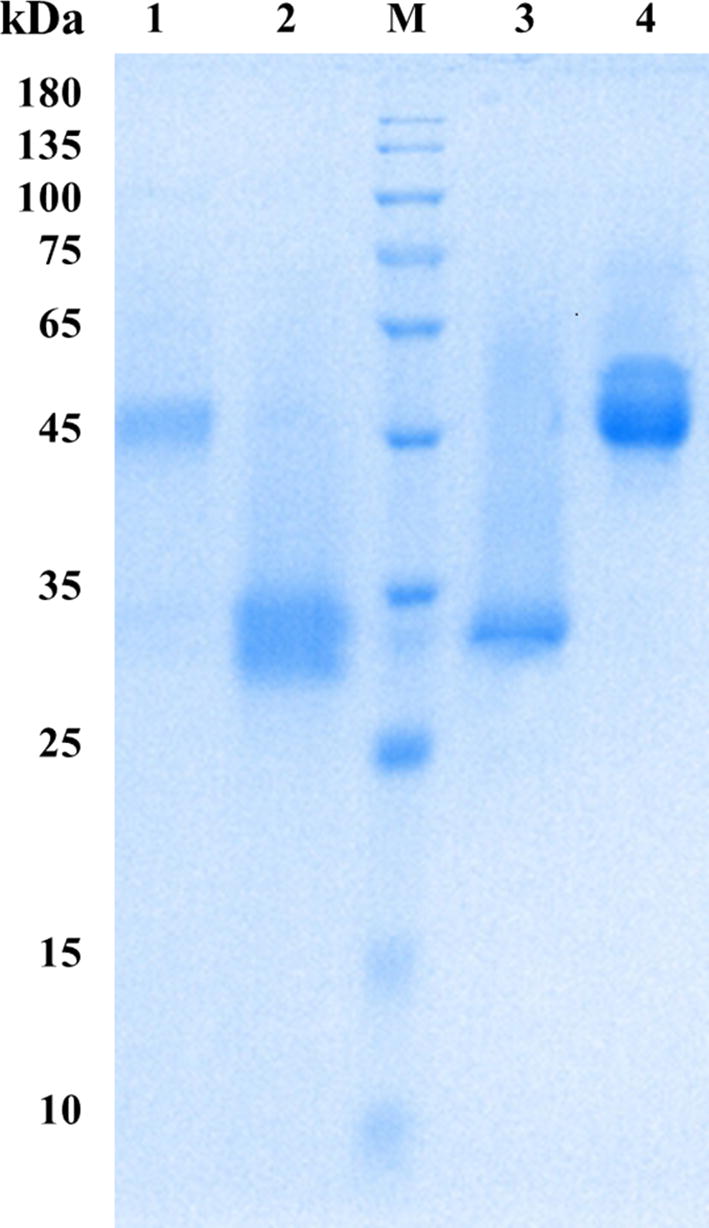
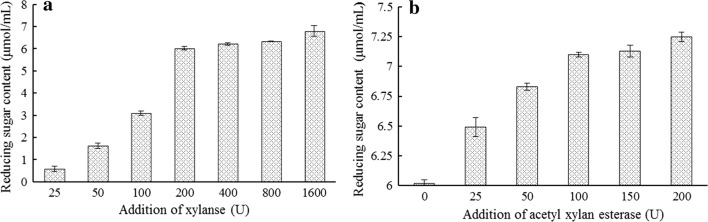
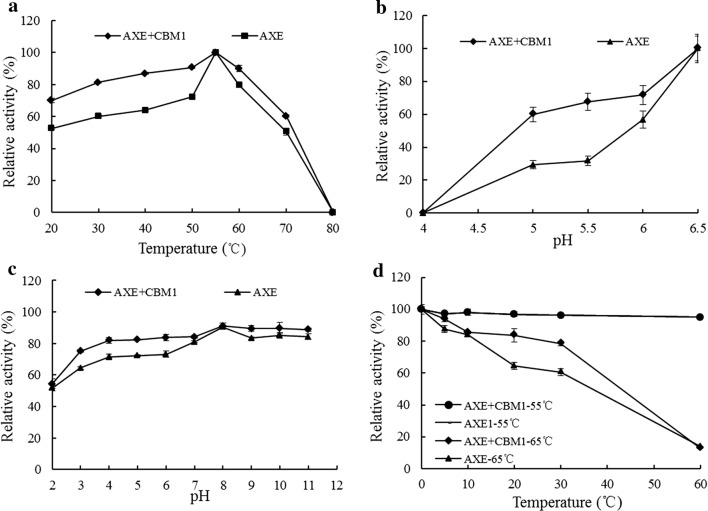
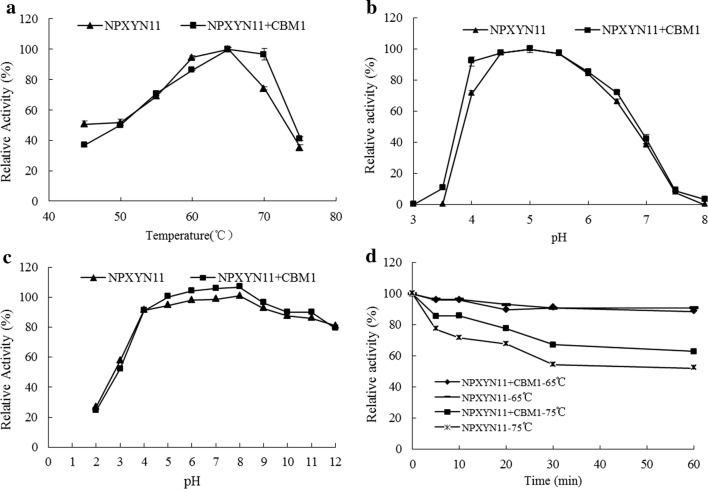
Wheat bran is an effective raw material for preparation xylooligosaccharides; however, current research mainly focuses on alkali extraction and enzymatic hydrolysis methods. Since ester bonds are destroyed during the alkali extraction process, xylanase and arabinofuranosidase are mainly used to hydrolyze xylooligosaccharides. However, alkali extraction costs are very high, and the method also causes pollution. Therefore, this study focuses on elucidating a method to efficiently and directly degrade destarched wheat bran. First, an acidic acetyl xylan esterase (AXE) containing a carbohydrate-binding module-1 (CBM1) domain was cloned from Talaromyces leycettanus JCM12802 and successfully expressed in Pichia pastoris. Characterization showed that the full-length acetyl xylan esterase AXE + CBM1 was similar toe uncovered AXE with an optimum temperature and pH of 55 °C and 6.5, respectively. Testing the acetyl xylan esterase and xylanase derived from Neocallimastix patriciarum in a starch-free wheat bran cooperative experiment revealed that AXE + CBM1 and AXE produced 29% and 16% reducing sugars respectively, compared to when only NPXYN11 was used. In addition, introduced the CBM1 domain into NPXYN11, and the results indicated that the CBM1 domain showed little effect on NPXYN11 properties. Finally, the systematically synergistic effects between acetyl xylan esterase and xylanase with/without the CBM1 domain demonstrated that the combined ratio of AXE + CBM1 coming in first and NPXYN11 + CBM1 s increased reducing sugars by almost 35% with AXE and NPXYN11. Furthermore, each component's proportion remained the same with respect to xylooligosaccharides, with the largest proportion (86%) containing of 49% xylobiose and 37% xylotriose.
麦麸是制备低聚木糖的有效原料;然而,目前的研究主要集中在碱提取和酶水解方法上。由于在碱提取过程中酯键被破坏,主要使用木聚糖酶和阿拉伯呋喃糖苷酶来水解低聚木糖。然而,碱提取成本非常高,而且该方法还会造成污染。因此,本研究着重于阐明一种有效且直接降解脱淀粉麦麸的方法。首先,从莱氏炭角菌JCM12802中克隆了一种含有碳水化合物结合模块-1(CBM1)结构域的酸性乙酰木聚糖酯酶(AXE),并在毕赤酵母中成功表达。表征显示,全长乙酰木聚糖酯酶AXE + CBM1与未发现的AXE相似,最佳温度和pH分别为55℃和6.5。在无淀粉麦麸协同实验中测试源自新丽盲肠菌的乙酰木聚糖酯酶和木聚糖酶,结果显示,与仅使用NPXYN11时相比,AXE + CBM1和AXE分别产生了29%和16%的还原糖。此外,将CBM1结构域引入NPXYN11,结果表明CBM1结构域对NPXYN11的性质影响很小。最后,乙酰木聚糖酯酶和木聚糖酶在有无CBM1结构域情况下的系统协同效应表明,AXE + CBM1与NPXYN11 + CBM1的组合比例中,AXE和NPXYN11使还原糖增加了近35%。此外,各组分相对于低聚木糖的比例保持不变,最大比例(86%)包含49%的木二糖和37%的木三糖。