Li Zhuoyang, Zhang Yijun
Department of Orthopedics, The First Affiliated Hospital, College of Medicine, Zhejiang University, Hangzhou, China.
J Orthop Surg Res. 2019 Jan 29;14(1):36. doi: 10.1186/s13018-019-1072-6.
To conduct a meta-analysis to compare the curative effect of treating the full thickness tear of the rotator cuff using the arthroscopic bone marrow stimulation (BMS) technology and provide the evidence for its extensive clinical application.
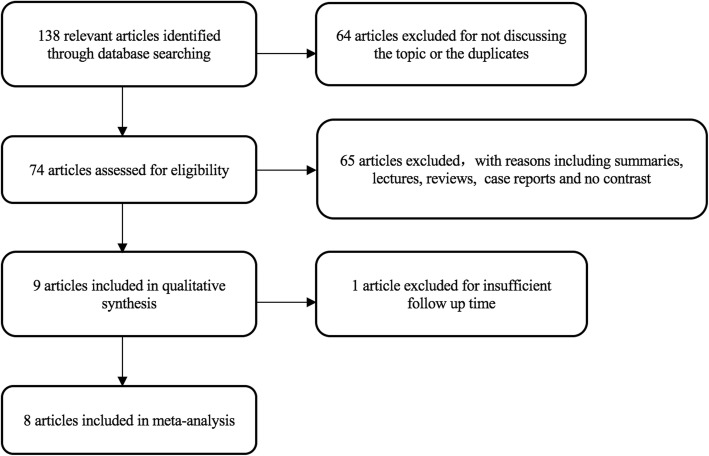
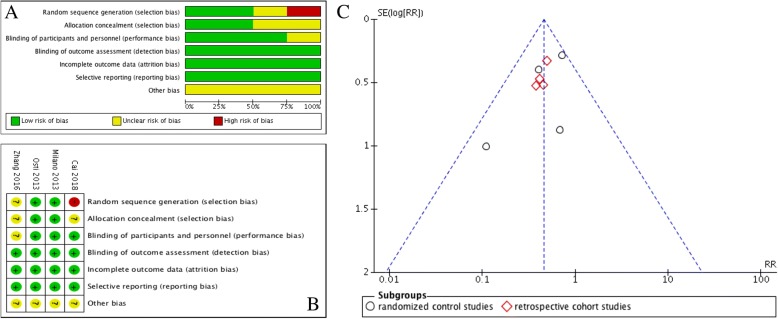
A systematic literature search was conducted to evaluate the studies on comparison of the curative effect of routine surgery with or without BMS on rotator cuff tear in the major medical databases. The literature was screened according to the inclusion and exclusion standards, and the quality assessment was conducted, then Review Manager 5.3 software was used for meta-analysis.
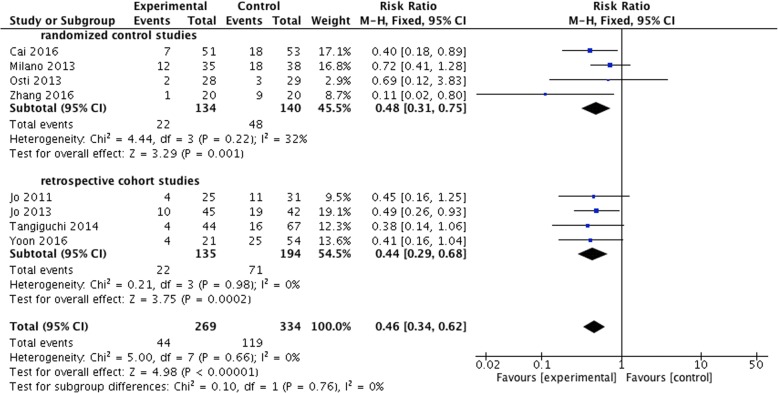
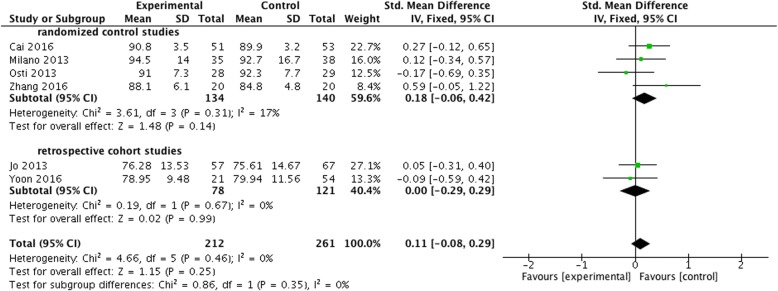
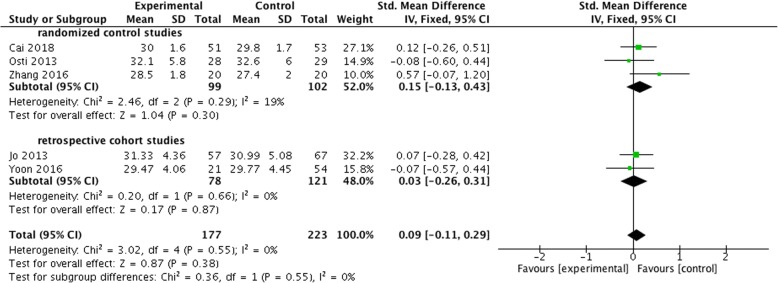
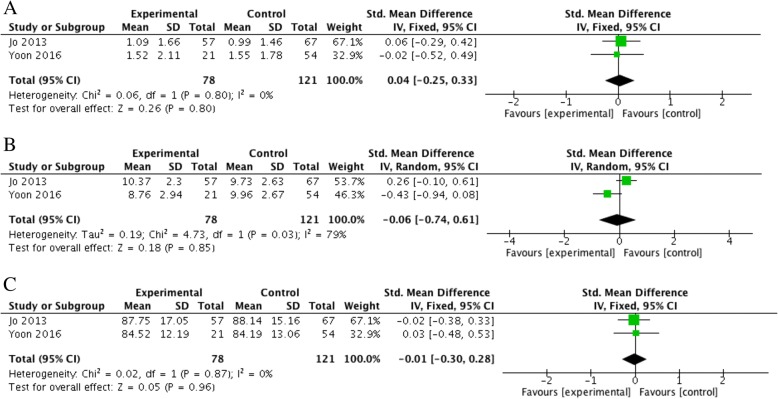
Eight articles were eligible for inclusion. There were no statistically significant differences between BMS and control groups for overall outcome scores (P > 0.05). Except the Constant score of BMS group was significantly higher than that of the control group at the third follow-up month (P = 0.007). However, the postoperative re-tear rate of the BMS group was significantly lower than that of the control group (P < 0.001). Furthermore, we made a subgroup analysis and found that the postoperative Constant and UCLA score had no significant differences among all groups (P > 0.05), and the re-tear rates of the BMS groups were lower than those of the control groups (P = 0.001, P = 0.0002).
BMS technology has no significant influence on the postoperative clinical result of patients. However, it can obviously promote the tendon-to-bone healing of the rotator cuff and decrease the re-tear rate, which provides evidence for the clinical treatment.
进行一项荟萃分析,比较关节镜下骨髓刺激(BMS)技术治疗肩袖全层撕裂的疗效,为其广泛临床应用提供依据。
在主要医学数据库中进行系统文献检索,以评估常规手术联合或不联合BMS治疗肩袖撕裂疗效比较的研究。根据纳入和排除标准筛选文献并进行质量评估,然后使用Review Manager 5.3软件进行荟萃分析。
8篇文章符合纳入标准。BMS组与对照组在总体结果评分上无统计学显著差异(P>0.05)。除了在第三次随访月时BMS组的Constant评分显著高于对照组(P = 0.007)。然而,BMS组术后再撕裂率显著低于对照组(P<0.001)。此外,我们进行了亚组分析,发现所有组术后Constant和UCLA评分无显著差异(P>0.05),且BMS组的再撕裂率低于对照组(P = 0.001,P = 0.0002)。
BMS技术对患者术后临床结果无显著影响。然而,它能明显促进肩袖的腱骨愈合并降低再撕裂率,为临床治疗提供了依据。