School of Life Sciences, University of Nottingham, Nottingham, United Kingdom.
School of Life Sciences, University of Nottingham, Nottingham, United Kingdom
mBio. 2019 Jan 29;10(1):e01828-18. doi: 10.1128/mBio.01828-18.
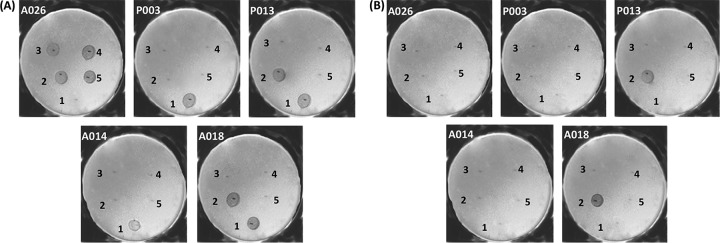
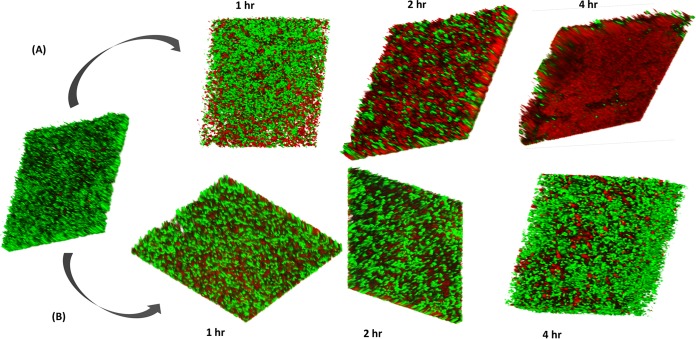
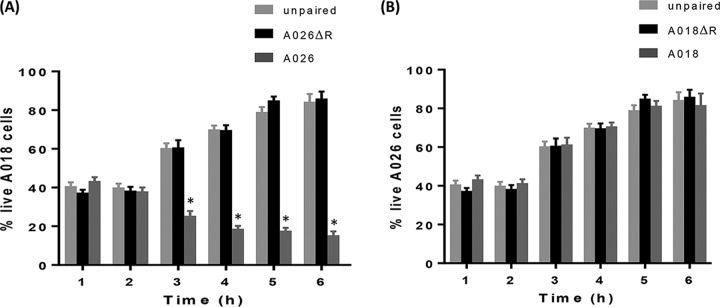
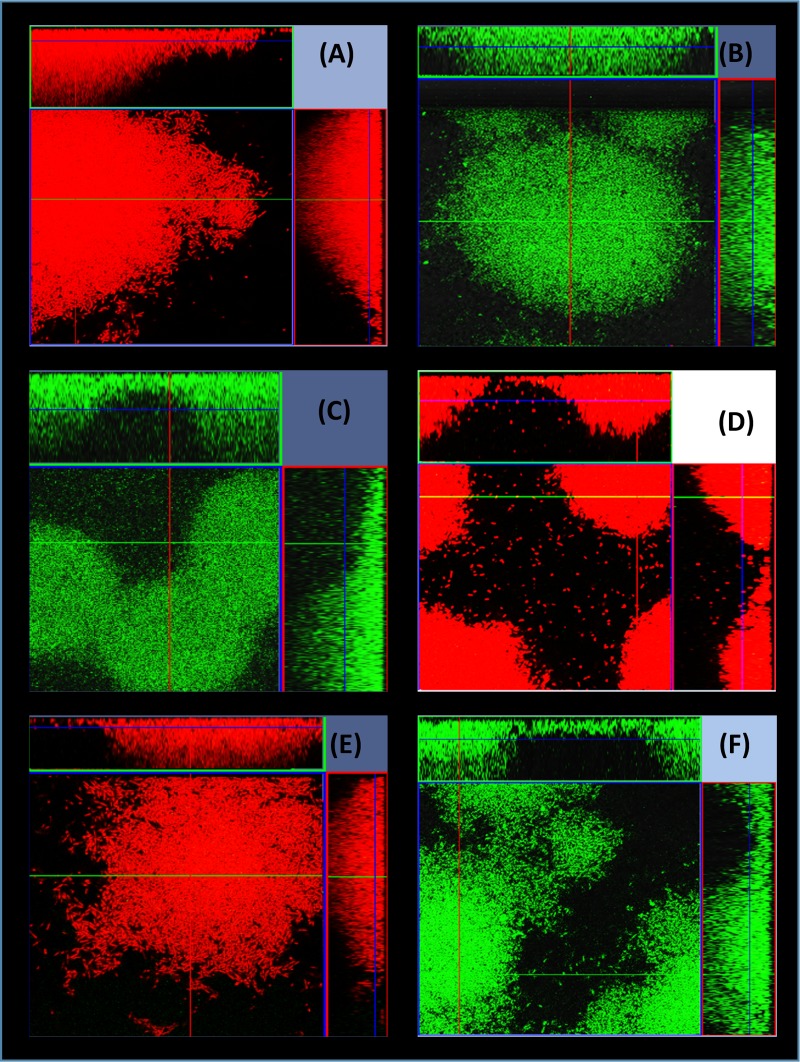
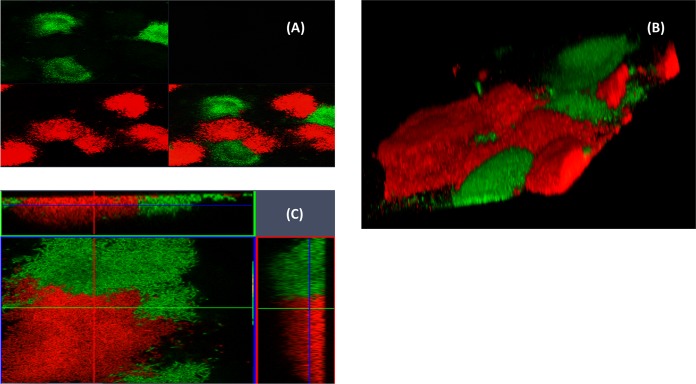
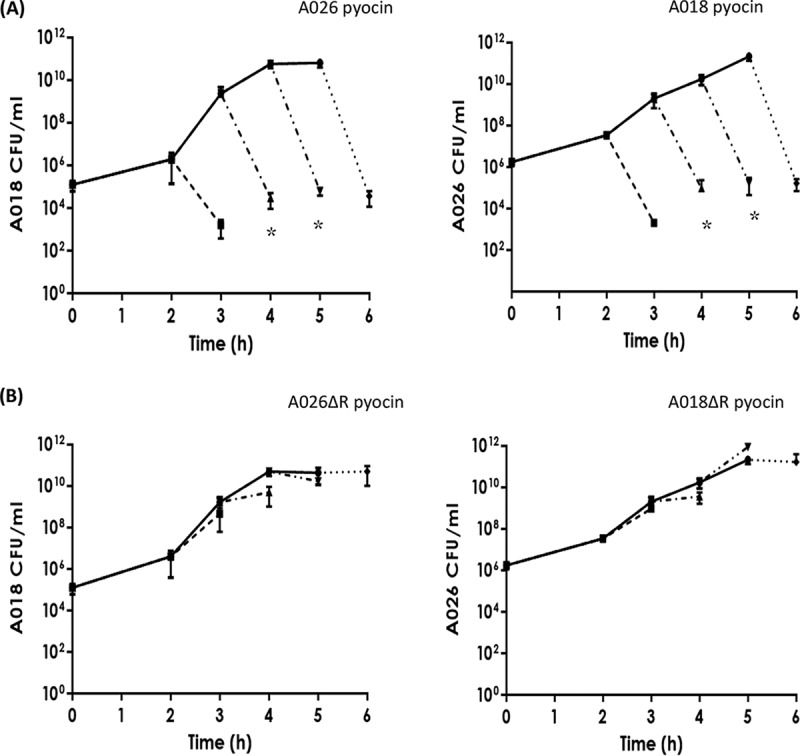
is an opportunistic pathogen and the leading cause of morbidity and mortality in cystic fibrosis (CF) patients. infections are difficult to treat due to a number of antibiotic resistance mechanisms and the organism's propensity to form multicellular biofilms. Epidemic strains of often dominate within the lungs of individual CF patients, but how they achieve this is poorly understood. One way that strains of can compete is by producing chromosomally encoded bacteriocins, called pyocins. Three major classes of pyocin have been identified in : soluble pyocins (S types) and tailocins (R and F types). In this study, we investigated the distribution of S- and R-type pyocins in 24 clinical strains isolated from individual CF patients and then focused on understanding their roles in interstrain competition. We found that (i) each strain produced only one R-pyocin type, but the number of S-pyocins varied between strains, (ii) R-pyocins were generally important for strain dominance during competition assays in planktonic cultures and biofilm communities in strains with both disparate R- and S-pyocin subtypes, and (iii) purified R-pyocins demonstrated significant antimicrobial activity against established biofilms. Our work provides support for a role played by R-pyocins in the competition between strains and helps explain why certain strains and lineages of dominate and displace others during CF infection. Furthermore, we demonstrate the potential of exploiting R-pyocins for therapeutic gains in an era when antibiotic resistance is a global concern. A major clinical problem caused by , is chronic biofilm infection of the lungs in individuals with cystic fibrosis (CF). Epidemic strains dominate and displace others during CF infection, but these intraspecies interactions remain poorly understood. Here we demonstrate that R-pyocins (bacteriocins) are important factors in driving competitive interactions in biofilms between strains isolated from different CF patients. In addition, we found that these phage-like pyocins are inhibitory against mature biofilms of susceptible strains. This highlights the potential of R-pyocins as antimicrobial and antibiofilm agents at a time when new antimicrobial therapies are desperately needed.
铜绿假单胞菌是一种机会性病原体,也是囊性纤维化 (CF) 患者发病和死亡的主要原因。由于存在多种抗生素耐药机制以及该生物体形成多细胞生物膜的倾向,铜绿假单胞菌感染的治疗较为困难。流行株的铜绿假单胞菌经常在单个 CF 患者的肺部占主导地位,但人们对其如何实现这一点知之甚少。铜绿假单胞菌菌株竞争的一种方式是产生染色体编码的细菌素,称为噬菌体。已在铜绿假单胞菌中鉴定出三种主要类型的噬菌体:可溶性噬菌体 (S 型) 和尾噬菌体 (R 和 F 型)。在这项研究中,我们调查了 24 株从单个 CF 患者中分离的临床株中 S-和 R-型噬菌体的分布,然后专注于了解它们在菌株间竞争中的作用。我们发现 (i) 每个菌株仅产生一种 R-噬菌体类型,但菌株之间 S-噬菌体的数量不同,(ii) 在浮游培养物和具有不同 R-和 S-噬菌体亚型的生物膜群落中,R-噬菌体通常对竞争测定中的菌株优势很重要,以及 (iii) 纯化的 R-噬菌体对已建立的生物膜表现出显著的抗菌活性。我们的工作支持 R-噬菌体在铜绿假单胞菌菌株之间竞争中发挥的作用,并有助于解释为什么某些铜绿假单胞菌菌株和谱系在 CF 感染期间会占据优势并取代其他菌株。此外,在抗生素耐药性成为全球关注的时代,我们证明了利用 R-噬菌体获得治疗收益的潜力。铜绿假单胞菌引起的一个主要临床问题是囊性纤维化 (CF) 个体肺部的慢性生物膜感染。流行株在 CF 感染期间占据优势并取代其他菌株,但这些种内相互作用仍知之甚少。在这里,我们证明 R-噬菌体 (细菌素) 是驱动来自不同 CF 患者的铜绿假单胞菌菌株在生物膜中竞争相互作用的重要因素。此外,我们发现这些类似噬菌体的噬菌体对易感菌株成熟生物膜具有抑制作用。这凸显了 R-噬菌体作为抗菌和抗生物膜剂的潜力,因为此时迫切需要新的抗菌疗法。