Department of Medical Physics, Memorial Sloan Kettering Cancer Center, New York, NY, 10065, USA.
Cancer Biology and Genetics Program, Memorial Sloan Kettering Cancer Center, New York, NY, 10065, USA.
Sci Rep. 2019 Jan 29;9(1):857. doi: 10.1038/s41598-018-37408-7.
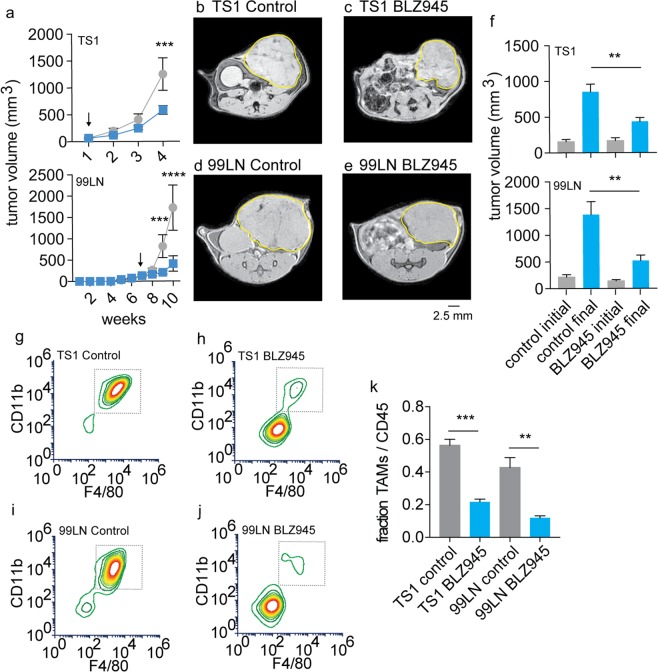
Iron deposits are a phenotypic trait of tumor-associated macrophages (TAMs). Histological iron imaging and contrast-agent free magnetic resonance imaging (MRI) can detect these deposits, but their presence in human cancer, and correlation with immunotherapeutic response is largely untested. Here, primarily using these iron imaging approaches, we evaluated the spatial distribution of polarized macrophage populations containing high endogenous levels of iron in preclinical murine models and human breast cancer, and used them as metabolic biomarkers to correlate TAM infiltration with response to immunotherapy in preclinical trials. Macrophage-targeted inhibition of the colony stimulating factor 1 receptor (CSF1R) by immunotherapy was confirmed to inhibit macrophage accumulation and slow mammary tumor growth in mouse models while also reducing hemosiderin iron-laden TAM accumulation as measured by both iron histology and in vivo iron MRI (FeMRI). Spatial profiling of TAM iron deposit infiltration defined regions of maximal accumulation and response to the CSF1R inhibitor, and revealed differences between microenvironments of human cancer according to levels of polarized macrophage iron accumulation in stromal margins. We therefore demonstrate that iron deposition serves as an endogenous metabolic imaging biomarker of TAM infiltration in breast cancer that has high translational potential for evaluation of immunotherapeutic response.
铁沉积是肿瘤相关巨噬细胞(TAMs)的表型特征。组织学铁成像和无对比剂磁共振成像(MRI)可检测这些沉积物,但它们在人类癌症中的存在及其与免疫治疗反应的相关性在很大程度上尚未得到验证。在这里,我们主要使用这些铁成像方法,评估了含有高水平内源性铁的极化巨噬细胞群体在临床前小鼠模型和人类乳腺癌中的空间分布,并将其用作代谢生物标志物,以在临床前试验中关联 TAM 浸润与免疫治疗反应。免疫治疗对集落刺激因子 1 受体(CSF1R)的巨噬细胞靶向抑制已被证实可抑制巨噬细胞积累并减缓乳腺肿瘤生长,同时还可减少铁组织学和体内铁 MRI(FeMRI)测量的含铁血黄素铁负荷 TAM 积累。TAM 铁沉积物浸润的空间分析定义了最大积累和对 CSF1R 抑制剂反应的区域,并根据间质边缘极化巨噬细胞铁积累水平揭示了人类癌症微环境之间的差异。因此,我们证明铁沉积可作为乳腺癌中 TAM 浸润的内源性代谢成像生物标志物,具有评估免疫治疗反应的高转化潜力。