Třebický Vít, Fialová Jitka, Stella David, Coufalová Klára, Pavelka Radim, Kleisner Karel, Kuba Radim, Štěrbová Zuzana, Havlíček Jan
Faculty of Science, Charles University, Prague, Czechia.
Applied Neurosciences and Brain Imaging, National Institute of Mental Health, Klecany, Czechia.
Front Psychol. 2019 Jan 15;9:2740. doi: 10.3389/fpsyg.2018.02740. eCollection 2018.
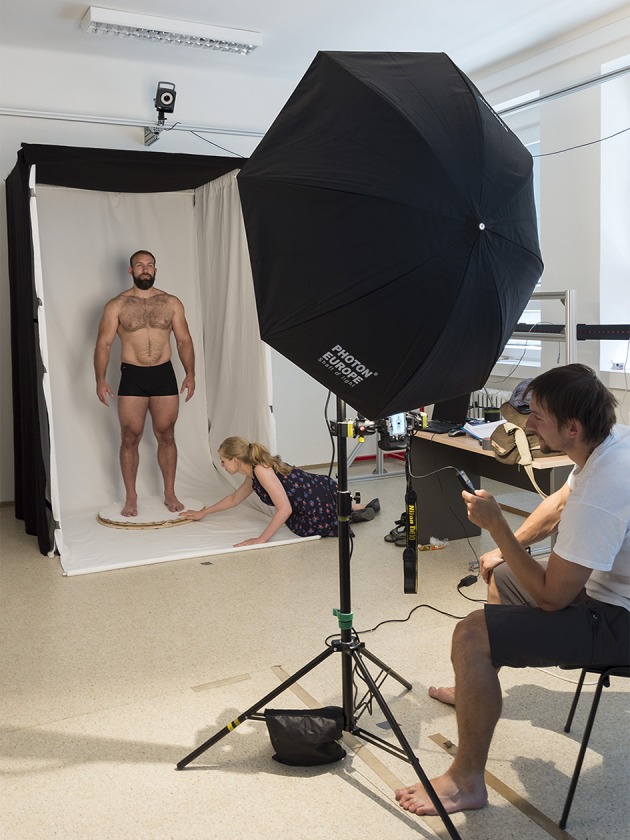
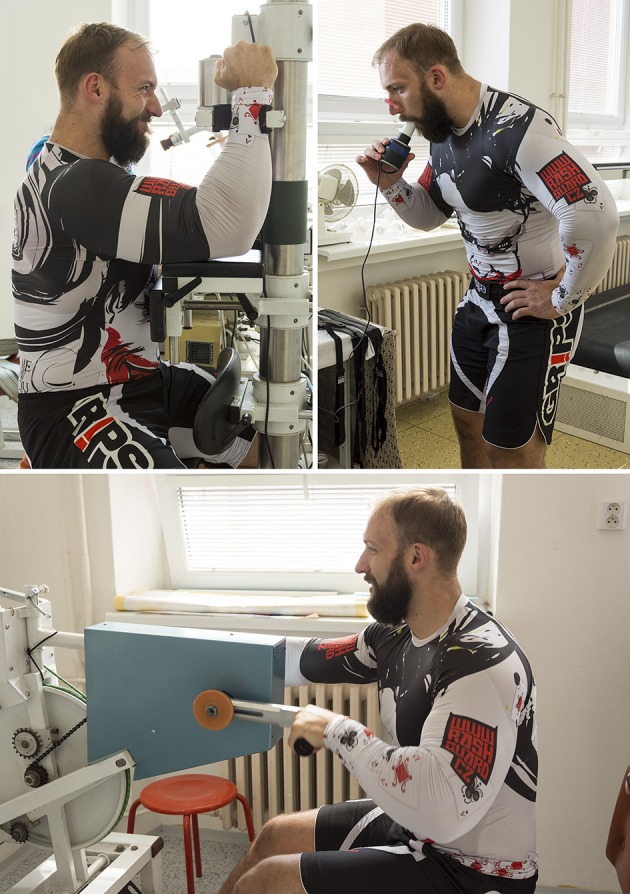
Facial perception plays a key role in various social interactions, including formidability assessments. People make relatively accurate inferences about men's physical strength, aggressiveness, and success in physical confrontations based on facial cues. The physical factors related to the perception of fighting ability and their relative contribution have not been investigated yet, since most existing studies employed only a limited number of threat potential measures or proxies. In the present study, we collected data from Czech Mixed Martial Arts (MMA) fighters regarding their fighting success and physical performance in order to test physical predictors of perceived fighting ability made on the basis of high-fidelity facial photographs. We have also explored the relationship between perceived and actual fighting ability. We created standardized 360° photographs of 44 MMA fighters which were assessed on their perceived fighting ability by 94 raters (46 males). Further, we obtained data regarding their physical characteristics (e.g., age, height, body composition) and performance (MMA score, isometric strength, anaerobic performance, lung capacity). In contrast to previous studies, we did not find any significant links between the actual and the perceived fighting ability. The results of a multiple regression analysis have, however, shown that heavier fighters and those with higher anaerobic performance were judged as more successful. Our results suggest that certain physical performance-related characteristics are mirrored in individuals' faces but assessments of fighting success based on facial cues are not congruent with actual fighting performance.
面部感知在包括威慑力评估在内的各种社交互动中起着关键作用。人们基于面部线索,能够对男性的体力、攻击性以及在肢体对抗中的表现做出相对准确的推断。由于大多数现有研究仅采用了有限数量的威胁潜力测量指标或替代指标,与战斗能力感知相关的身体因素及其相对贡献尚未得到研究。在本研究中,我们收集了捷克综合格斗(MMA)选手关于他们战斗成绩和身体表现的数据,以便测试基于高保真面部照片做出的战斗能力感知的身体预测因素。我们还探究了感知到的战斗能力与实际战斗能力之间的关系。我们为44名MMA选手拍摄了标准化的360度照片,由94名评分者(46名男性)对这些照片的战斗能力感知进行评估。此外,我们获取了他们的身体特征(如年龄、身高、身体组成)和表现(MMA得分、等长力量、无氧运动表现、肺活量)的数据。与之前的研究不同,我们没有发现实际战斗能力与感知到的战斗能力之间存在任何显著关联。然而,多元回归分析的结果表明,体重较重的选手和无氧运动表现较高的选手被认为更成功。我们的研究结果表明,某些与身体表现相关的特征会反映在个人面部,但基于面部线索对战斗成功的评估与实际战斗表现并不一致。