Sordyl Joanna, Kopyta Ilona, Sarecka-Hujar Beata, Francuz Tomasz, Matusik Paweł, Małecka-Tendera Ewa
Department of Paediatrics and Paediatric Endocrinology, School of Medicine, Medical University of Silesia, Katowice, Poland.
Department of Paediatric Neurology, School of Medicine, Medical University of Silesia, Katowice, Poland.
Arch Med Sci. 2019 Jan;15(1):120-125. doi: 10.5114/aoms.2018.73983. Epub 2018 Mar 2.
Elevated lipid concentrations were observed in adults with headaches. However, studies in children are scarce. Recent data suggest new potential risk factors for atherosclerosis, which may be associated with headaches. The aim of the study was to analyse the blood levels of lipids and new markers of atherosclerosis in children with idiopathic headaches.
The study population comprised 65 children (39 with idiopathic headaches and 26 healthy children). Total cholesterol (TC), high-density lipoprotein (HDL), low-density lipoprotein (LDL) cholesterol and triacylglycerol (TG) levels were measured in every patient. Brain-derived neurotrophic factor (BDNF), soluble CD40 ligand (sCD40L), endothelial plasminogen activator inhibitor (serpin E1/PAI I) and vascular endothelial growth factor (VEGF) blood level measurements were performed in 34 children.
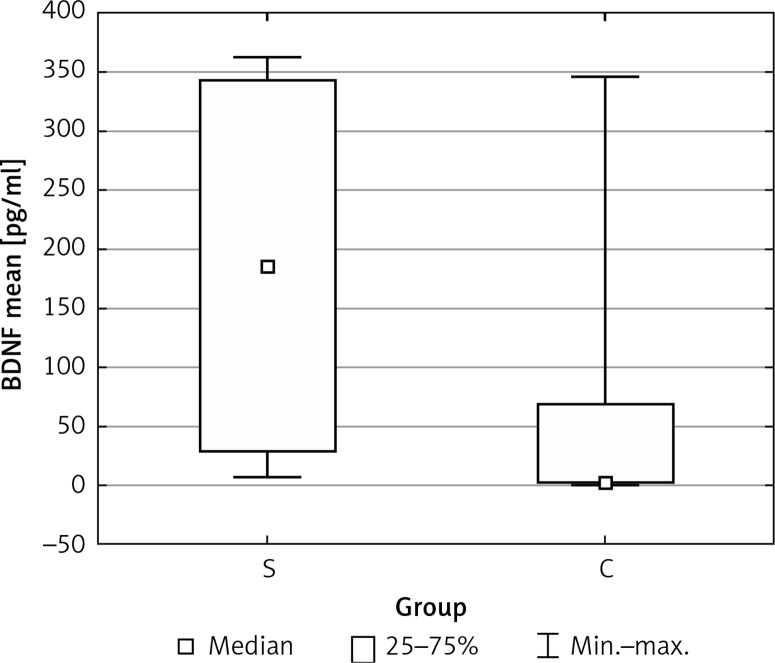
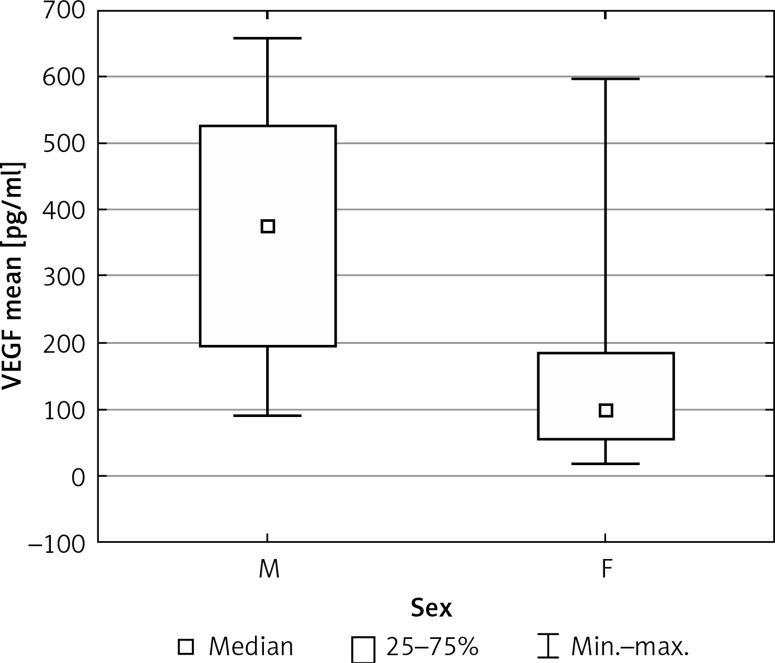
Children with headaches had higher BMI -scores (0.2 vs. -1.14; = 0.006). TC level was lower in patients with headaches (121.04 mg/dl vs. 146.87 mg/dl, = 0.019). No differences in concentrations of TG, HDL or LDL were found. BDNF was significantly higher in the studied group (171.57 pg/ml vs. 64.04 pg/ml, = 0.012). The VEGF was higher in boys with headaches than in girls (368.27 pg/ml vs. 142.86 pg/ml, = 0.011). There were no differences in levels of VEGF, sCD40L or PAI-1 between groups.
Children with headaches have lower total cholesterol and higher BDNF levels than controls. No significant difference in levels of triacylglycerols, HDL cholesterol, LDL cholesterol, VEGF, sCD40L or PAI-1 was found between children with headaches and controls.
在患有头痛的成年人中观察到脂质浓度升高。然而,关于儿童的研究很少。最近的数据表明动脉粥样硬化有新的潜在危险因素,这可能与头痛有关。本研究的目的是分析患有特发性头痛的儿童的血脂水平和动脉粥样硬化的新标志物。
研究人群包括65名儿童(39名患有特发性头痛的儿童和26名健康儿童)。测量了每位患者的总胆固醇(TC)、高密度脂蛋白(HDL)、低密度脂蛋白(LDL)胆固醇和三酰甘油(TG)水平。对34名儿童进行了脑源性神经营养因子(BDNF)、可溶性CD40配体(sCD40L)、内皮纤溶酶原激活物抑制剂(丝氨酸蛋白酶抑制剂E1/PAI I)和血管内皮生长因子(VEGF)的血液水平测量。
患有头痛的儿童BMI得分更高(0.2对-1.14;P = 0.006)。头痛患者的TC水平较低(121.04mg/dl对146.87mg/dl,P = 0.019)。未发现TG、HDL或LDL浓度有差异。研究组中BDNF显著更高(171.57pg/ml对64.04pg/ml,P = 0.012)。患有头痛的男孩的VEGF高于女孩(368.27pg/ml对142.86pg/ml,P = 0.011)。两组之间VEGF、sCD40L或PAI-1水平没有差异。
与对照组相比,患有头痛的儿童总胆固醇较低,BDNF水平较高。在患有头痛的儿童和对照组之间,未发现三酰甘油、HDL胆固醇、LDL胆固醇、VEGF、sCD40L或PAI-1水平有显著差异。