Department of Microbiology and Immunology, University of Michigan Medical School, Ann Arbor, Michigan, USA.
Division of Infectious Diseases, Department of Internal Medicine, University of Michigan Medical School, Ann Arbor, Michigan, USA.
mSphere. 2019 Jan 30;4(1):e00698-18. doi: 10.1128/mSphereDirect.00698-18.
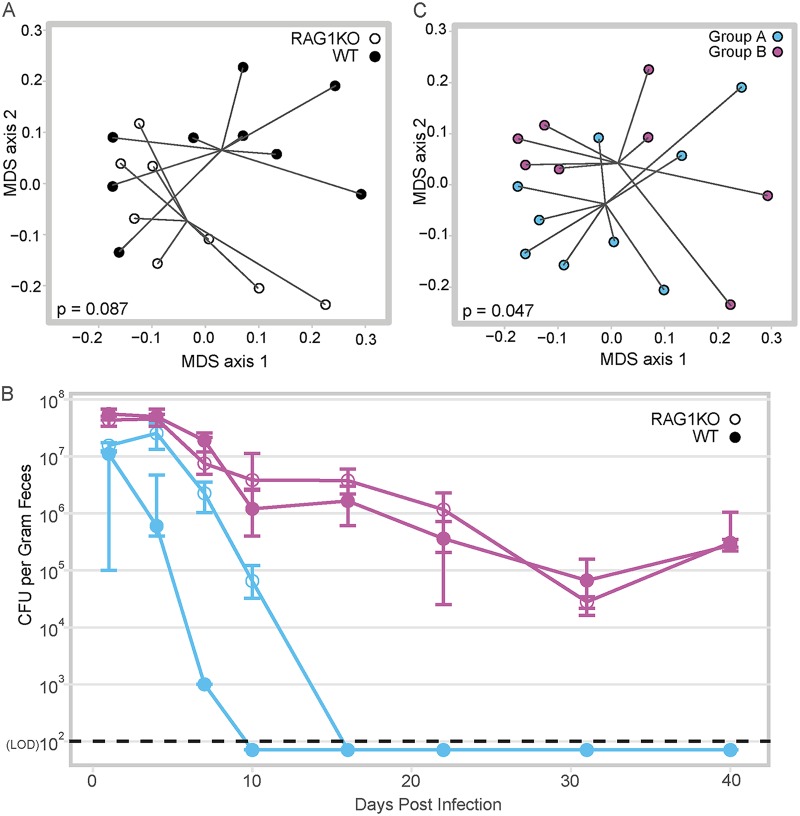
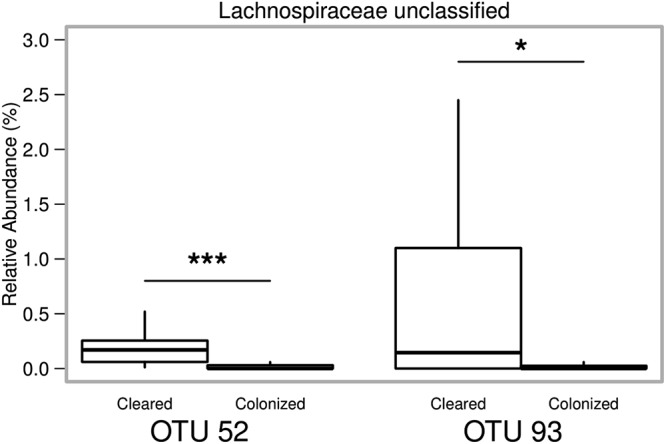
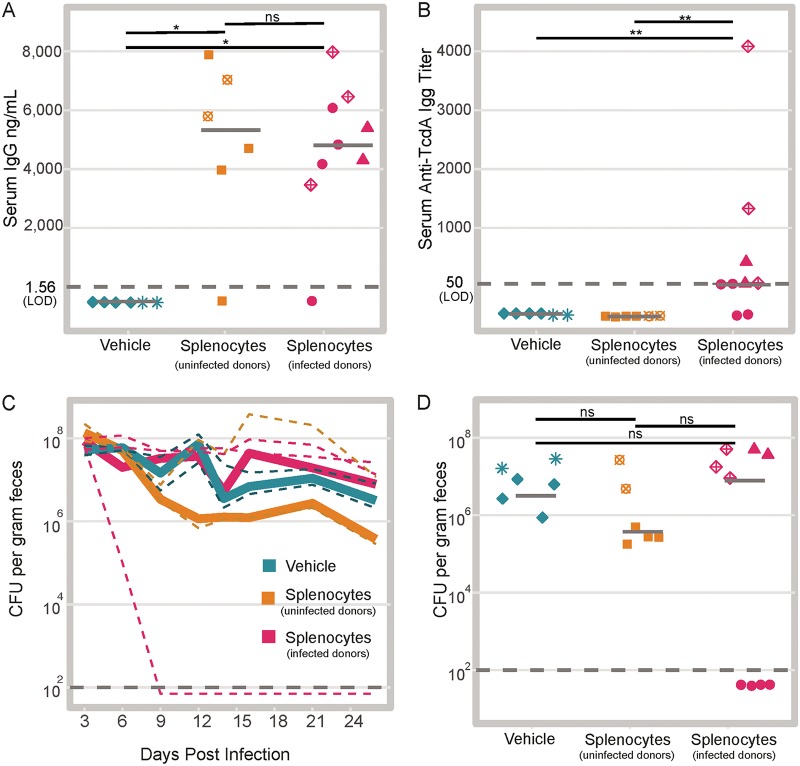
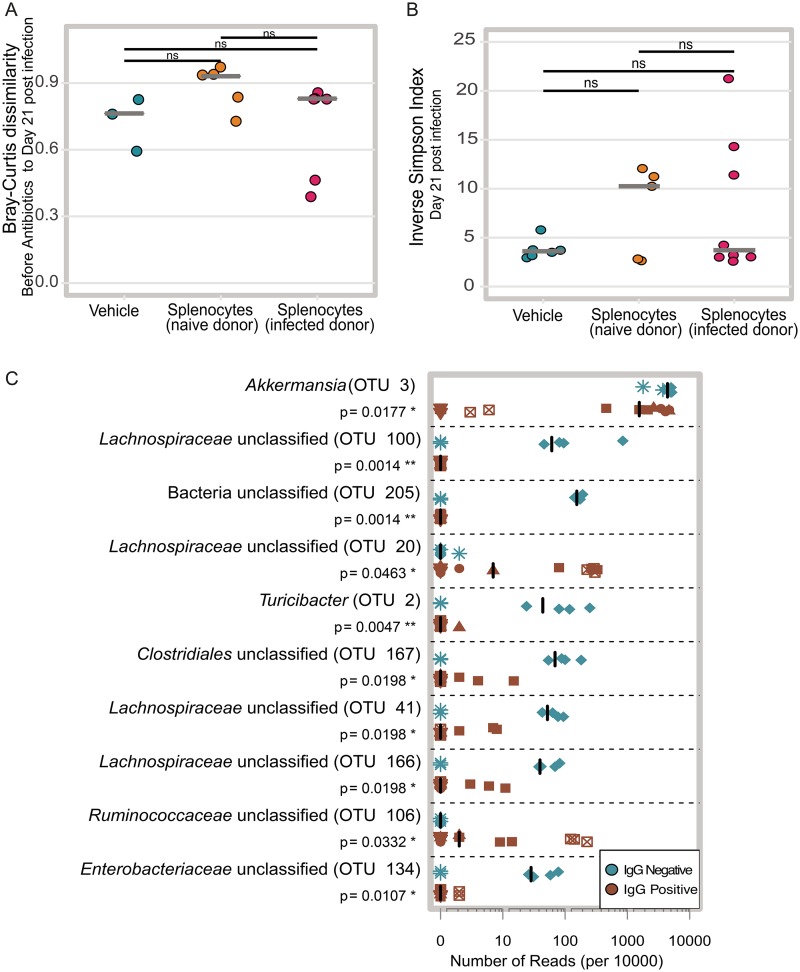
() , a Gram-positive, anaerobic bacterium, is the leading single cause of nosocomial infections in the United States. A major risk factor for infection (CDI) is prior exposure to antibiotics, as they increase susceptibility to CDI by altering the membership of the microbial community enabling colonization. The importance of the gut microbiota in providing protection from CDI is underscored by the reported 80 to 90% success rate of fecal microbial transplants in treating recurrent infections. Adaptive immunity, specifically humoral immunity, is also sufficient to protect from both acute and recurrent CDI. However, the role of the adaptive immune system in mediating clearance of has yet to be resolved. Using murine models of CDI, we found that adaptive immunity is dispensable for clearance of However, random forest analysis using only two members of the resident bacterial community correctly identified animals that would go on to clear the infection with 66.7% accuracy. These findings indicate that the indigenous gut microbiota independent of adaptive immunity facilitates clearance of from the murine gastrointestinal tract. infection is a major cause of morbidity and mortality in hospitalized patients in the United States. Currently, the role of the adaptive immune response in modulating levels of colonization is unresolved. This work suggests that the indigenous gut microbiota is a main factor that promotes clearance of from the GI tract. Our results show that clearance of can occur without contributions from the adaptive immune response. This study also has implications for the design of preclinical studies testing the efficacy of vaccines on clearance of bacterial pathogens, as inherent differences in the baseline community structure of animals may bias findings.
艰难梭菌是一种革兰氏阳性、厌氧细菌,是美国医院获得性感染的主要单一病因。艰难梭菌感染(CDI)的一个主要危险因素是先前接触过抗生素,因为抗生素通过改变微生物群落的组成使易感性增加,从而导致 CDI。肠道微生物群在提供对 CDI 的保护方面的重要性,通过粪菌移植治疗复发性感染的 80%至 90%的成功率得到了强调。适应性免疫,特别是体液免疫,也足以预防急性和复发性 CDI。然而,适应性免疫系统在介导清除中的作用尚未得到解决。使用艰难梭菌感染的小鼠模型,我们发现适应性免疫对于清除是可有可无的。然而,仅使用常驻细菌群落的两个成员进行随机森林分析,可以以 66.7%的准确率正确识别出将清除感染的动物。这些发现表明,独立于适应性免疫的土著肠道微生物群有助于从鼠胃肠道中清除。艰难梭菌感染是美国住院患者发病率和死亡率的主要原因。目前,适应性免疫反应在调节 定植水平方面的作用尚未解决。这项工作表明,土著肠道微生物群是促进从胃肠道清除的主要因素。我们的研究结果表明,在没有适应性免疫反应的情况下,可以清除。这项研究对测试清除细菌病原体疫苗疗效的临床前研究的设计也具有影响,因为动物基线群落结构的固有差异可能会使研究结果产生偏差。