Department of Medical Sciences, Clinical Diabetes and Metabolism, Uppsala University, 751 85, Uppsala, Sweden.
Drugs. 2019 Feb;79(3):219-230. doi: 10.1007/s40265-019-1057-0.
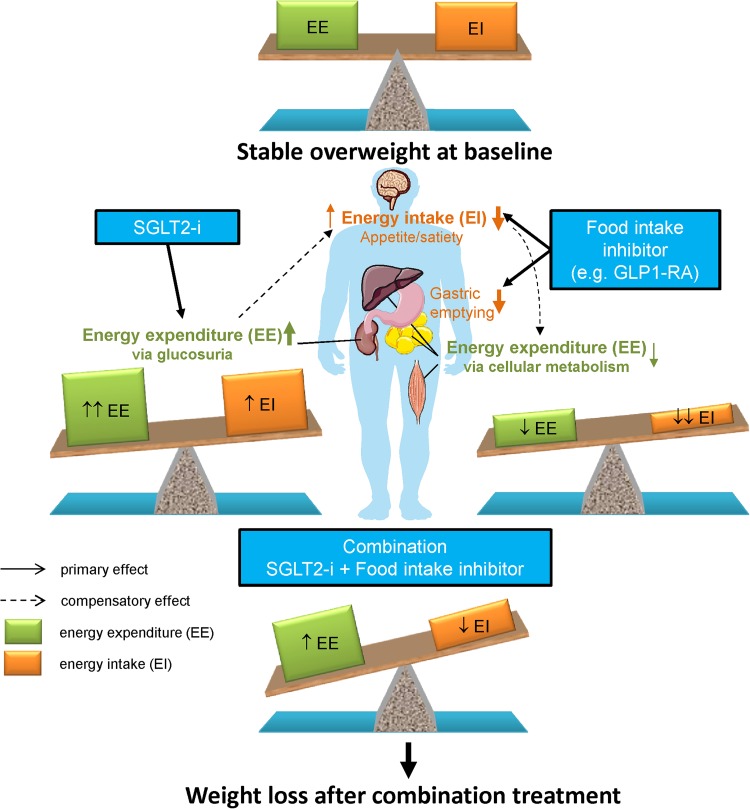
Sodium-glucose co-transporter 2 (SGLT2) inhibitors are glucose-lowering drugs that reduce plasma glucose levels by inhibiting glucose and sodium reabsorption in the kidneys, thus resulting in glucosuria. Their effects consequently include reductions in HbA1c, blood glucose levels, and blood pressure, but also reductions in body weight and adiposity. The ability to reduce body weight is consistently observed in individuals taking SGLT2 inhibitors, but this weight loss is moderate due to counter-regulatory mechanisms striving to maintain body weight. This has prompted exploration of SGLT2 inhibitors in combination with other agents acting via decreased food intake, e.g., glucagon-like peptide 1 receptor agonists (GLP1-RAs). The bodyweight effects are promising, and together with the signs of prevention of cardiovascular and renal events, such combinations including SGLT2 inhibitors are appealing. The weight loss is clinically important, as most individuals with type 2 diabetes are overweight or obese, but also because there is an unmet need for safe, effective, and durable weight loss interventions in obese individuals without diabetes.
钠-葡萄糖共转运蛋白 2(SGLT2)抑制剂是一种降低血糖的药物,通过抑制肾脏对葡萄糖和钠的重吸收,从而导致糖尿。其作用包括降低 HbA1c、血糖水平和血压,但也降低体重和肥胖。服用 SGLT2 抑制剂的个体始终会出现体重减轻,但由于试图维持体重的代偿机制,这种体重减轻是适度的。这促使人们探索 SGLT2 抑制剂与其他通过减少食物摄入起作用的药物联合使用,例如胰高血糖素样肽 1 受体激动剂(GLP1-RAs)。体重减轻的效果很有前景,再加上预防心血管和肾脏事件的迹象,因此包括 SGLT2 抑制剂在内的这些联合用药具有吸引力。体重减轻在临床上很重要,因为大多数 2 型糖尿病患者超重或肥胖,而且对于没有糖尿病的肥胖个体,安全、有效和持久的减肥干预措施也存在未满足的需求。