Yuan Xin, Wang Zhangying, Huang Jianzhong, Xuan Hua, Gao Zhiyong
State Key Laboratory of Hybrid Rice, Key Laboratory for Research and Utilization of Heterosis in Indica Rice of Ministry of Agriculture, College of Life Sciences, Wuhan University, Wuhan, China.
Front Plant Sci. 2019 Jan 18;9:1991. doi: 10.3389/fpls.2018.01991. eCollection 2018.
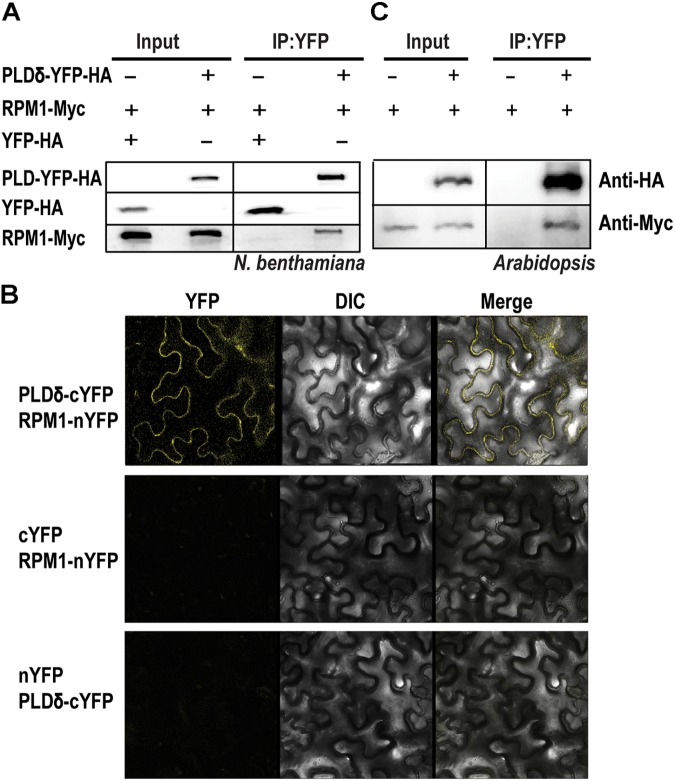
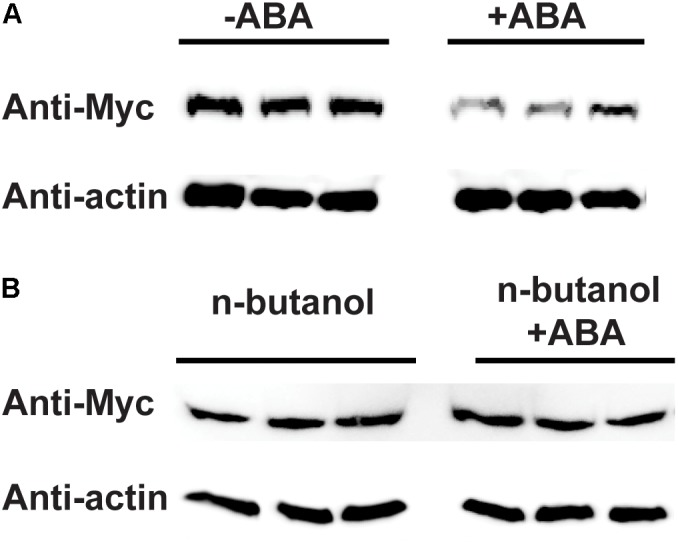
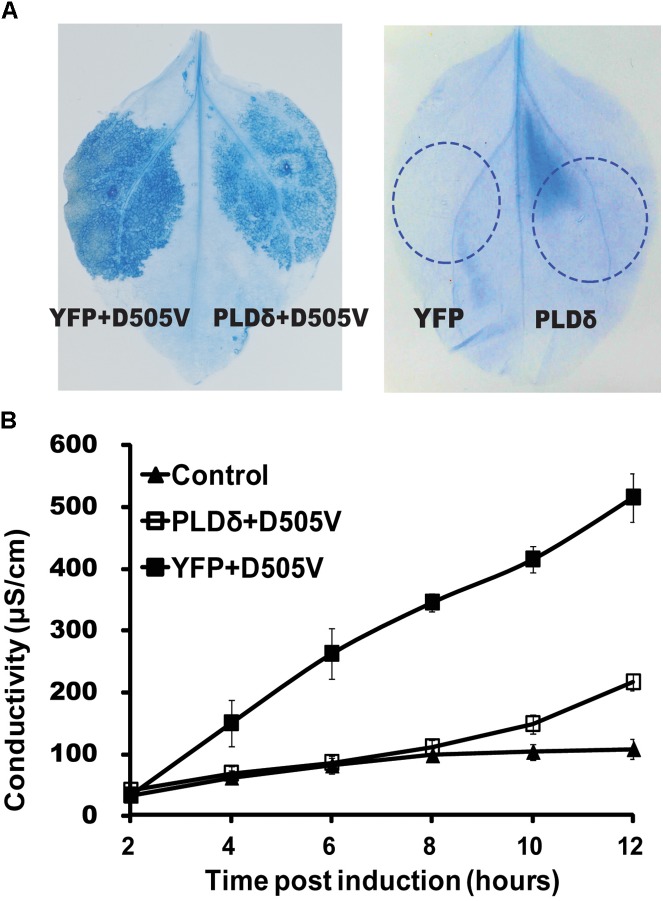
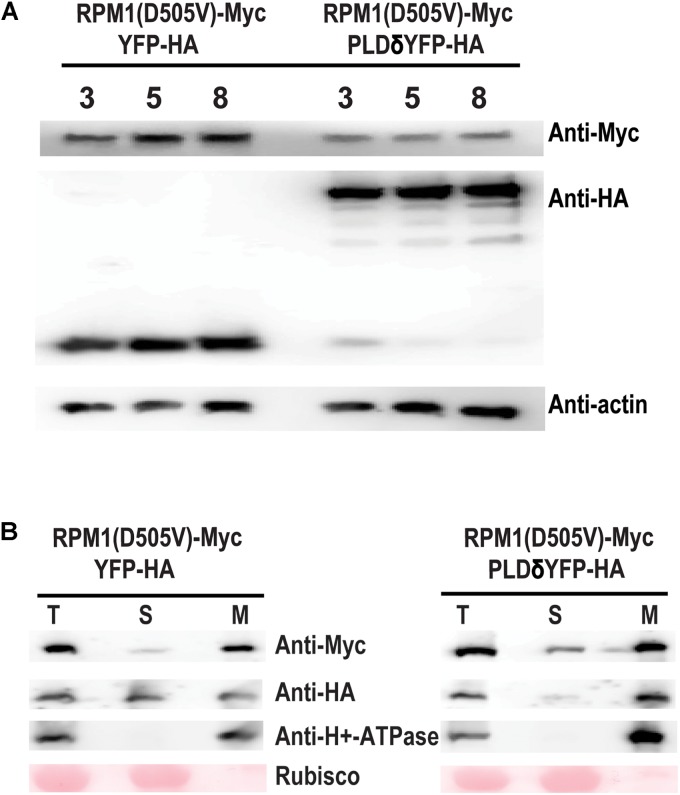
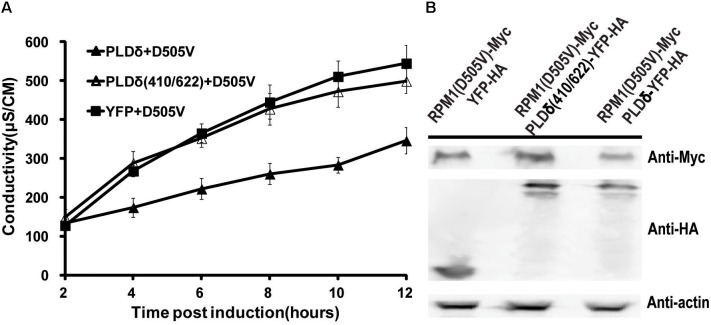
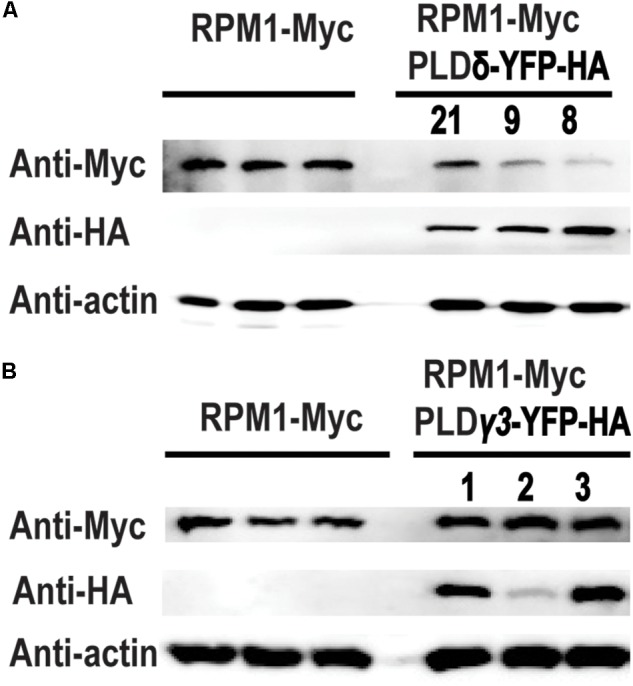
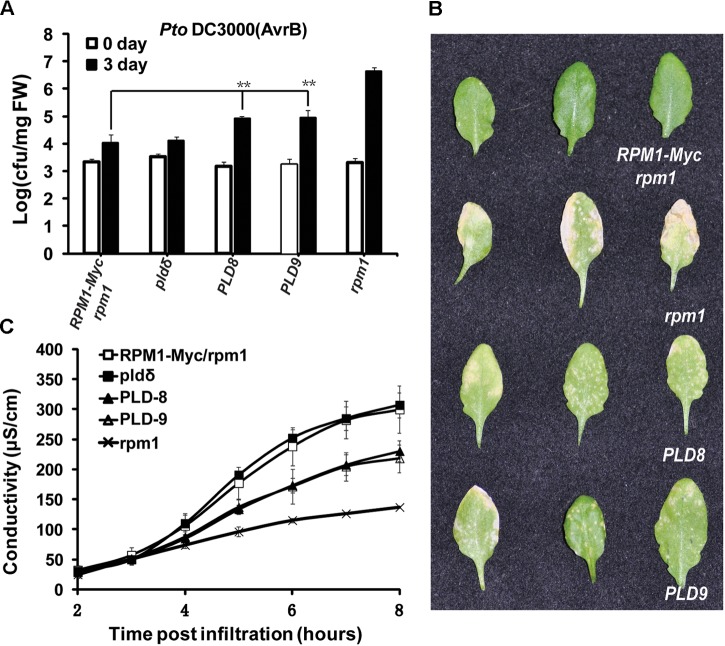
RPM1 is a plant immune receptor that specially recognizes pathogen-released effectors to activate effector-triggered immunity (ETI) in . RPM1 triggers ETI and hypersensitive response (HR) for disease resistance. Previous reports indicated that Phospholipase D (PLD) positively regulated RPM1-mediated HR. However, single, double, and triple mutants of 12 members of the PLD family in did not show suppressed RPM1-mediated HR, indicating the functional redundancy among PLD members. In this study, we revealed that PLD could negatively regulate the function of RPM1. We found that RPM1 interacted with PLDδ, but did not interact with PLDβ1, PLDβ2, and PLDγ3. Overexpression of δ conducted to a reduction of protein level and corresponding activity of RPM1. We found that abscisic acid (ABA) reduced the protein level of RPM1, and the ABA-induced RPM1 reduction required PLD activity and PLD-derived phosphatidic acid (PA). Our study shows that PLD plays both negative and positive roles regulating the protein level and activity of RPM1 during stress responses in plants. PLD proteins are regulating points to integrate the abiotic and biotic responses of plants.
RPM1是一种植物免疫受体,它能特异性识别病原体释放的效应子,从而在植物中激活效应子触发的免疫反应(ETI)。RPM1触发ETI和超敏反应(HR)以实现抗病性。先前的报道表明,磷脂酶D(PLD)正向调节RPM1介导的HR。然而,植物中PLD家族12个成员的单突变体、双突变体和三突变体均未表现出对RPM1介导的HR的抑制作用,这表明PLD成员之间存在功能冗余。在本研究中,我们发现PLD可以负向调节RPM1的功能。我们发现RPM1与PLDδ相互作用,但不与PLDβ1、PLDβ2和PLDγ3相互作用。过表达PLDδ导致RPM1的蛋白水平和相应活性降低。我们发现脱落酸(ABA)降低了RPM1的蛋白水平,且ABA诱导的RPM1减少需要PLD活性和PLD衍生的磷脂酸(PA)。我们的研究表明,在植物应激反应过程中,PLD在调节RPM1的蛋白水平和活性方面发挥着正负两方面的作用。PLD蛋白是整合植物非生物和生物反应的调控点。